


Is an acrylic spa hot tub truly non-porous?
2026-03-13 15:35When consumers choose a hot tub, they often notice a frequently mentioned selling point: "Non-porous acrylic material."
Many brands emphasize this characteristic when advertising acrylic spa hot tubs, which inevitably raises questions:
• Is an acrylic spa hot tub truly completely non-porous?
• Is acrylic naturally non-absorbent and impermeable?
• What is a "non-porous" surface?
• What are the practical benefits of a non-porous structure for users?
• Is a non-porous material more hygienic?
• Will it become porous over time?
To help you clearly understand the structural characteristics, surface properties, and advantages of acrylic spa hot tubs, this article will provide an in-depth analysis from the perspectives of materials science, surface characteristics, cleaning advantages, and long-term durability, ultimately helping you clearly answer:
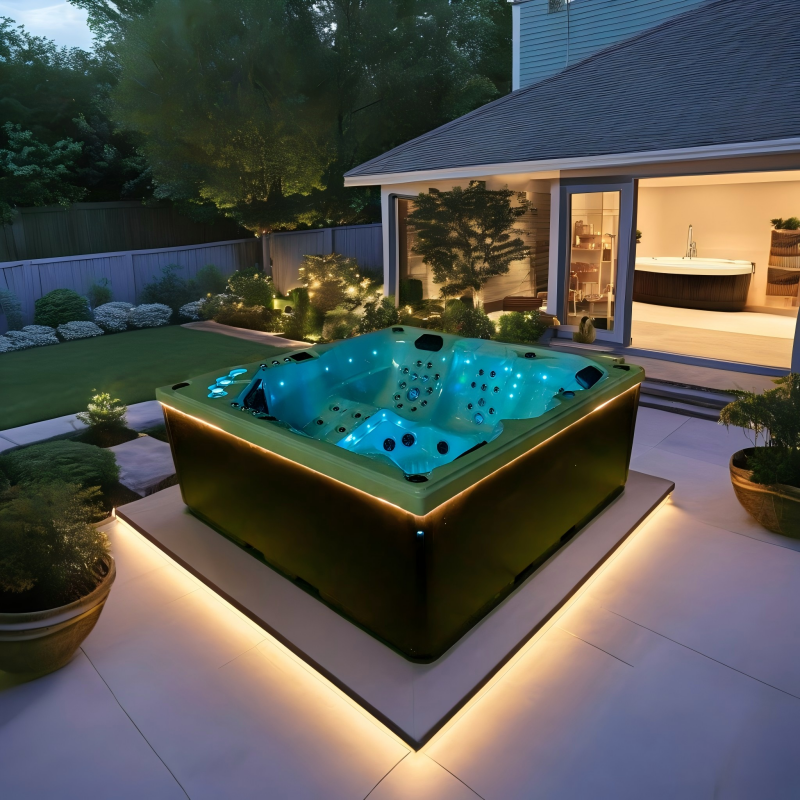
Is an acrylic spa hot tub truly non-porous?
What is a "non-porous" surface? Is an acrylic spa hot tub made of this material?
In materials science, "non-porous" does not mean a material is "completely devoid of micropores," but rather refers to:
• Smooth surface
• Non-absorbent
• Impermeable to liquids
• Not prone to bacterial growth
• Not easily penetrated by contaminants
In other words, "non-porous" primarily refers to high surface density and virtually impermeable pores.
Acrylic sheets used in hot tubs (usually PMMA, polymethyl methacrylate) after thermoforming:
✔ Dense surface
✔ Stable molecular structure
✔ High chemical inertness
✔ Naturally non-absorbent properties
Therefore, from a material properties perspective, acrylic is essentially a non-porous material.
Does the surface structure of an acrylic spa hot tub possess natural non-porousness?
The answer is: Yes.
High-quality acrylic sheets used in acrylic spa hot tubs have the following characteristics:
1. High-density structure
The tightly packed molecules of acrylic form a strong and stable structure, making its surface naturally non-porous.
2. Smooth and Flat Surface
Acrylic spa hot tubs undergo polishing and thermoforming, resulting in an extremely smooth, non-porous surface.
3. Strong Chemical Stability
Unlike natural materials such as wood and stone, acrylic does not absorb liquids or contaminants.
4. Non-Absorbent
PMMA has extremely low water absorption, making it a truly non-absorbent material.
From a materials science perspective, the surface of an acrylic spa hot tub is "functionally non-porous," making it ideal for contact with water, cleaning agents, and various water treatment chemicals.
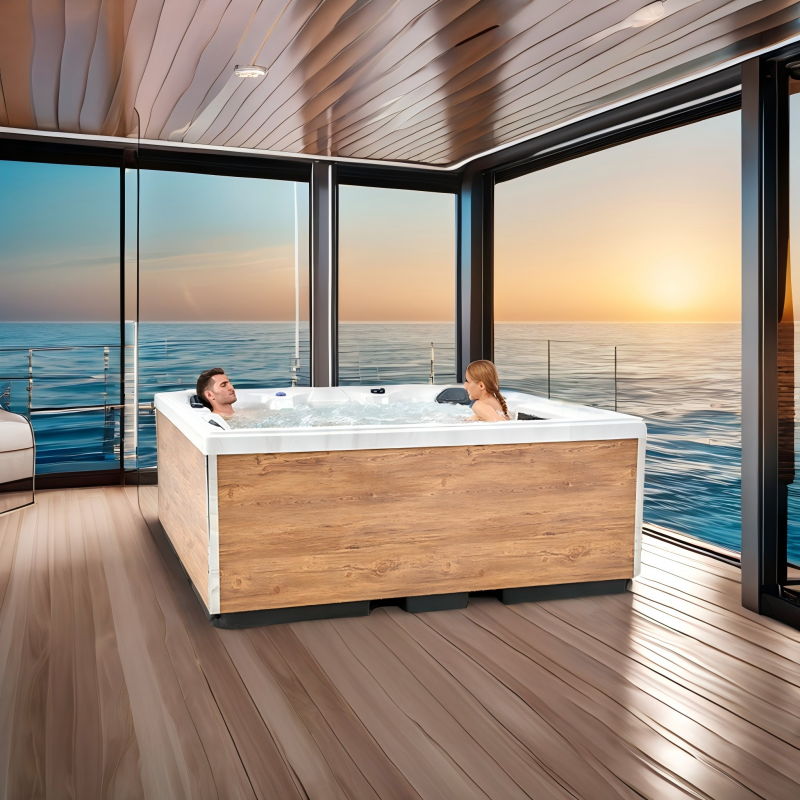
How does the non-porous structure of an acrylic spa hot tub improve hygiene?
This is a key concern for many users.
The non-porous material of an acrylic spa hot tub offers the following hygiene advantages:
1. No Bacterial Growth
Porous materials such as stone or inferior plastics easily trap dirt and grime, allowing bacteria to hide in the micropores and become difficult to remove.
Because acrylic has a non-porous surface, dirt has nowhere to hide, making it difficult for bacteria to adhere and multiply.
2. Does not absorb soap, grease, and residue
Ordinary materials may absorb shower gel, lotion, grease, etc., causing odors or stains.
The acrylic spa hot tub surface does not absorb oil or water, naturally keeping it clean.
3. Easy to clean, no strong acids or alkalis required
Most stains can be easily wiped away with:
• Water
• Mild detergent
• Soft cloth
This is thanks to its non-porous structure, eliminating the need for deep cleaning with strong chemicals.
4. Does not easily discolor or yellow
Because dirt does not penetrate the surface pores, the acrylic spa hot tub maintains its bright shine for a long time.
Will an acrylic spa hot tub become "porous" over time?
Many people worry that the surface of an acrylic spa hot tub will become rough over time, thus becoming "porous."
However, this concern is mostly based on misunderstanding.
An acrylic spa hot tub will not become "porous" due to aging.
The only situations that truly roughen the surface are the following:
1. Using improper cleaning agents (such as abrasives or sandpaper)
This will create tiny scratches on the surface, making it lose its shine and appear "porous."
2. Scrubbing with a hard sponge or steel wool
This will scratch the surface and destroy its smoothness.
3. Long-term use of oily bath salts or unsuitable chemicals
This will cause dirt to adhere, creating the illusion that the surface has absorbed substances.
4. Scale buildup that is not cleaned promptly
This will result in a visually rough appearance.
These situations do not cause the acrylic itself to become porous, but rather the surface to be damaged or covered with dirt.
When used correctly, the non-porous nature of the acrylic spa hot tub can be maintained for a long time.
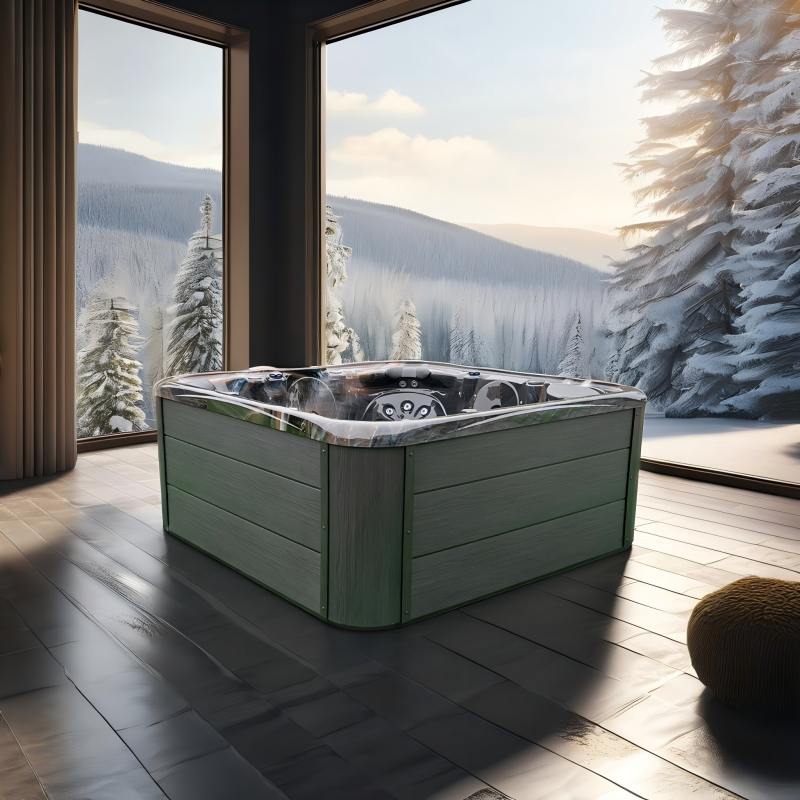
Why is "non-porous" so important for an acrylic spa hot tub?
The non-porous structure brings significant advantages to the acrylic spa hot tub:
1. More hygienic and safer
It does not absorb dirt or harbor microorganisms, making it safer than fiberglass, enamel, or wood.
2. Easier to Clean
No strong detergents or frequent deep cleaning required.
3. More Durable
The surface is less prone to damage from absorbing chemicals.
4. Stronger Water and Oil Resistance
Non-porous materials are less prone to stubborn stains.
5. Longer-Lasting Gloss
The smooth, non-porous surface helps maintain a mirror-like finish.
Are there any materials with a non-porous structure like acrylic spa hot tubs?
To better understand the non-porous nature of acrylic, we can compare it to common bathtub materials:
✔ Acrylic (Non-porous)
Smooth, dense surface, non-absorbent, making it one of the ideal materials for spa hot tubs.
✔ Fiberglass (Microporous)
Thin surface coating, easily scratched, and pores may appear after prolonged use.
✔ Enameled Steel (Non-porous but Fragile)
High surface hardness, but easily chipped or broken.
✔ Artificial Stone (Partially Non-porous, depending on formula)
High-quality artificial stone is non-porous, but more expensive.
✔ Wood (Porous)
Naturally porous, requiring special waterproofing treatment.
Therefore, acrylic spa hot tubs achieve an excellent balance between "non-porousness" and "durability."
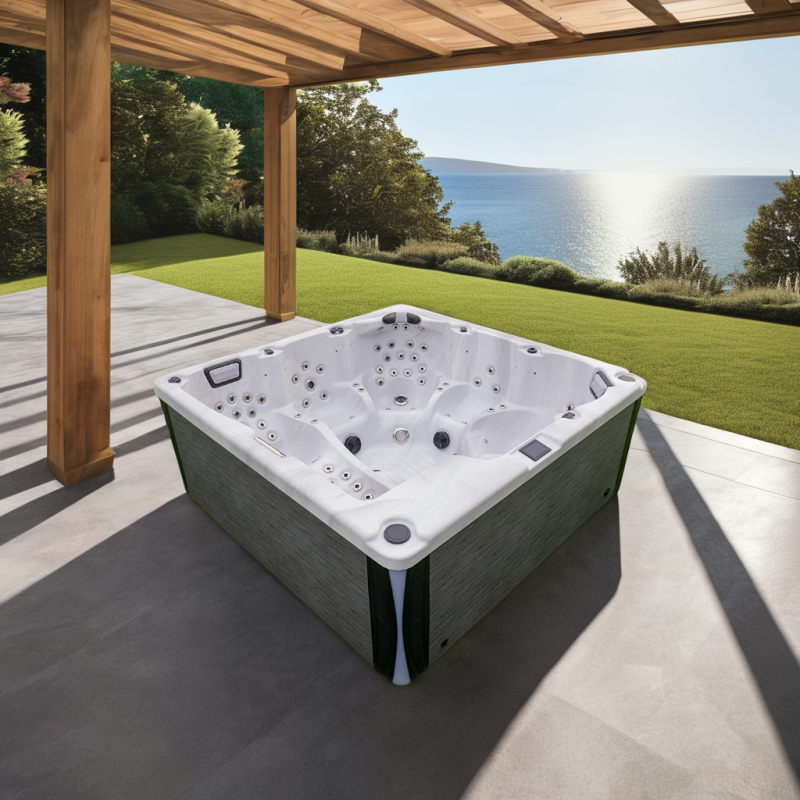
Will the non-porous nature of acrylic spa hot tubs affect water treatment?
No, it's actually beneficial.
1. Does not absorb chemicals
Maintains water chemistry stability.
2. Does not allow dirt to penetrate
Water will not become cloudy due to surface contamination.
3. Less prone to odors
Because dirt is not absorbed by the material, it is less likely to produce persistent odors.
4. Easier to maintain disinfectant effectiveness
Disinfectants are not absorbed by porous materials, making it easier to maintain the appropriate concentration.
How to keep the non-porous surface of the acrylic spa hot tub undamaged?
To maintain the smooth, non-porous nature of your acrylic spa hot tub, we recommend the following:
1. Do not use abrasive cleaners, such as scouring powder or coarse-grained cleaning products.
2. Do not use hard tools. Do not use steel wool or abrasive nylon brushes.
3. Use a dedicated, mild cleaner, such as a mild acrylic surface cleaner.
4. Clean the surface regularly to prevent limescale buildup.
5. Avoid using oily bath salts or skin care oils in the bathtub.
6. Rinse the bathtub surface with clean water after each use.
By following these maintenance methods, you can maintain the non-porous advantage of your acrylic spa hot tub for a long time.
Is an acrylic spa hot tub non-porous?
👉 Yes, an acrylic spa hot tub is a non-porous material.
Its surface is dense, smooth, non-absorbent, impermeable, and does not harbor bacteria, making it one of the most suitable materials for hot tubs.
However, please note:
• Non-porous does not mean "impossible to damage"
• Improper cleaning methods can scratch the surface, making it appear "porous"
• With proper maintenance, acrylic's non-porous properties can be maintained for life
Therefore, from a materials science, hygiene, and user experience perspective, the acrylic spa hot tub is indeed a truly non-porous bathtub option.