


Is bubbling at the bottom of an acrylic spa hot tub normal?
2026-03-13 15:30Many users encounter a common situation when using an acrylic spa hot tub: foam, white bubbles, floating foam, or viscous foam appear at the bottom.
This often leads to questions:
• Is this normal?
• Does it indicate damage to the acrylic spa hot tub?
• Is it a water quality issue, a chemical issue, or a structural problem?
• Does it require immediate repair, or can it be easily fixed?
In fact, bubbling at the bottom of an acrylic spa hot tub is normal in many cases, but it can also indicate problems with water quality, chemical balance, or residue.
To make a correct judgment, we must understand the causes of bubbling, the properties of acrylic materials, the operating principles of spa systems, and how to distinguish between "normal foam" and "abnormal foam."
This article will provide an in-depth analysis from a professional perspective, offering complete judgment criteria and solutions.
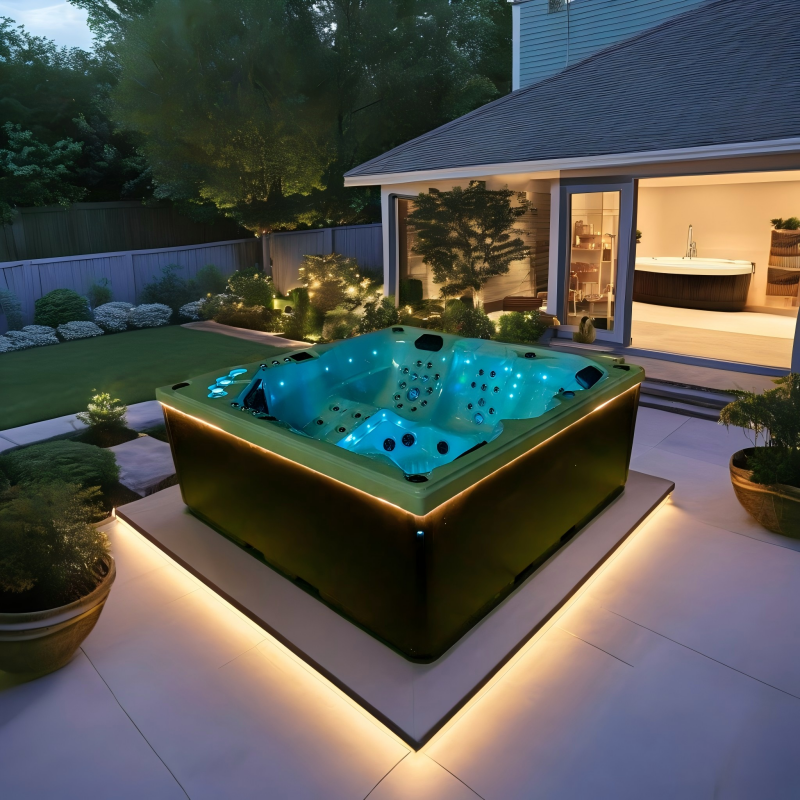
Why does foam appear in an acrylic spa hot tub? What are the reasons?
When using an acrylic spa hot tub, foam in the water can come from various sources, including:
• Bubbles generated by natural water agitation
• Cleaning agent residue
• Oils and lotions from the user's skin
• Chemical imbalance
• Low water hardness
• Accumulation of organic matter
• Changes in acrylic surface tension
However, to determine if it's "normal," it's essential to understand the type of foam.
What types of foam are produced at the bottom of an acrylic spa hot tub?
Foam is generally classified into three categories:
1. Clear, transparent small bubbles (usually normal)
Characteristics:
• Clear and bright
• Very slight
• Dissipates quickly upon contact with water flow
• Disappears naturally when the system stops running
This type of foam is usually normal and does not indicate any problem with the acrylic spa hot tub.
2. White floating foam (common but requires slight attention)
Characteristics:
• Foam buildup
• A thin layer of white foam appears on top
• Does not disappear immediately
This usually originates from chemicals, water quality, or contaminants, but is not necessarily a sign of equipment malfunction.
3. Thick, Viscous Foam (An Abnormal Phenomenon)
Characteristics:
• Very thick foam
• Milky white or slightly yellow
• Difficult to disappear, and may even increase with agitation
This indicates deteriorating water quality and requires immediate attention.
Therefore, when you see bubbles at the bottom of your acrylic spa hot tub, don't panic. Determine if it's normal based on the type of foam.
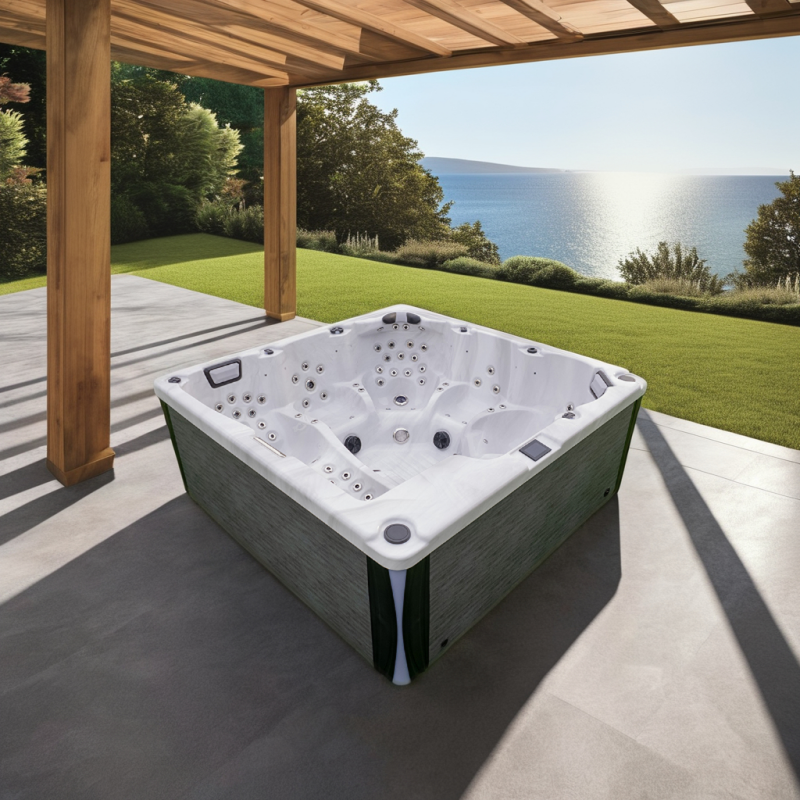
Is it normal for bubbles to appear at the bottom of an acrylic spa hot tub?
The answer has two parts:
✔ Some "transparent bubbles" are completely normal
When you start the spray system of your acrylic spa hot tub, the following physical factors will cause many small, transparent bubbles to appear at the bottom:
• Water flow disturbance
• Aerodynamic effect of air intake from the nozzle
• Increased water temperature leading to gas release
• Contact between trace minerals in the water and air
These factors will cause many small, transparent bubbles to appear at the bottom.
These bubbles will rise and burst with pressure changes, which is a "normal natural phenomenon" during the operation of the acrylic spa hot tub.
❗ However, excessive, abnormally colored, or slow-dissipating foam is abnormal.
Situations include:
• White foam covering the water surface
• Sticky bubbles
• Foam that persists
• Foam that increases with stirring
• Foam accompanied by an unusual odor
• Cloudy water
These are not normal phenomena and require further examination of water quality and chemical balance.
What factors cause foaming at the bottom of the acrylic spa hot tub?
The following will analyze the causes comprehensively from physical, chemical, hygiene, and water quality perspectives.
Is there residue in the water causing foaming in the acrylic spa hot tub?
This is one of the most common causes.
Residue may come from:
• Shower gel, shampoo
• Laundry detergent residue on swimwear
• Fabric softener residue
• Soap bubbles
• Body lotion or skincare products
• Hairspray, cosmetics
These residues quickly generate foam when they encounter the jet of water. If the user does not rinse their body thoroughly before entering the acrylic spa hot tub, foam buildup can easily occur.
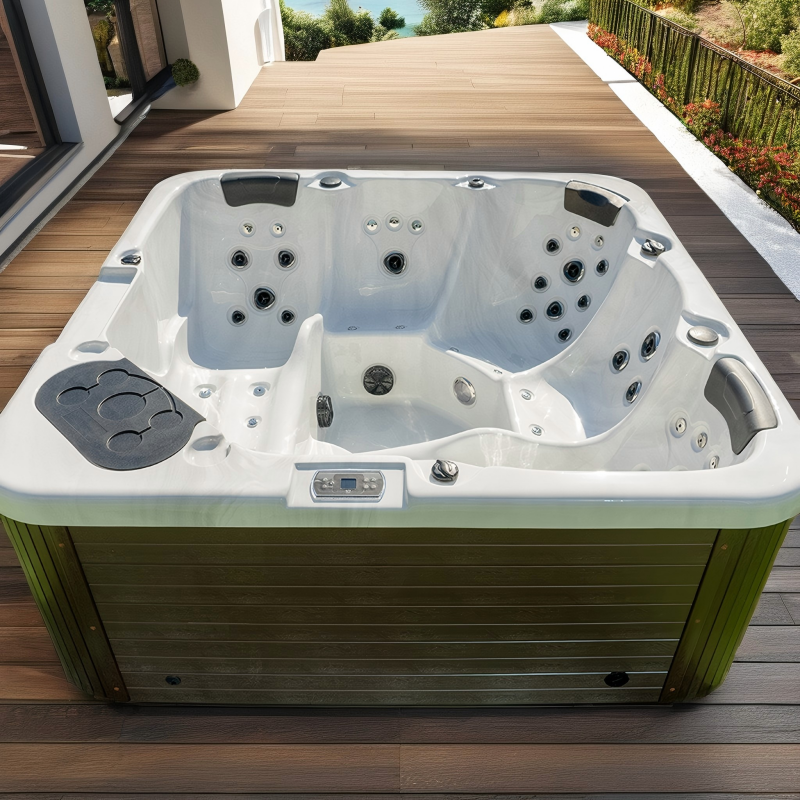
Can water chemical imbalance cause foaming in an acrylic spa hot tub?
Yes, and it's a common cause.
Especially:
1. Low water hardness (soft water)
Low calcium hardness makes the water "too soft," making it prone to foaming.
2. pH imbalance
Both excessively high and low pH levels can cause foaming.
3. Insufficient disinfectant concentration
When there isn't enough chlorine or bromine, organic matter cannot be completely broken down, resulting in foam.
4. High total dissolved solids (TDS)
Over time:
• Sweat
• Grease
• Chemicals
• Scale
• Organic contaminants
These increase the amount of "dirty stuff" in the water, making it more prone to foaming.
Does air entering the system cause foaming?
Yes. The nozzle design of acrylic spa hot tubs typically mixes in air to enhance the massage effect. If too much air is drawn in, the system sucks in extra air, causing bubbles to continuously form at the bottom.
This is usually normal, but if the system is drawing in excessive air, the air regulating valve may need to be checked.
Does the surface of the acrylic spa hot tub affect foaming?
Acrylic surfaces are smooth and don't easily attract impurities, but the following conditions may increase foaming:
• Inadequate surface cleaning
• Use of unsuitable acrylic cleaning agents
• Cleaning agent residue
• Scale buildup
Any surface residue can alter the surface tension of water, making foam formation easier.
Does foaming at the bottom of the acrylic spa hot tub indicate equipment damage?
Usually, it's not equipment damage, but rather due to the following reasons:
• Poor water quality
• Insufficient cleaning
• Imbalanced water chemistry
• Contaminants introduced by the user
• Clogged filter
• Grease inside the pipes
However, if the following conditions are also present, it may indicate a system problem:
• Abnormal heating by the heater
• Increased pump noise
• Uneven nozzle spray
• Unusual odor from the pipes
This situation requires further inspection and maintenance.
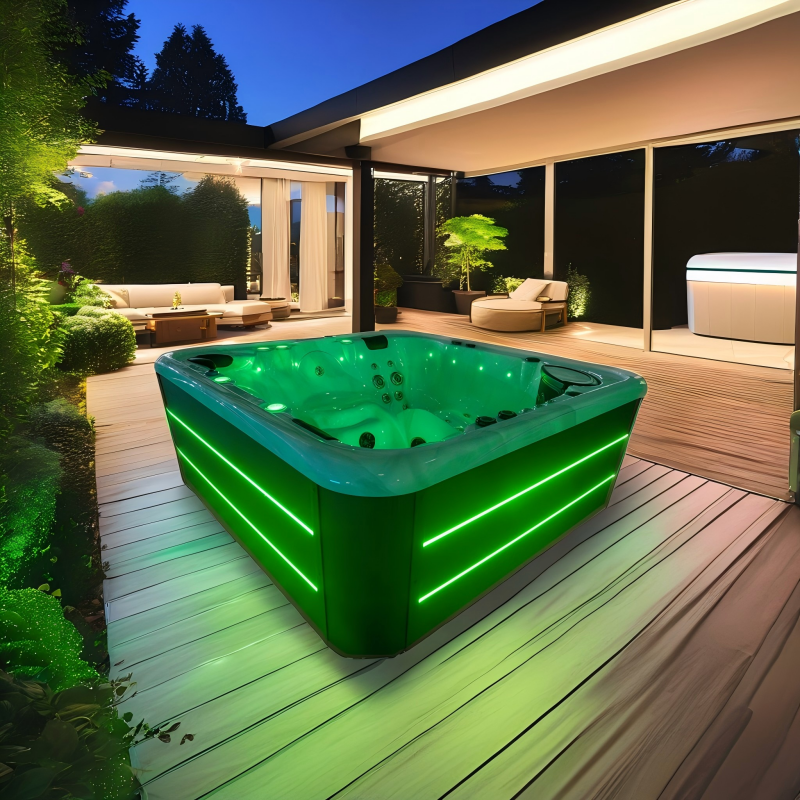
How to determine if foam on an acrylic spa hot tub needs treatment?
The following conditions require attention:
✔ Opaque foam
✔ Odorous foam
✔ Increased foam with stirring
✔ Milky white or pale yellow foam
✔ Excessive foam remaining after filter cleaning
✔ Foam persisting even after partial water replacement
These conditions indicate abnormal water quality, not simply normal air bubbles.
How to solve the problem of foaming at the bottom of an acrylic spa hot tub?
Here are the professional steps:
1. Test water chemistry (pH, alkalinity, hardness, disinfectant)
Adjust to normal ranges if imbalanced.
2. Perform a thorough shock treatment
Use an oxidizing shock agent to break down organic matter in the water.
3. Clean or replace the filter
Clogged filters cause continuous foam buildup.
4. Drain some water and add fresh water
Replacing at least 30%–50% of the water can significantly reduce foam.
5. Avoid using bath products containing oil or fragrances
These products are highly likely to cause foaming.
6. Use a defoamer specifically designed for hot tubs
Quick and effective, but only a temporary solution and should not be used long-term.
How to prevent acrylic spa hot tubs from foaming again?
1. Rinse your body before use to avoid introducing oils into the water
This is the first key step in preventing foaming.
2. Do not wear clothing with fabric softener
Swimsuits can be rinsed with water only.
3. Regularly maintain the water chemistry
Use the correct dosage of disinfectant and hardness enhancer.
4. Regularly flush and replace the filter
Maintain the filtration system's efficiency.
5. Completely change the bathwater every 2–3 months
Prevent dissolved solids buildup.
Is foaming at the bottom of an acrylic spa hot tub dangerous?
In most cases:
❌ Not dangerous
❌ Does not indicate surface damage
❌ Does not indicate electrical leakage or mechanical failure
However, if the foam is caused by:
• Chemical imbalance
• Excessive organic matter
• Grease buildup
• Water contamination
it may:
⚠ Affect disinfection effectiveness
⚠ Make it easier for bacteria to grow
⚠ Increase the burden on the heater
⚠ Affect user experience
Therefore, while foaming itself is not dangerous, neglecting to address it can cause problems.
Is foaming at the bottom of an acrylic spa hot tub normal?
✔ Normal:
• Small, transparent bubbles
• Natural air turbulence generated during system operation
• Dissipates quickly after stopping
❗ Abnormal:
• White, viscous foam
• Large amounts of persistent foam
• Odor
• Cloudy water
These are not normal phenomena and require water quality adjustment, filter cleaning, or water replacement.
Final professional conclusion:
👉 Slightly transparent bubbles at the bottom of the acrylic spa hot tub are normal.
However, the presence of a large amount of thick foam is abnormal and requires immediate water quality maintenance and cleaning.