


Indoor vs. Outdoor Spa Hot Tubs: Which Is Better for Your Lifestyle?
2026-11-17 15:35As people pay more and more attention to home leisure and quality of life, whirlpool hot tubs have gradually become an important part of the home SPA space. Whether you're relaxing after a busy day or enjoying leisure time with family and friends on the weekends, the right hot tub can make your life more comfortable.
However, when purchasing a spa hot tub, many consumers are faced with a question: Should they choose an indoor spa hot tub or an outdoor spa hot tub?
Although both have hot water soaking, circulation filtration and massage functions, there are obvious differences in installation environment, usage experience, energy consumption, maintenance difficulty and long-term cost. Indoor hot tubs pay more attention to privacy, convenience of use and environmental stability; outdoor spa hot tubs place more emphasis on natural experience, spatial freedom and outdoor leisure functions.
Improper selection may result in additional installation costs, energy waste and subsequent maintenance problems. Therefore, before purchasing, it is necessary to understand the advantages and disadvantages of the two spa hot tubs based on actual life needs, and choose the product that truly suits you.
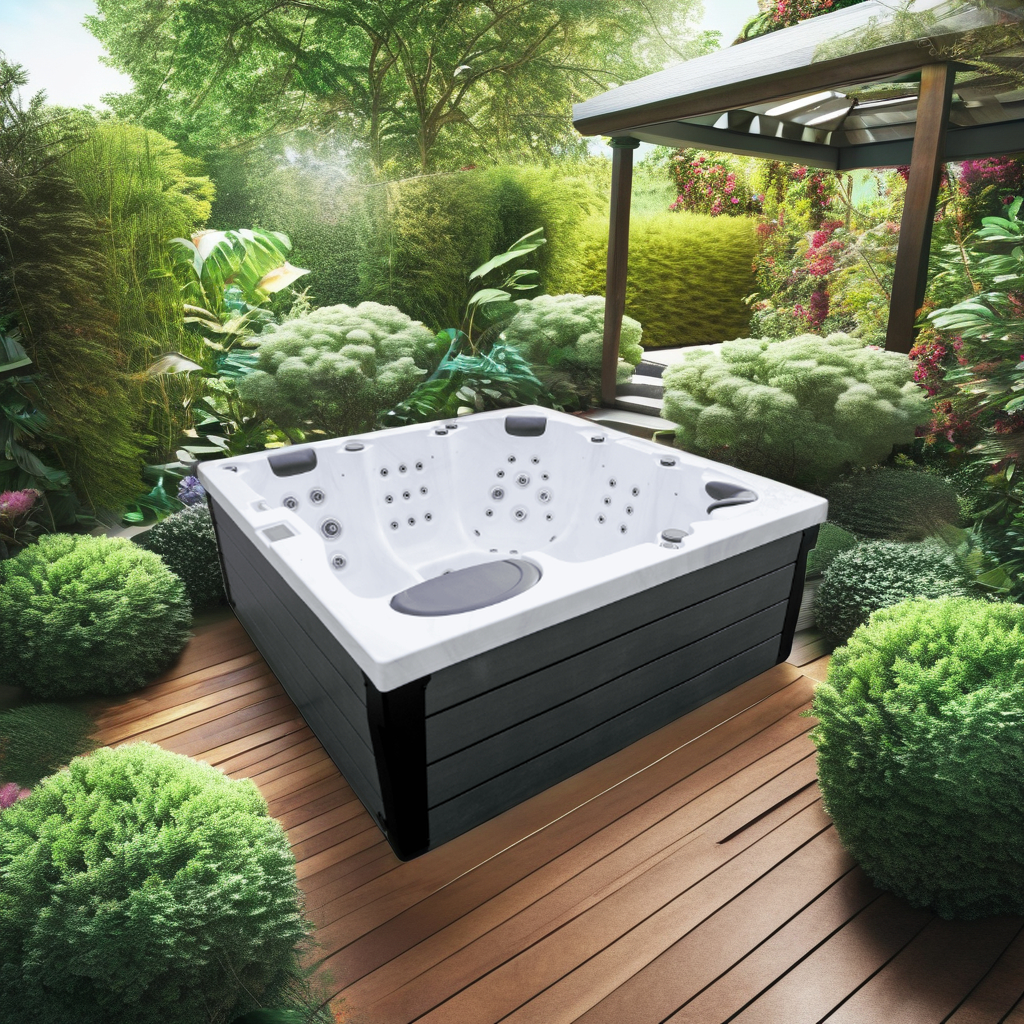
Advantages and Disadvantages of Indoor Hot Tubs
Indoor spa hot tubs are usually installed in family bathrooms, separate spa rooms, master bathroom spaces or indoor leisure areas. Common designs include freestanding and recessed, and can be customized to suit the interior decor.
1. Not affected by weather, more convenient to use all year round
The biggest advantage of an indoor hot tub is that the use environment is relatively stable. Whether it is hot summer, cold winter, or rainy or windy weather, users can enjoy hot water soaking at any time without considering external weather changes.
For families with daily relaxation habits, an indoor spa hot tub is easier to integrate into daily life and eliminates the need for frequent trips between indoors and outdoors.
2. More private and suitable for family use
Indoor hot tubs offer greater privacy than outdoor spa hot tubs. Users can arrange their usage time according to their own living habits without worrying about neighbors’ sight or interference from the external environment.
Particularly for urban apartments and higher-density residences, indoor installations often make it easier to meet privacy needs.
3. Easier to integrate into interior design
Modern indoor spa hot tubs are not only a bathroom fixture, they can also be the design highlight of an interior space. Through stone, wood finishes, glass partitions and ambient lighting, it can be combined with shower rooms, saunas and other facilities to create a complete home SPA space.
4. Major Disadvantages of Indoor Hot Tubs
The biggest challenge with an indoor spa hot tub is humidity management. Hot water will produce water vapor when exposed to the air. If the ventilation and dehumidification design are not reasonable, it may cause condensation on the walls, damp furniture, and even mold problems.
In addition, it is necessary to confirm the floor load-bearing, waterproofing, power supply configuration and drainage conditions before installation. Especially for large built-in hot tubs, sufficient space for equipment maintenance must be reserved.
Solution: It is recommended to conduct a professional space assessment before installation and design the ventilation system based on the bathtub water surface area and frequency of use. For closed SPA rooms, you can consider configuring independent dehumidification equipment and using waterproof and moisture-proof materials for decoration.
Advantages and Disadvantages of Outdoor Hot Tubs
Outdoor spa hot tubs are mainly installed in patios, terraces, gardens or next to swimming pools. Not only is it a leisure device, it can also be combined with outdoor furniture, landscape lighting and shading facilities to enhance the overall space experience.
1. The natural environment brings a better leisure experience
The biggest appeal of an outdoor spa hot tub is its ability to integrate with the natural environment. Users can soak in the hot water in the garden or terrace while admiring the sky, plants and surrounding landscape.
Compared to indoor spa hot tubs, outdoor installations make it easier to create a resort-style relaxing atmosphere, especially for homes with separate patios or villas.
2. Space planning is more flexible
Outdoor spa hot tubs can be installed to suit patio and patio layouts without taking up indoor space. Common installation methods include freestanding, semi-embedded and platform.
For families with larger outdoor activity areas, you can choose an outdoor SPA bathtub with a size of 4-6 people to meet the needs of family members and friends.
3. Suitable for family socializing and outdoor entertainment
Outdoor spa hot tubs can be combined with swimming pools, outdoor sofas and relaxation areas to become a great addition to family gatherings. For B&Bs, vacation homes and boutique hotels, outdoor hot tubs also have a certain level of scene appeal.
4. Major Disadvantages of Outdoor Hot Tubs
The outdoor environment is more complex, and equipment is easily affected by low temperature, wind, rain, dust and ultraviolet rays. Especially in winter, when the outside temperature is lower, the bathtub needs to consume more energy to maintain the water temperature.
If the product's insulation layer is insufficient and the insulation cover is not tightly sealed, significant heat loss may occur. Additionally, fallen leaves, dust, and rain can add to daily cleaning tasks.
Solution: Choose an outdoor spa hot tub with good insulation, an airtight thermal cover, and frost protection. The installation location should be away from direct strong wind areas as much as possible, and awnings or windproof facilities should be configured according to the local climate.
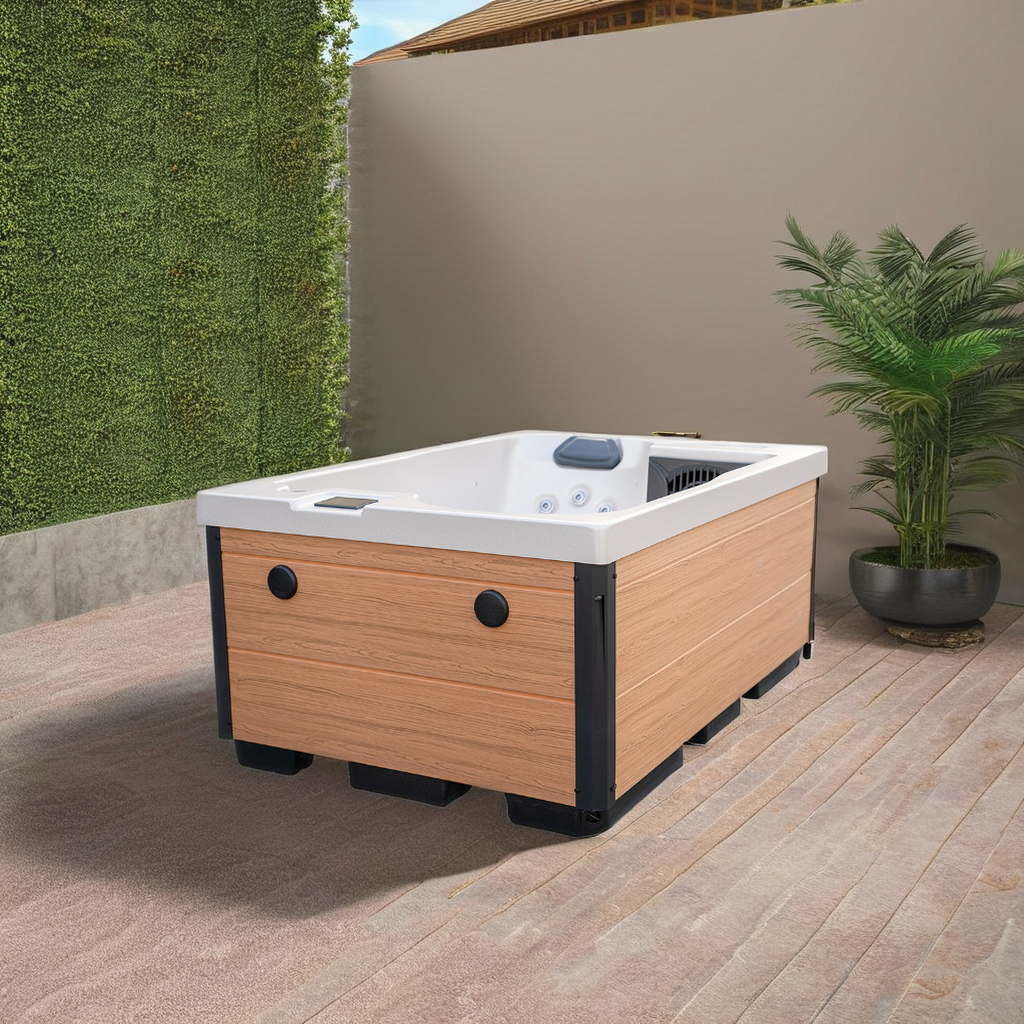
Indoor Hot Tubs vs. Outdoor Hot Tubs: The Core Differences
There is no absolute advantage or disadvantage between the two products. The key lies in the installation environment and usage requirements.
| Comparison | Indoor Hot Tub | Outdoor Hot Tub |
| Installation | Bathroom, SPA room | Garden, patio, terrace |
| Privacy | High | Depends on surroundings |
| Weather Impact | Minimal | High |
| Temperature Stability | Relatively stable | Depends on insulation |
| Installation Requirements | Waterproofing, ventilation, drainage | Foundation, drainage, weather protection |
| Maintenance | Humidity and moisture control | Dust, leaves and weather exposure |
| Best For | Daily use and privacy | Outdoor relaxation and social activities |
From the perspective of actual use, indoor hot tubs are more suitable for families who value privacy, year-round convenience, and indoor space integration; outdoor whirlpool hot tubs are more suitable for people who have courtyards and like natural environments and outdoor leisure activities.
What technical parameters should you pay attention to when buying a hot tub?
When shopping for a whirlpool hot tub, don’t just look at appearance, price, and the number of massage nozzles. Cylinder size, heating power, insulation performance, water pump and filtration system will directly affect the long-term use experience.
1. Size and Capacity
Common specifications for home hot tubs are as follows:
| Hot Tub Size | Approximate Dimensions | Capacity |
| Small | 1500 × 1500 mm | 2 Persons |
| Medium | 1800 × 1800 mm | 3–4 Persons |
| Large | 2000 × 2000 mm | 5–6 Persons |
| Extra Large | 2200 × 2200 mm or above | 6–8 Persons |
The above are reference dimensions, the actual capacity depends on the cylinder structure and seat layout. Access space around the equipment and actual access should also be considered when purchasing.
2. Heating power and heating efficiency
The heating system determines how quickly your whirlpool hot tub heats up. Assume that a bathtub has a capacity of 1000L and the water temperature needs to be raised from 20°C to 38°C. Calculated based on the specific heat capacity of water, approximately 20.93kWh of heat is theoretically required.
If a 3kW electric heater is used, the theoretical heating time is about 7 hours without considering heat loss. In actual use, ambient temperature, pipeline heat dissipation and cylinder insulation also need to be considered, so the time is usually longer.
This shows that consumers should not just look at the heater power, but should also consider the bathtub capacity and overall insulation design to judge the performance of the equipment.
3. Insulation performance
Insulation properties directly impact the long-term energy consumption of both indoor and outdoor whirlpool hot tubs. It is recommended to pay attention to high-density polyurethane insulation materials, bottom insulation structures, pipe insulation and insulation covers with good sealing performance.
Insulation is especially important for outdoor whirlpool hot tubs that receive heavy use during the winter.
4. Water pump and massage nozzle
The water pump determines the water circulation and massage system's operating capabilities. Common nozzles include directional nozzles, rotating nozzles and bubble nozzles.
When purchasing, you should pay attention to the position of the nozzles, massage intensity and adjustment method, rather than simply pursuing quantity. Reasonable nozzle layout can better cover the shoulder, neck, back and leg areas.
5. Filtration system
Hot tubs require ongoing water quality management. Consumers should pay attention to filter type, filtration cycle method, filter replacement cycle, and disinfection requirements.
It should be noted that the filtration system can only help remove some impurities and cannot completely replace water disinfection. Regular testing of water quality and cleaning of pipes is equally important.
Hot Tub Cost of Ownership: The Purchase Price Isn’t Everything
Many consumers only pay attention to the price of equipment when purchasing, but ignore the cost of electricity, water, filter elements and daily maintenance.
The electricity bill for a whirlpool hot tub comes primarily from the heater, water pump, circulating filtration system, and auxiliary equipment.
For example, assuming a whirlpool hot tub consumes an average of 6kWh per day, is used 30 days per month, and the local electricity price is $0.3/kWh, the monthly electricity bill is approximately:
6 × 30 × 0.3 = $54.
This is only hypothetical data used to illustrate calculation methods and is not the actual energy consumption of all whirlpool hot tubs. True cost depends on product capacity, insulation performance, ambient temperature and frequency of use.
Indoor hot tubs are relatively less affected by outside temperatures, but may increase the energy consumption of dehumidification and ventilation equipment; outdoor whirlpool hot tubs need to deal with additional heat loss caused by low temperatures and wind in winter.
Additionally, whirlpool hot tubs require regular water changes, filter cleaning, and pipe maintenance. Equipment price, installation costs, energy costs, and annual maintenance costs should all be factored into your budget before purchasing.
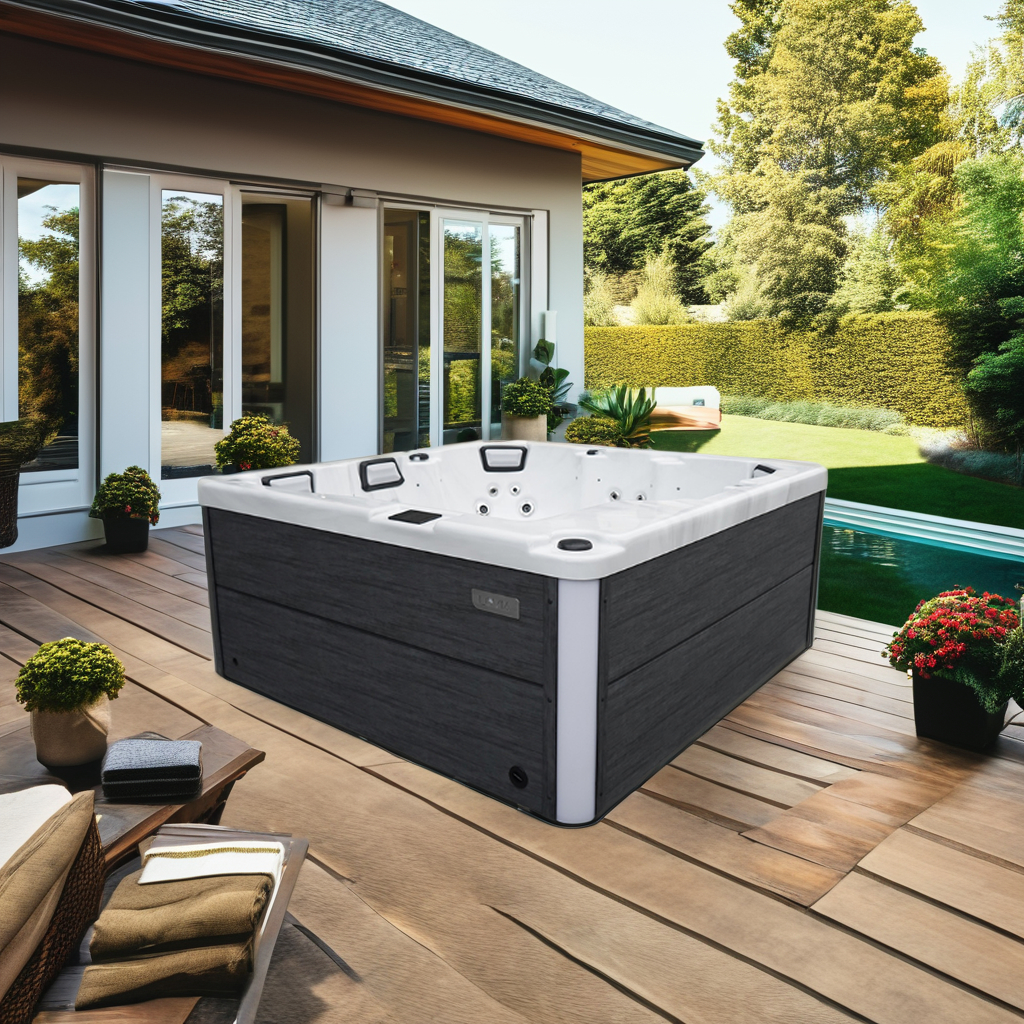
Indoor vs. Outdoor Hot Tubs: Which to Choose for Different Lifestyles?
1. Urban apartment homes: If the residence does not have an independent courtyard and the indoor area and building conditions permit, an indoor whirlpool hot tub is usually more suitable. It can provide better privacy and convenience for daily use.
2. Villas and single-family homes: If you have a patio or spacious terrace, an outdoor whirlpool hot tub can better integrate into outdoor living. It is recommended to choose a model with multiple seats, good insulation and weather resistance.
3. Families with the elderly and children: Priority should be given to safe entry and exit, non-slip floors, handrails, cover locks and temperature management. Indoor installations often make it easier to reduce the inconvenience caused by bad weather, but they also require strict safety precautions.
4. People who like socializing and outdoor entertainment: Outdoor whirlpool hot tubs are more suitable to be combined with gardens, swimming pools and leisure furniture, providing a richer family gathering experience.
5. People who pursue a private SPA experience: You can consider indoor and outdoor solutions, such as setting up showers and changing areas indoors, and installing hot tubs outdoors to form a complete leisure space.
Frequently Asked Questions (FAQ)
FAQ 1: Which one is more energy efficient, indoor hot tub or outdoor hot tub?
There are no absolute answers. Indoor hot tubs are less affected by low temperatures outside, but dehumidification and ventilation energy consumption do need to be considered. Outdoor hot tubs rely more on insulation and may use more energy, especially in the winter.
FAQ 2: Can outdoor whirlpool hot tubs be used in winter?
Can. It is recommended to choose products with good thermal insulation structure and anti-freeze protection function, and keep the equipment running according to the manufacturer's requirements to avoid pipeline freezing.
FAQ 3: Can an outdoor whirlpool hot tub be installed on a balcony?
A professional load-bearing assessment is required first. For example, the mass of 1000L of water is about 1000kg, plus the weight of the equipment and user. You cannot judge whether it is suitable for installation based on the balcony area alone.
FAQ 4: What is the appropriate water temperature setting for a hot tub?
The CDC recommends that whirlpool hot tub water temperatures do not exceed 40°C. Users should control the soaking time according to their own conditions to avoid prolonged exposure to high temperatures.
FAQ 5: How often does the water in a whirlpool hot tub need to be changed?
Depends on the number of users, water quality conditions, filtration efficiency and disinfection management level. It is recommended to refer to the product instructions, check the water quality regularly and change the water as required.