


How do you fix outdoor whirlpool hot tub jets that aren't working?
2026-07-11 15:35The ability of an outdoor whirlpool hot tub to provide a soothing spa-like massage experience relies heavily on the proper functioning of its jets. For many users, installing a jacuzzi outdoor spa hot tub is about more than just enjoying a warm soak; it is primarily about using powerful water massage to relieve fatigue, relax muscles, and boost blood circulation. Consequently, when the jets suddenly stop working, spray weakly, or deliver a noticeably diminished massage, it not only compromises the user experience but may also indicate varying degrees of malfunction within the circulation system, pump, electrical controls, or even the internal plumbing.
In fact, jet-related issues are among the most common problems encountered in outdoor whirlpool hot tub maintenance. Statistics from the North American spa industry indicate that issues involving the circulation system, pumps, and jets account for approximately 30% to 40% of all repair cases. Notably, a significant portion of these malfunctions are not caused by damage to the jets themselves, but rather by clogged filters, airlocks in the plumbing, low water levels, pump irregularities, or a lack of routine maintenance. Therefore, abnormal jet performance does not necessarily require immediate part replacement; instead, a systematic troubleshooting process should be followed to accurately identify the root cause, effectively resolve the issue, and avoid unnecessary repair costs.
This article provides a comprehensive analysis of the typical symptoms of jet malfunction, common causes, detailed troubleshooting methods, repair steps, and preventive maintenance measures. It aims to help homeowners, vacation rental operators, and hotel managers maintain their outdoor whirlpool hot tubs, extend equipment lifespan, and ensure a consistently comfortable massage experience.
What are outdoor whirlpool hot tub jets, and why are they so important?
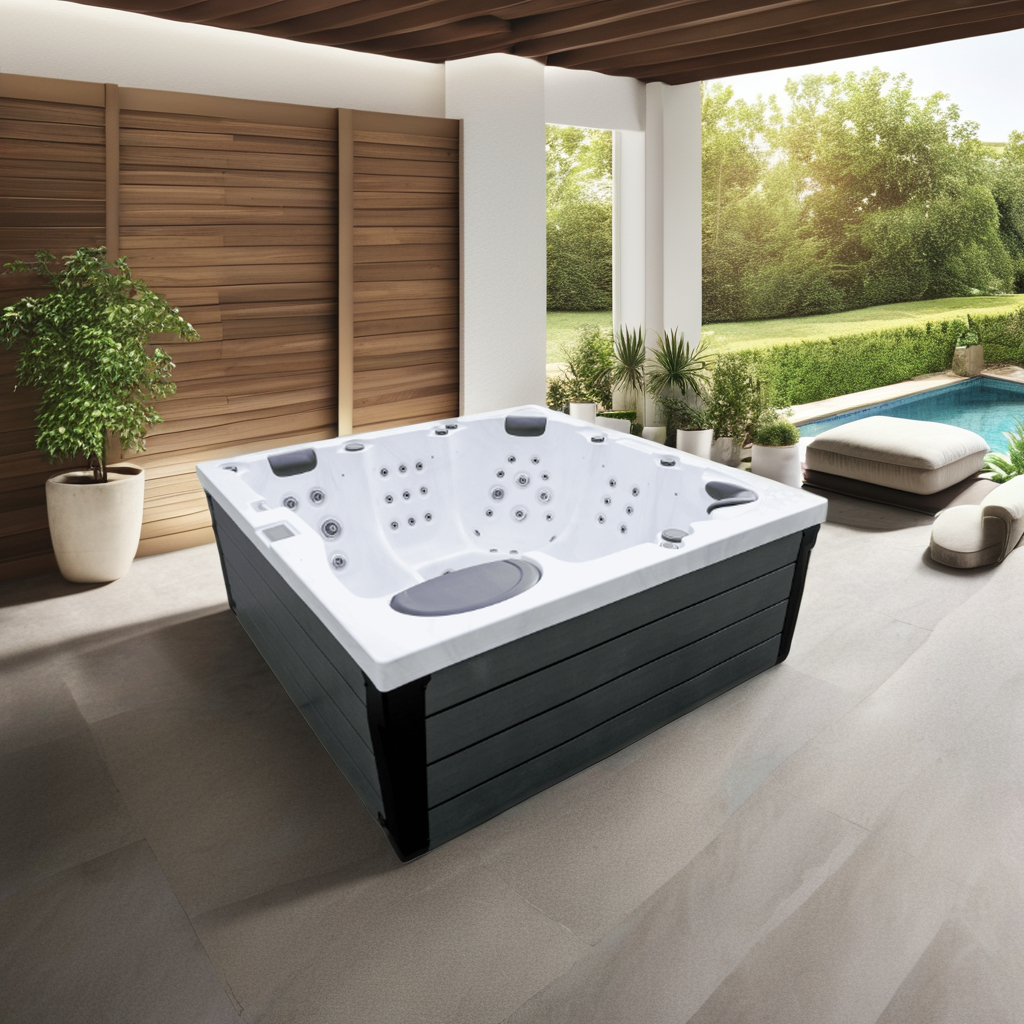
Before addressing malfunctions, it is essential to understand the function of the jets. The jets in an outdoor whirlpool hot tub are not merely water outlets; they constitute a complete massage system. This system typically comprises nozzles, water supply lines, an air-mixing system, a pump, and control valves. When circulating water is pressurized by the massage pump, high-speed streams are expelled through the jets. Simultaneously, some jets draw in air to mix with the water, creating a powerful, bubble-infused massage effect that allows the user to experience hydrotherapy at varying intensities and angles. Modern jacuzzi outdoor spa hot tubs typically feature 10, 20, or even over 50 jets; high-end models may be equipped with more than 80 jets of various types—such as rotary, directional, pulsating, deep-tissue, and air-massage nozzles—each targeting specific areas of the body like the neck and shoulders, lower back, legs, and feet. Because the jets are central to the hydrotherapy experience, any malfunction not only degrades the massage quality but may also signal an underlying issue within the hot tub's entire circulation system.
What are the common signs that outdoor hot tub jets are malfunctioning?
Many users assume that a jet is only "broken" if it stops spraying water entirely. In reality, jet malfunctions often develop gradually, progressing from minor irregularities to complete failure, with different symptoms appearing at each stage. Detecting these early warning signs can often prevent the problem from escalating.
1. No water flow at all
This is the most obvious and easily detected issue. When the massage mode is activated, no water sprays from any of the jets, rendering the massage function completely inoperative—even though the control panel starts up normally and the equipment appears to be running. This situation usually indicates a problem with the massage pump (such as a power issue, a seized motor, or an air lock) or a severe blockage in the circulation system.
2. Significantly weakened water flow
Another common symptom is that the jets still spray water, but the flow is noticeably weaker than before, resulting in insufficient massage intensity; even adjusting the intensity to the maximum setting fails to restore normal performance. This is often caused by a clogged filter, a worn pump impeller, low water levels, partial pipe blockages, or the accumulation of limescale and biofilm inside the nozzles. While many users mistakenly attribute this to equipment aging, the system can usually be restored to normal operation through proper cleaning and maintenance.
3. Some jets work normally while others do not
If only a few jets in your outdoor whirlpool hot tub fail to spray water while others function correctly, the issue is likely localized to specific nozzles, diverter valves, supply lines, or the jets themselves, rather than the entire circulation system. Such issues are generally easier to repair than a total system failure, as they require inspection only of the specific affected area.
4. Intermittent jet operation
Some users may notice that the jets work normally for a few minutes after the massage function is activated, then suddenly stop, only to resume operation later. This often indicates that the pump's overheat protection has triggered, the motor windings are aging, the capacitor is failing, or there is an intermittent fault in the control system. Ignoring this issue over the long term could eventually lead to complete failure of the massage pump.
5. Jets spraying mostly air or intermittent water flow
Normally, jets mix in a controlled amount of air to create a massage effect; however, if the output is almost entirely air, or if the water flow is intermittent and accompanied by excessive bubbles, the circulation system may be airlocked, or there could be air leaks in the suction lines or insufficient water levels. This scenario is particularly common after refilling the jacuzzi outdoor spa hot tub.
6. Jets rotate but lack massage pressure
Some rotating nozzles may still spin, yet the water pressure is noticeably weak, providing little to no massage sensation. This usually indicates a drop in pump output pressure, damage to the pump impeller, or internal nozzle blockage caused by mineral deposits.
Why do outdoor whirlpool hot tub jets stop working?
There are many reasons why whirlpool hot tub jets might malfunction, and not every issue requires replacing parts. In many cases, identifying the root cause and performing simple maintenance is enough to restore normal operation.
1. Low water level preventing the pump from drawing water
Insufficient water level is one of the most common yet frequently overlooked issues. During operation, the water level in an outdoor whirlpool hot tub can gradually drop due to evaporation, splashing, or a lack of replenishment over time. If the water level falls below the suction intake, the pump draws in large amounts of air instead of a steady stream of water, preventing the jets from spraying properly. It is recommended to keep the water level a few centimeters above the filter intake and to check and top up the water regularly.
2. Filter Clogging Affects Circulation Flow
If a filter is not cleaned for an extended period, it accumulates hair, sebum, leaves, pollen, and other debris, causing circulation resistance to rise steadily. When the pump cannot draw in sufficient water, the water pressure at the jets naturally drops significantly. Industry maintenance data indicates that approximately 20% to 30% of jet flow issues are directly linked to clogged filters. Therefore, if you notice a drop in jet pressure, the first step should be to remove the filter cartridge for inspection and cleaning.
3. Air Lock in the Plumbing
Air locks are a common issue after refilling a jacuzzi outdoor spa hot tub. When air becomes trapped in the circulation system, the pump may run but fail to establish a continuous flow, preventing the jets from spraying properly. This situation typically occurs after water changes, maintenance, or prolonged periods of inactivity. Proper air purging or re-priming the system can usually restore normal operation quickly.
4. Clogged Jets
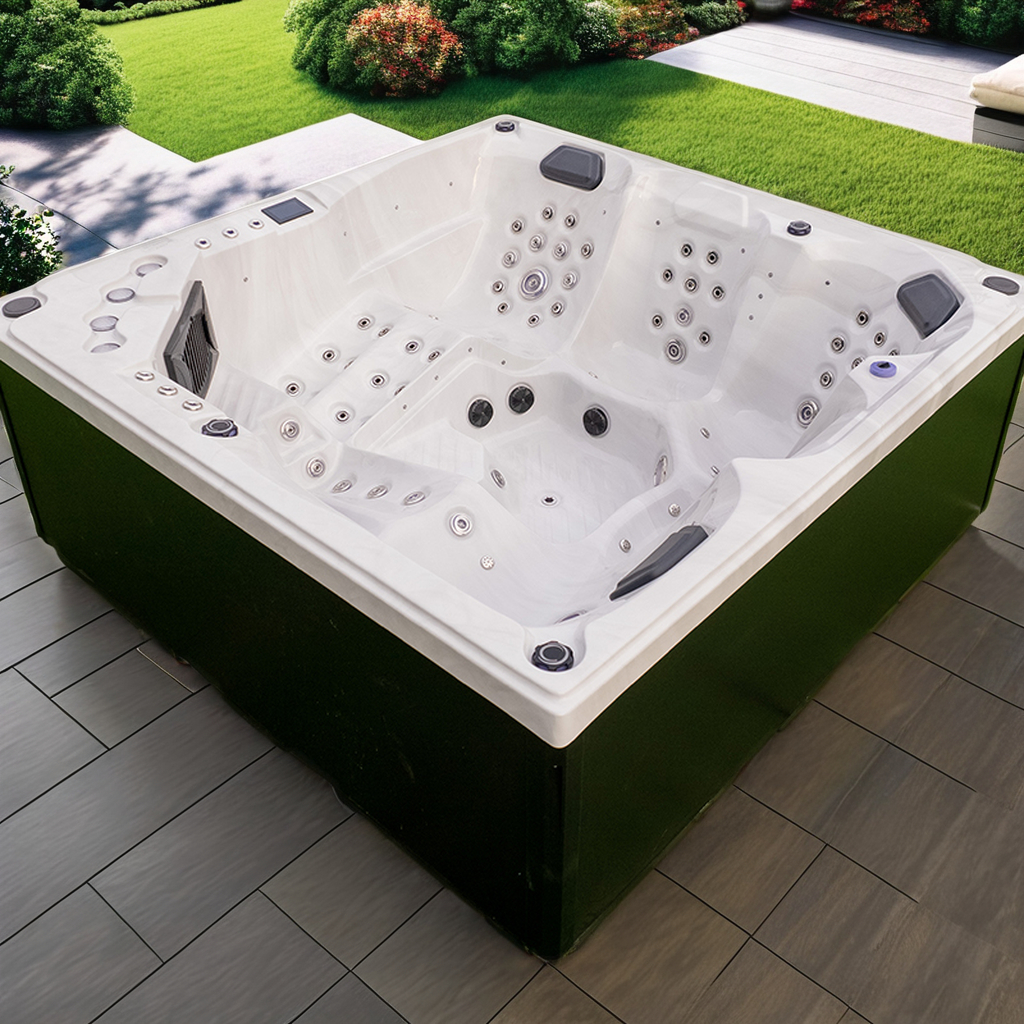
Long-term use of hard water or a lack of maintenance can lead to the buildup of calcium and magnesium minerals, limescale, and biofilm inside the jets. As the jet passages narrow, water pressure naturally decreases. Some rotating jets may also fail to spin due to debris obstruction; therefore, periodic removal and cleaning of the jets are recommended.
5. Damaged Pump Impeller
The massage pump impeller converts mechanical energy into water pressure. If the impeller is worn, broken, or entangled with debris, the motor may still run, but the jets will fail to generate sufficient pressure. Diagnosing this type of fault usually requires dismantling the pump to inspect the impeller and replacing the assembly if necessary.
6. Aging Pump Capacitor
For jacuzzi outdoor spa hot tubs that have been in use for years, an aging start capacitor is a common issue. As capacitor performance declines, the pump struggles to start—often emitting a humming sound without actually running—which results in the jets failing to operate entirely. Replacing the start capacitor usually restores normal function.
7. Control System or Relay Failure
Modern jacuzzi outdoor spa hot tubs typically use electronic control systems to manage massage pumps. If a relay fails, the control board output is abnormal, or there is a poor electrical connection, the massage pump will not receive the start signal, even when the user presses the jet activation button. Diagnosing issues with control voltage and circuit status typically requires a professional technician.
How can you troubleshoot and fix non-functioning jets in an outdoor hot tub?
When dealing with jet malfunctions, it is best to troubleshoot from the simplest to the most complex issues rather than immediately dismantling the equipment or replacing parts.
First, check if the water level in the hot tub is within the normal range. If the level is low, immediately add clean water and restart the massage system to see if the jets resume operation.
Next, check the control panel for error codes. If codes such as FLO, DR, OH, or other alerts appear, address the specific fault according to the manual; often, jets stop working because the system's safety mechanism has automatically shut down the massage pump.
Then, remove the filter to test the system. If the jets function normally after the filter cartridge is removed, the issue is likely a clogged filter, and the cartridge should be cleaned or replaced immediately.
If the jets still lack pressure after refilling, consider the possibility of an airlock. On some whirlpool hot tubs, you can bleed air by loosening the massage pump fitting; restart the unit once the air has escaped and a steady stream of water flows. Ensure the power is disconnected during this process and take precautions against hot water splashing.
If the above methods fail, verify whether the massage pump is actually starting. Under normal conditions, you should hear a steady running sound and feel distinct vibration. A humming sound without water flow suggests a damaged capacitor or a jammed impeller; a complete lack of sound indicates a need to inspect the power supply, circuitry, and control board.
To address clogged jets, remove the jet assembly and soak it in a specialized descaling agent for several hours, then use a soft brush to clear away internal deposits. Avoid using metal tools to force a blockage clear, as this could damage the jet's structure.
How can you prevent future jet malfunctions in your jacuzzi outdoor spa hot tub?
Proper maintenance is more effective than repair at preventing jet malfunctions. It is recommended to check the water level weekly to ensure the suction intake remains submerged; thoroughly clean the filter every two to four weeks to prevent increased circulation resistance; and perform a deep clean of the circulation lines every three to four months—ideally when changing the water—to remove any accumulated biofilm or mineral deposits. For users in areas with hard water, it is recommended to regularly use descaling products designed for outdoor hot tubs to minimize the buildup of calcium and magnesium deposits in the jets and piping. Additionally, maintain pH levels, total alkalinity, and sanitizer concentrations within the proper ranges; prolonged water quality imbalance not only promotes scale formation but also accelerates internal equipment corrosion.
When shutting down the outdoor whirlpool hot tub for winter, strictly follow the manufacturer's instructions for draining, winterizing, and maintenance to prevent residual water from freezing and damaging the jets, piping, or massage pumps. Furthermore, after every water change, ensure any airlocks are properly cleared to prevent trapped air from interfering with jet operation.
For commercial facilities, establish an equipment inspection protocol to regularly monitor pump operating current, jet pressure, circulation flow rates, and control system status. Preventive maintenance helps identify potential issues early and reduces the rate of unexpected breakdowns.
FAQ
The jets on my jacuzzi outdoor spa hot tub aren't spraying water at all; is the pump broken?
Not necessarily. While a faulty pump can cause the jets to stop working, issues such as low water levels, clogged filters, airlocks, control system safety cut-offs, or power supply problems can also prevent the jets from spraying. We recommend troubleshooting step-by-step—from the simplest to the most complex issues—before deciding whether the pump needs repair or replacement.
Only a few jets on my jacuzzi outdoor spa hot tub aren't working while the others function normally; what is the cause?
This usually indicates that the main circulation system is operating correctly. The problem is more likely localized to specific jets, diverter valves, or branch pipes—such as blockages or the accumulation of scale and biofilm inside the jets. Start by checking if the malfunctioning jets can be removed and cleaned.
Why do the jets suddenly lose pressure after I change the water in my jacuzzi outdoor spa hot tub?
This is usually caused by an airlock. During refilling, air can enter the massage pump or circulation lines, obstructing normal water intake. Bleeding the air according to the equipment manual—or having a professional release the trapped air—will usually restore normal jet operation.
How often should I clean the jets on my jacuzzi outdoor spa hot tub?
It is recommended to perform a deep cleaning of the jets every 3 to 4 months, coinciding with the water change. If the local water supply is hard or the jacuzzi outdoor spa hot tub is used frequently, you may want to shorten the cleaning interval to once every two months to minimize mineral deposits and biofilm formation.
How can you reduce the likelihood of jet malfunctions in an outdoor whirlpool hot tub?
Maintaining a stable water level, regularly cleaning the filter, changing the water on schedule, balancing water chemistry, periodically removing biofilm from the plumbing, avoiding prolonged pump operation without water flow, and performing seasonal maintenance as recommended by the manufacturer are all effective measures to reduce jet failure rates and extend the hot tub's lifespan.