


Do outdoor spa hot tub jets shut off automatically?
2026-07-02 15:30Modern outdoor spa hot tubs have evolved far beyond simple vessels for hot water; they are now comprehensive systems integrating heating, circulation and filtration, hydrotherapy massage, and smart controls. In recent years, as consumer demand for wellness, home relaxation, and a high-quality outdoor lifestyle has grown, the functionality of these tubs has become increasingly intelligent. The jet system is a core feature that directly shapes the user's hydrotherapy experience. While buyers often focus on the number of jets, massage intensity, and spray patterns, a seemingly simple yet frequently asked question arises: do the jets shut off automatically?
For first-time owners, this question often stems from practical concerns. Some worry that prolonged jet operation might damage the motor or waste electricity, while others wonder why the jets stopped working even though they didn't manually turn them off. In reality, most modern outdoor spa hot tubs do feature an automatic shut-off function. However, this isn't governed by a single rule; rather, it is determined by a combination of control mechanisms—including timers, temperature protection, circulation mode switching, energy-saving strategies, and fault protection protocols. In other words, if your jets shut off automatically, it doesn't necessarily indicate a malfunction; often, it simply means the system is correctly executing its protective routines.
So, why do jacuzzi outdoor spa tub jets shut off automatically? Which scenarios are normal, and which might signal a problem? Does the automatic shut-off feature enhance the experience or restrict usage? This article provides a comprehensive analysis of the reasons behind and the significance of this feature, covering technical principles, usage scenarios, energy-saving logic, and maintenance considerations.
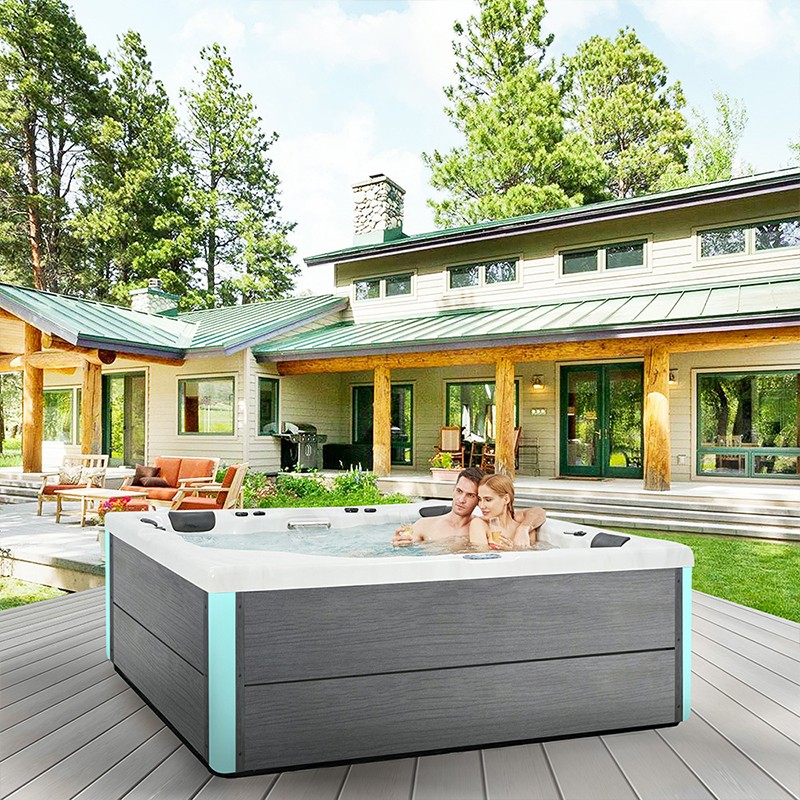
How do outdoor spa hot tub jets work?
Jets do not operate in isolation; they rely on the entire water circulation system to function. Generally, a complete jet system consists of a circulation pump, a massage pump, air control valves, plumbing, and the jet units themselves.
When the user activates the massage mode, the pump runs at high speed, driving water from the tub through the plumbing to the jets. Meanwhile, an air-mixing system introduces air into the water flow, creating a more powerful jet impact and an aerated bubble effect. The nozzles then direct this high-pressure stream onto areas such as the shoulders, back, waist, and legs, providing a massage-like sensation. High-end jacuzzi outdoor spa tubs typically feature between 20 and over 100 jets, offering various massage modes—such as straight, rotating, pulsating, and air-bubble jets.
In terms of operation, the jets are high-power components. The massage pumps in standard residential outdoor spa hot tubs usually range from 1.5 to 3 horsepower, with some high-end models exceeding 4 horsepower. Consequently, activating the jets leads to a significant increase in the unit's overall power consumption. Data shows that while a jacuzzi outdoor spa tub in standby/heating mode might consume only 1 to 3 kWh, instantaneous power consumption can rise to 4 to 7 kWh when dual pumps operate the jets at full capacity. Therefore, from an energy management perspective, running the jets continuously without restriction is impractical.
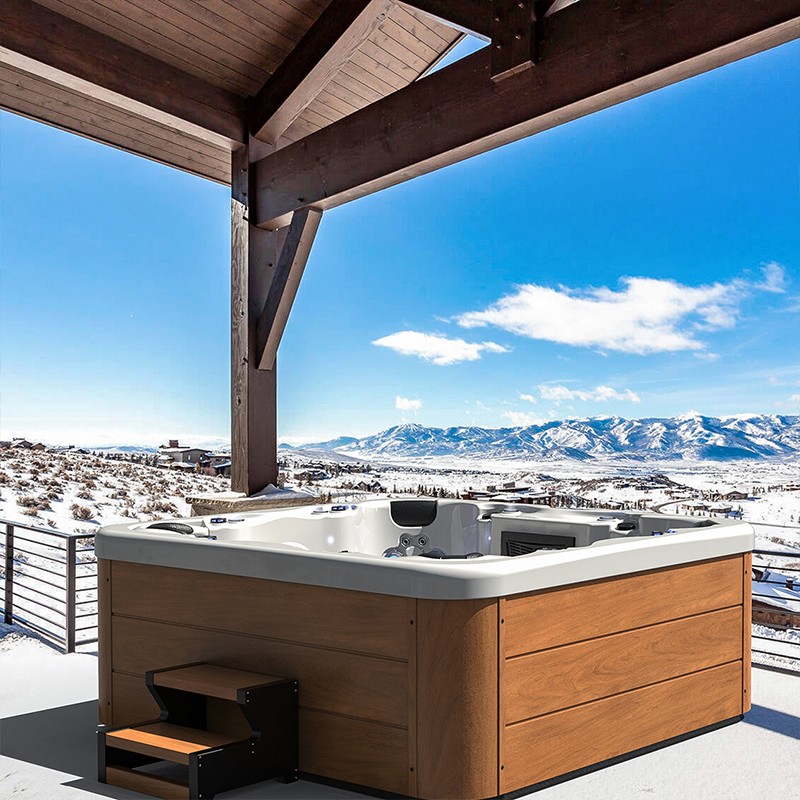
Do outdoor spa hot tub jets shut off automatically?
Yes, automatic shut-off for jets is a standard feature in most modern outdoor spa hot tubs.
Most brands configure a default automatic shut-off time for the jets—typically 15, 20, or 30 minutes. This means that even if a user manually activates the jets, the system will automatically deactivate the massage function once the preset duration elapses, returning the unit to its standard circulation or standby mode.
Why are jacuzzi outdoor spa tub jets designed this way?
The reasons go beyond energy conservation; they also involve equipment protection, user safety, and system longevity.
First, automatic shut-off prevents motor overload. Operating the massage pumps at full jet capacity requires sustained high-speed rotation, which generates significant heat. Prolonged operation causes the temperature of the motor windings to rise continuously. Although modern spa hot tub pumps are designed for heat dissipation, sustained high loads accelerate mechanical wear. Manufacturer test data indicates that running massage pumps beyond recommended time limits for extended periods can increase bearing wear rates by 20% to 35%. Thus, the automatic shut-off mechanism effectively extends the lifespan of the pump system. Secondly, the automatic shut-off feature helps protect the user. When using a jacuzzi outdoor spa tub, people often become so immersed in the relaxing environment that they lose track of time. Prolonged exposure to high-intensity jet massage can lead to localized muscle fatigue, skin irritation, or even mild dehydration. This is particularly relevant in water temperatures of 38°C to 40°C, where the body's core temperature gradually rises. If the jets run for an extended period, the resulting accelerated blood circulation can place additional strain on the body. Automatic shut-off helps prevent such overuse.
Why do outdoor hot tub jets sometimes shut off automatically after just a few minutes?
Some users may notice that their spa hot tub jets shut off after only a few minutes, rather than running for the full 20-minute cycle. This does not necessarily indicate a malfunction; it may simply be a result of the system's operating logic.
One common reason is thermal protection. Outdoor spa hot tubs are typically equipped with temperature sensors that monitor the heater and pump systems in real-time. If the control system detects an abnormal rise in pump temperature, it may shut off the jets early to prevent heat-related damage.
For instance, if the filter is clogged, water intake is insufficient, or circulation efficiency drops, the load on the water pump increases. Increased load leads to higher motor temperatures. If the control board determines that the temperature is approaching a safety threshold, it may proactively shut off the jets. Many brands set this protection trigger temperature between 50°C and 70°C, depending on the specific pump model and control system design.
Another reason involves electrical protection mechanisms. Some outdoor spa hot tubs prioritize the stable operation of the heater and basic circulation system when household power supply is limited. If multiple high-power components—such as dual-pump jet systems, lighting, ozone sanitizers, and the heater—are activated simultaneously, the instantaneous current draw may approach the circuit's limit. To prevent a circuit breaker trip, the control system might automatically shut off some of the jet loads.
Automatic shut-off is a key component of energy-saving features in outdoor hot tubs
Modern outdoor spa hot tubs increasingly emphasize energy efficiency, and the automatic jet shut-off function is a crucial element of this design.
Industry energy consumption surveys indicate that while massage modes typically account for only 5% to 10% of a spa hot tub's total operating time, they can contribute to over 20% of its total electricity consumption. This is because massage pumps consume significantly more energy than standard circulation pumps. Consequently, without an automatic shut-off feature, many users might forget to turn off the jets after use, leading to significant, unnecessary energy waste.
Consider an outdoor spa hot tub with a dual-pump system, where the jets consume 5 kW of power at full capacity. If a user forgets to turn them off—resulting in an extra hour of operation—and this happens ten times a month, the wasted electricity from the jets alone could reach 50 kWh. Depending on local electricity rates, this can lead to a noticeable increase in costs.
An automatic shut-off mechanism significantly reduces this risk of waste by limiting the duration of a single operating cycle. This is why outdoor spa hot tubs with high energy-efficiency ratings almost always come equipped with an automatic shut-off function.

Does automatic shut-off mean the hot tub jets are broken?
When users notice the jets have stopped working, their first reaction is often to wonder if the unit is broken. In reality, this is not necessarily the case.
You can generally assess the situation this way: if the jets can be restarted within a few minutes of stopping and the water flow returns to normal, the system has likely simply executed its standard automatic shut-off logic. There is no need to worry in this scenario.
However, you may need to inspect the equipment if the following issues occur: the jets shut off frequently and cannot be restarted; water flow is noticeably weak after starting; the pump makes abnormal noises; an error code appears on the control panel; or the water temperature fluctuates abnormally. These symptoms could indicate a clogged filtration system, an aging pump, a malfunctioning air control valve, or a faulty control board.
How can you tell the difference between a normal shut-off and a malfunction?
The simplest method is to check the default timer settings in the user manual. Most jacuzzi outdoor spa tubs clearly specify the automatic shut-off time for the jets. If the shut-off time matches the manual's specifications, it is likely normal behavior. If the duration is significantly shorter than the official setting, further inspection of the system is required.
Can individual jets on a jacuzzi outdoor spa tub be turned off?
Beyond the automatic shut-off for the entire jet system, many users also wonder if individual jets can be turned off separately.
The answer depends on the specific spa hot tub model. Mid-to-high-end models usually support individual jet adjustment; users can rotate the outer ring of the jet to control its activation and water pressure intensity. This design offers two advantages: first, it allows users to customize the massage area based on their physical needs; second, it enables water pressure to be concentrated on a smaller number of jets, thereby increasing the intensity of the massage in specific areas. For instance, if a user wishes to target only the lower back, they can deactivate the shoulder and leg jets, thereby concentrating greater water pressure on the lumbar jets. This is a key feature distinguishing high-end jacuzzi outdoor spa tubs from entry-level models.
How will the automatic shut-off function for jacuzzi outdoor spa tub jets evolve?
With the advancement of smart home technology, the automatic shut-off mechanisms for spa hot tub jets will become increasingly intelligent, moving beyond simple countdown timers.
Future systems may dynamically adjust operations based on user habits, changes in body temperature, real-time power consumption, and usage patterns. For example, an AI control system could recognize that a user typically finishes their massage after 15 minutes and automatically optimize the shut-off time. Alternatively, it might dynamically adjust jet intensity based on changes in the user's thermal load rather than simply turning the jets off.
Some premium brands have already begun implementing such smart logic. For instance, a control system might automatically reduce jet output power 10 minutes into a session—gradually stepping down from 100% to 60%—to provide a smoother, more comfortable experience. This signifies a shift for outdoor spa hot tubs from simple "on/off" operation to an era of intelligent, adaptive functionality.
FAQ
1. How long does it usually take for outdoor spa hot tub jets to shut off automatically?
Most products have a default setting of 15 to 30 minutes, depending on the brand and control system.
2. Can the jets be turned back on after automatically shutting off?
Yes, usually—provided the system hasn't entered protection mode or encountered a malfunction.
3. Does the automatic shut-off affect the massage experience?
Generally, no. Most users satisfy their primary massage needs within 15 to 20 minutes.
4. Why do my jets shut off after just a few minutes?
This could be due to overheat protection, a clogged filter, current limitations, or a system malfunction.
5. Is it possible to turn off individual jets?
Some mid-to-high-end jacuzzi outdoor spa tubs allow for the independent adjustment or deactivation of individual jets.