


Can I Use Spa Hot Tub Water to Water My Garden?
2026-04-07 15:35Once a whirlpool spa hot tub has been installed in a home or courtyard, regular water changes become an essential part of its maintenance. Whenever a large volume of water is drained, many users are faced with a very practical question:
Can the water from a spa hot tub be used directly to water the garden?
From the perspective of water conservation and eco-friendly reuse, this idea seems perfectly reasonable. However, the water in a whirlpool spa hot tub is not exactly the same as ordinary tap water or rainwater; it typically contains various water-treatment additives and substances generated during use.
Therefore, this question cannot be answered with a simple "yes" or "no." Instead, it requires a professional analysis that considers multiple factors, such as water composition, plant tolerance, and specific usage conditions.
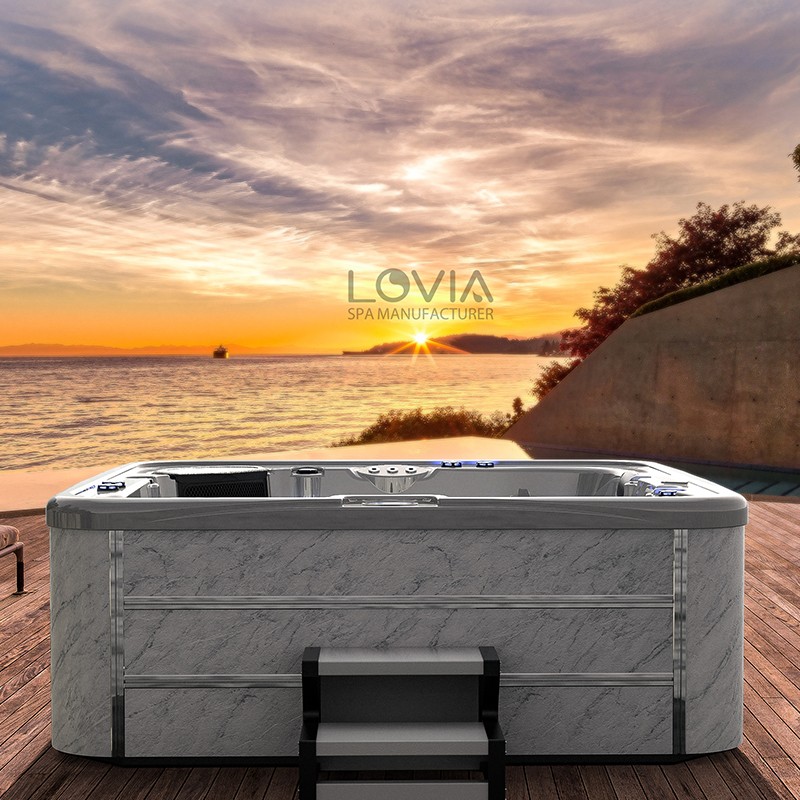
How Does Spa Hot Tub Water Differ from Ordinary Water?
To determine whether spa hot tub water is suitable for watering plants, one must first clarify a core issue: What exactly is the difference between water from a spa hot tub and ordinary water?
Basic Characteristics of Spa Hot Tub Water
The water in a spa hot tub typically possesses the following characteristics:
•It has undergone chemical disinfection treatment.
•Its temperature is higher than ambient temperature.
•It has been continuously circulated and reused over an extended period.
•It may contain dissolved solids.
These characteristics establish that the water in a whirlpool spa hot tub is not a "natural water body," but rather a type of functional water that has been artificially managed and treated.
What Ingredients Does Spa Hot Tub Water Typically Contain?
This is the crucial factor in determining whether the water is suitable for watering plants.
Common water-treatment ingredients include:
•Disinfectant residues
•Chemicals used to balance water chemistry
•Minerals dissolved in the water
The presence of these ingredients is intended to ensure that the whirlpool spa hot tub remains clean and safe for human use; they are not designed to support plant growth.

Can Water Containing Disinfectants Harm Plants?
Plant Sensitivity to Water Quality
Most garden plants—particularly ornamental plants and vegetables—are relatively sensitive to the chemical composition of water. While the disinfectants found in spa hot tubs are safe for humans within reasonable limits, they can potentially cause the following issues for plants:
•Leaf burn
•Root irritation
•Stunted growth
Therefore, if the water from a spa hot tub still contains significant levels of disinfectant residue, it is not suitable for direct use in watering a garden.
What are the potential effects of using water from a spa hot tub that is too hot?
Temperature is a critical factor.
Freshly drained water from a whirlpool spa hot tub is typically at a temperature significantly higher than the ambient environment.
The potential impacts of high-temperature water on plants include:
•Damage to root systems
•Alteration of the soil's microbial environment
•Causing short-term stress to the plants
Therefore—even setting aside the issue of chemical composition—high temperature alone makes this water unsuitable for direct use in watering plants.
Can the water from a spa hot tub be used if it has cooled down?
This is a follow-up question that many people ask.
Is the water "safer" once it has cooled?
While allowing the water to cool does indeed eliminate the risk of heat-related damage, it is important to note that:
•A drop in temperature does not mean the chemical components disappear.
•Disinfectants do not automatically vanish simply because the water cools down.
•Dissolved substances within the water remain present.
In other words, even after cooling, water from a whirlpool spa hot tub may still have an adverse effect on plants.
Which plants are suitable for watering with water from a spa hot tub?
Under certain conditions, water from a whirlpool spa hot tub is not entirely unusable.
Relatively tolerant plant types include:
•Mature woody plants (trees and shrubs)
•Shrubs that are not particularly sensitive to water quality
•Certain plants that are tolerant of salinity and environmental fluctuations
However, even in these cases, one should adhere to the principles of "limited use, dilution, and intermittent application."
Which plants should *not* be watered with water from a spa hot tub?
You should strictly avoid using water from a spa hot tub to water the following types of plants:
•Seedlings or newly planted specimens
•Flowers that are sensitive to water quality
•Edible vegetables and herbs
These plants have a low tolerance for the chemical components and salts found in the water; using whirlpool spa hot tub water on them could disrupt their normal growth.

Can water from a spa hot tub be used after being diluted?
This is a relatively sensible approach.
What is the benefit of dilution?
By mixing the spa water with ordinary tap water, you can:
•Lower the concentration of disinfectants
•Reduce potential irritation to the plants
•Improve the water's overall suitability for plants
However, it must be emphasized that dilution does not completely eliminate the risks; it merely mitigates the potential negative effects to a certain extent.
What problems might arise from using spa hot tub water to water plants over the long term?
If water from a whirlpool spa hot tub is used to irrigate a garden frequently and over a prolonged period, it may lead to the following potential hazards:
•Accumulation of salts in the soil
•Disruption of the microbial environment
•Reduced nutrient absorption capacity of plant root systems
These issues often do not manifest immediately but tend to accumulate gradually over time.
From a maintenance perspective, how should spa hot tub water ideally be disposed of?
From a professional maintenance standpoint, the primary objectives of changing the water in a spa hot tub are:
•To eliminate contaminants present in the old water
•To reset and restore the water quality environment
•To ensure the proper and safe operation of the equipment
Therefore, draining the water is, in itself, a "maintenance procedure" and is not designed with the intention of subsequent reuse.
So, can spa hot tub water actually be used to water a garden?
Taking all factors into account, the answer to this question can be summarized as follows:
•It is generally not recommended to use water directly from a whirlpool spa hot tub to water a garden.
•If you must use it, ensure that the water has cooled down completely.
•Limit its use to small quantities and apply it only to non-sensitive plants.
•Avoid using it frequently or over extended periods.
Fundamentally, water from a whirlpool spa hot tub remains "functional water"—specifically treated for a technical purpose—rather than a natural source of irrigation water.
How can we approach the reuse of spa hot tub water in a more rational manner?
Considering environmental sustainability is a commendable goal, but such efforts should be grounded in scientific understanding.
Water from a spa hot tub is best viewed as:
•Maintenance water that requires proper and responsible disposal
•Rather than a standard source of water for gardening purposes
Whenever conditions permit, utilizing harvested rainwater or standard tap water for garden irrigation remains the safer and more reliable choice.

Can I use water from my spa hot tub to water my garden?
A summary of the key points discussed:
•Water from a spa hot tub is not equivalent to ordinary water.
•It contains disinfectants and dissolved solids.
•Both its high temperature and chemical composition can adversely affect plants.
•It is not recommended for use as a regular source of irrigation water.
If you do choose to utilize it, you should proceed with extreme caution and remain fully aware of its potential consequences.