


Can a spa hot tub be overfilled?
2026-01-20 15:35When using a whirlpool spa hot tub, many people focus on water temperature, disinfectant, or the filtration system, neglecting a seemingly simple but crucial issue—the water level. Many users believe, "The more water, the more comfortable the soak," but in reality, a spa hot tub is not a device that can be filled with unlimited water.
So, can a whirlpool spa hot tub be overfilled?
What problems arise if too much water is added?
Why do manufacturers always emphasize the "water level line" rather than "fill it up"?
To truly understand this issue, a systematic analysis of the spa hot tub's structural design, working principle, and dynamic changes in water volume is necessary.
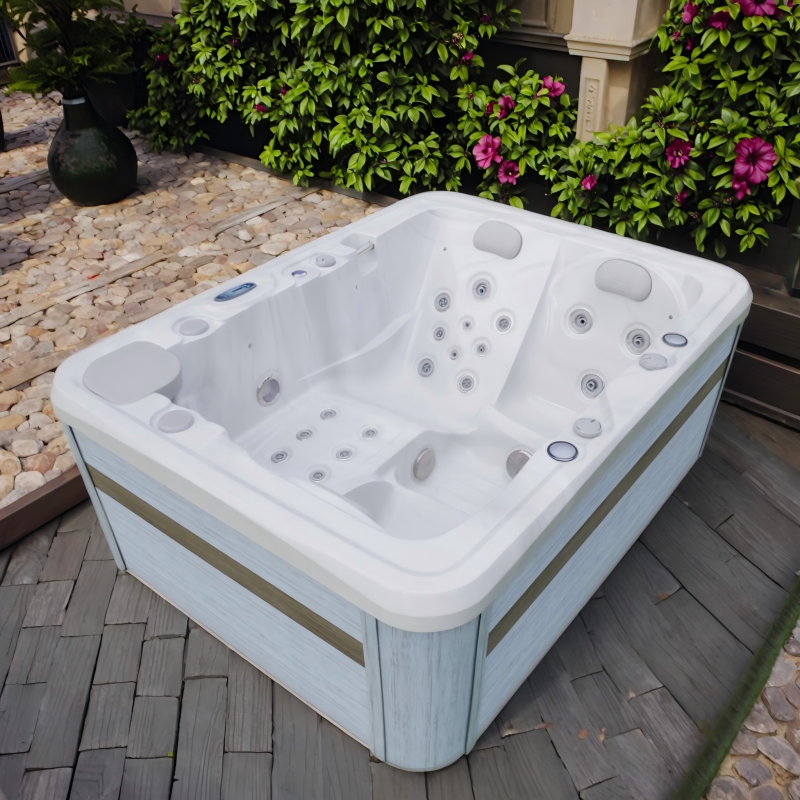
Does a "suitable water level" exist for a spa hot tub?
The answer is yes, and it is one of the fundamental elements in whirlpool spa hot tub design.
Every spa hot tub is manufactured with a recommended water level range set based on the following factors:
• Inner tank height and overflow structure
• Jets installation position
• Return inlet and filter height
• Allowed space for water level rise after a person enters
Therefore, spa hot tubs are not designed to be "full," but rather to maintain a stable water level during use.
Why can't whirlpool spa hot tubs be filled to the brim?
From a physics perspective, the reason is quite intuitive.
As your core explanation points out:
If a spa hot tub is filled to the brim, even if only one person enters, the water will overflow.
This is because the water level in a whirlpool spa hot tub in a static state differs significantly from the water level during actual use.
Key reasons for water level changes include:
• Drainage effect after a person enters
• Increased water temperature leading to volume expansion
• Water turbulence during nozzle operation
If water is added to near the top of the tub when no one is present, overflow is almost inevitable during use.
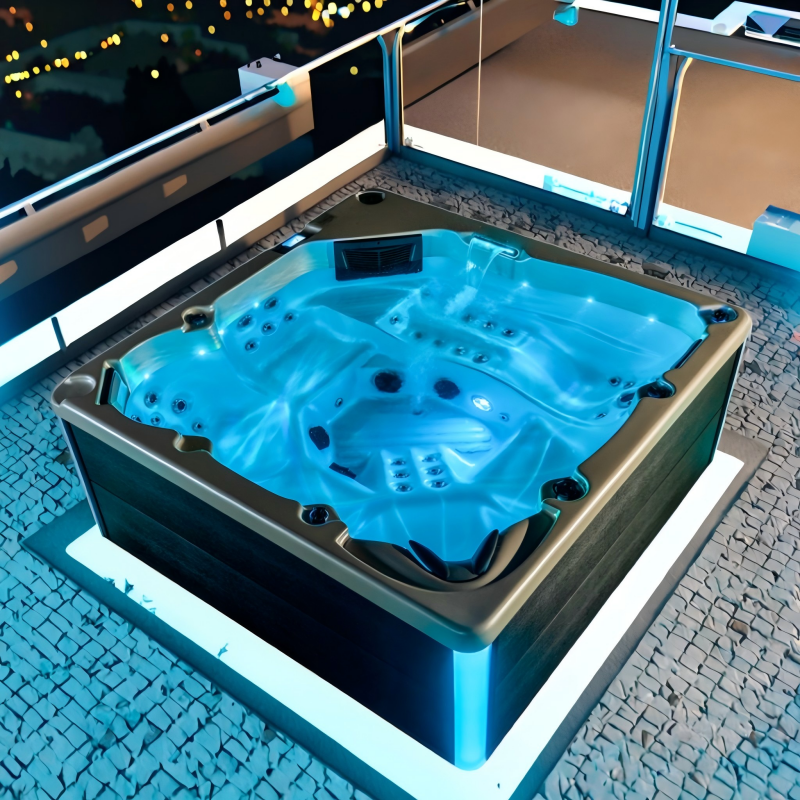
What is the most direct problem with overfilling a spa hot tub?
Overflow risk is the primary concern.
When a spa hot tub is overfilled, the most obvious and frequent problem is overflow.
Overflow is not simply a matter of "the floor is wet"; it often means:
• Water continuously flowing from the edge of the tub
• Uncontrolled water volume reduction
• Unstable water level
Over time, repeated overflows can make the overall operation of the whirlpool spa hot tub unstable.
Will overfilling affect the spa hot tub's nozzle system?
This is an often overlooked but crucial question.
Nozzle height is closely related to water level.
Spa hot tub nozzles are typically designed within a specific height range to ensure:
• Stable water-air mixing
• Impact force conforming to design parameters
• No air intake or turbulence formation
When the water level is significantly higher than the design range, the following may occur:
• Abnormal water flow direction
• Uneven spraying effect
• Localized water pressure variations
While these changes may not immediately damage the equipment, they will significantly affect the user experience and water flow stability of the spa hot tub.
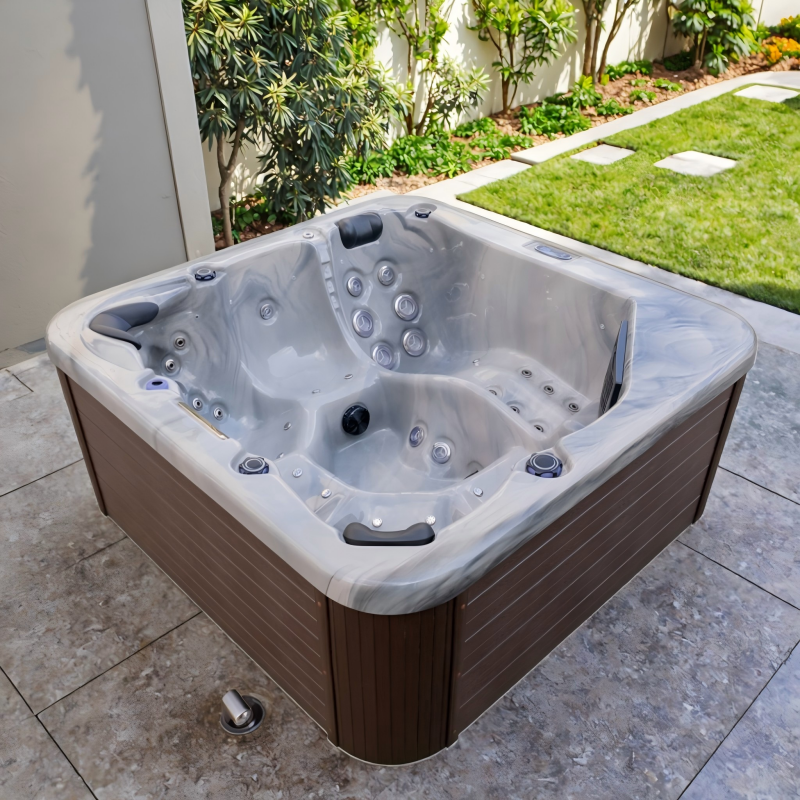
Will overfilling the spa hot tub affect the filtration system?
Yes, and this effect is often indirect but continuous.
The filtration system is highly sensitive to water level.
The filtration system of a spa hot tub relies on a stable water level to achieve:
• Uniform water intake
• Continuous circulation
• Effective impurity trapping
When the water level is too high, the following problems may occur:
• Changes in the return water path
• Reduced surface water circulation efficiency
• Increased difficulty in drawing floating contaminants into the filter
From a long-term operational perspective, this reduces the overall water quality control capability of the whirlpool spa hot tub.
Does overfilling affect the temperature control performance of the spa hot tub?
The answer is: It will have an indirect impact.
When the spa hot tub frequently overflows, it often means:
• Continuously changing actual water volume
• Newly added cold water entering the system
• The heating system needs repeated adjustments
This makes water temperature control unstable, manifesting as:
• Increased heating time
• Increased temperature fluctuations
• Difficulty in maintaining the set temperature
Although the problem may seem unrelated to the water level on the surface, the root cause is still the uncontrolled water volume caused by overfilling.
What is the practical significance of the water level line in a spa hot tub?
Many people see the water level markings on the inside of the spa hot tub but don't truly understand their purpose.
The water level markings are not "suggestions," but rather "operating boundaries."
The water level markings are based on the following calculations:
• Drainage volume at maximum number of users
• Thermal expansion space of the water
• Water level fluctuations caused by nozzle operation
Therefore, the water level markings are essentially one of the safe operating boundaries of the spa hot tub, not a dispensable indicator.
Why doesn't adding more water make the spa hot tub more comfortable?
This is a common misconception.
In fact, the comfort of a spa hot tub depends primarily on:
• Water flow design
• Temperature stability
• Seat and nozzle compatibility
Not simply the amount of water.
When the water level is too high, it may cause:
• Excessive water surface agitation
• Forced adjustment of seating posture
• Unnatural water flow direction
These all reduce the user experience originally designed for the spa hot tub.
How to determine if the spa hot tub is overfilled?
Here are some indicators to check:
• Is the water level close to or above the top edge of the tub?
• Is the water level significantly higher when no one is in use?
• Does it overflow even with slight entry during use?
If all of the above are present, it's generally safe to assume the whirlpool spa hot tub is overfilled.
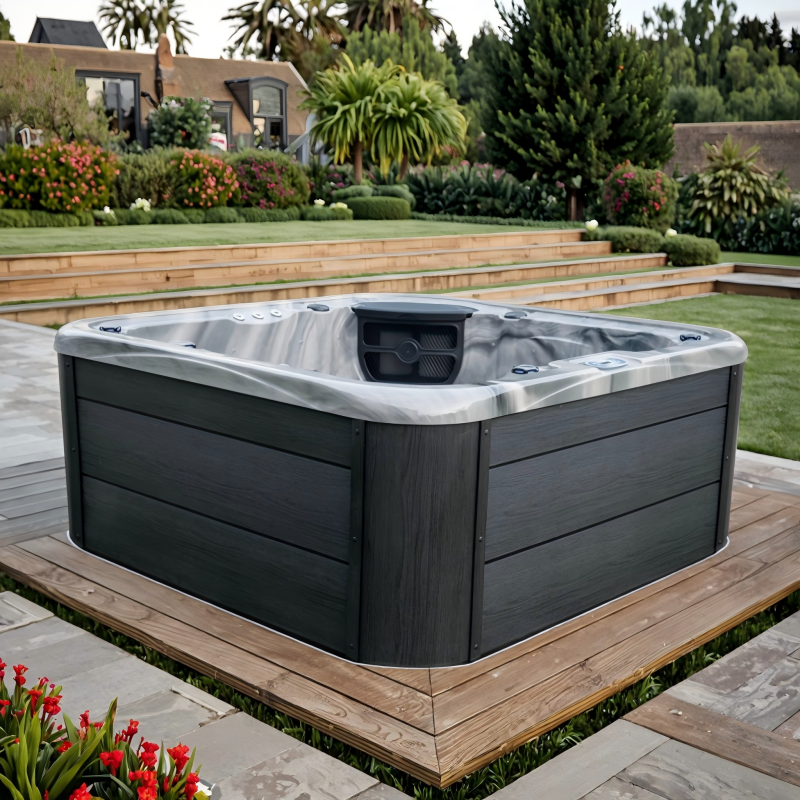
What are the correct principles for filling a spa hot tub?
While there are differences between models, the general principles are largely consistent:
• Fill according to the water level line on the inner wall.
• Ensure the nozzle is completely covered by water.
• Allow room for the water level to rise if someone enters.
The core goal of this principle is singular: to keep the spa hot tub stable when in use, rather than appearing full when empty.
Can a whirlpool spa hot tub be overfilled?
A spa hot tub should not be overfilled.
Adding too much water to a spa hot tub can indeed cause overflow, and the reason is very straightforward—the water level will immediately rise and overflow as soon as someone enters.
In addition to the above, overfilling the spa hot tub may also:
• Affect the nozzle's performance
• Interfere with the filtration and circulation system
• Reduce temperature control stability
• Increase the difficulty of daily maintenance
The truly correct approach is to always keep the whirlpool spa hot tub within the designed water level range, rather than pursuing a superficial "more water".
How do LOVIA SPA’s swim spas benefit fitness-oriented customers?
LOVIA SPA’s swim spas are engineered to combine hydrotherapy with exercise, offering strong current systems suitable for resistance training, swimming practice, and rehabilitation. These models are popular with gyms, wellness centers, and homeowners seeking a compact fitness option. Buyers can Purchase these units Wholesale at favorable Prices and add them to their product portfolio.
Our Factory provides custom options such as LED lighting, control upgrades, and insulation enhancements. With balanced design and High quality components, LOVIA SPA swim spas deliver comfort and consistent performance.