


What Effect Does Calcium Have on Black Acrylic Spa Hot Tubs?
2026-03-07 15:35Black acrylic spa hot tubs are increasingly popular in homes, hotels, and vacation homes due to their modern look, aesthetics, and high gloss.
However, with increased usage, changes in local water quality, or inadequate maintenance, many users find white spots, roughness, or dullness appearing on the surface of their bathtubs. These changes are usually caused by calcium deposits.
So, what effect does calcium have on black acrylic spa hot tubs? Why are these problems more apparent on black surfaces? How can they be avoided or treated?
This article will provide an in-depth analysis from a professional perspective of the relationship, effects, causes, and maintenance methods of calcium and acrylic, helping consumers correctly understand the key points of acrylic spa hot tub care.
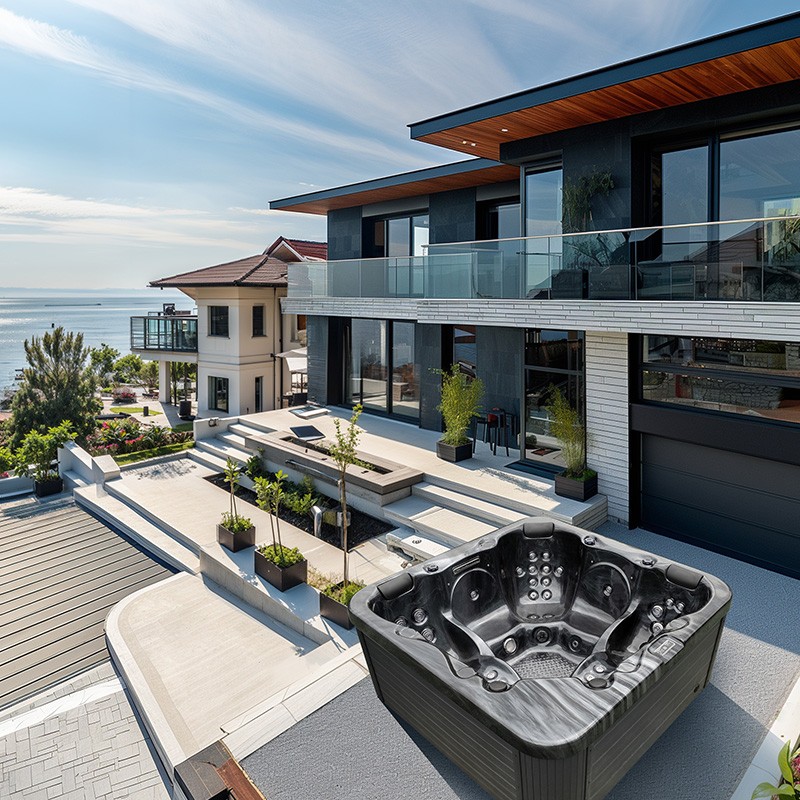
Why Does Calcium Show More Prominently on Black Acrylic Spa Hot Tubs?
1. The Impact of Color on Visual Effects
A black surface highlights every watermark, so the same amount of calcium residue will be more noticeable on a black acrylic spa hot tub than on a white tub. Trace minerals also easily create contrast under light, making spots appear more prominent.
2. High Gloss on Black Surfaces
High-gloss acrylic is sensitive to water stains and hard water marks. Once a calcium film forms on the surface, it weakens the gloss effect, resulting in a dull or uneven reflective surface.
3. High Calcium and Magnesium Content in Water Makes It Easier to Leave Marks
Water from hard water areas contains higher levels of calcium carbonate and magnesium carbonate. Prolonged contact will cause the black acrylic surface to lose its original luster.
Therefore, black acrylic spa hot tubs are not "more easily damaged," but rather "more prone to showing" calcium marks.
What effect does calcium have on black acrylic spa hot tubs?
To thoroughly answer this core question, we analyze it from three aspects: surface effect, the material itself, and long-term use.
Does calcium change the surface gloss of acrylic spa hot tubs?
The answer is yes. When calcium deposits on the surface of a black acrylic spa hot tub, the following issues may occur:
1. White spots or deposit rings appear on the surface
Calcium adheres to the acrylic surface in the form of white spots, watermarks, or thin films, especially around drain outlets, nozzles, or water level lines.
2. Reduced gloss and uneven reflection
Acrylic's most attractive feature is its high-gloss, mirror-like effect. However, calcium deposits form fine particles that block light, making the surface dull. This is especially noticeable on black surfaces.
3. Rough or sticky feel
Calcium is not a smooth material; it makes the originally smooth and delicate acrylic surface feel rough, affecting the user experience.
4. Localized "matte finish"
If calcium deposits are not removed over a long period, they will gradually form slight etching, resulting in localized matte finishes, which significantly affect the visual quality of the black acrylic spa hot tub.

Does calcium damage the material itself of the acrylic spa hot tub?
Many people worry that calcium deposits might cause acrylic layers to crack, corrode, or deform. The expert conclusions are as follows:
1. Calcium does not damage the acrylic structure
Calcium is a mineral deposit, non-corrosive, and will not cause chemical damage to the acrylic itself.
2. However, calcium can create a "false scratch" phenomenon
White dots may look like scratches, but they are actually illusions formed by mineral deposits.
3. Improper cleaning methods can cause real damage
Calcium itself does not damage the material, but using the following methods to remove it will cause actual damage:
• Using strong acids
• Using sandpaper or abrasive pads
• Using cleaners containing abrasive particles
• Scraping with metal tools
These methods will truly damage the acrylic surface, permanently damaging its shine.
4. Calcium deposits can mix with other substances
Minerals in hard water can combine with soap and grease to form "soap scum." This type of complex deposit can be more difficult to remove, indirectly affecting the bathtub surface.
Conclusion: Calcium itself does not corrode the acrylic material, but its deposits can affect the gloss and even induce damage due to improper cleaning methods.
How does calcium affect the long-term aesthetics of a black acrylic spa hot tub?
The appeal of a black acrylic spa hot tub lies in its mirror-like shine, premium texture, and overall visual effect. However, calcium deposits can have a long-term impact on its appearance.
Does calcium make a black acrylic spa hot tub dull?
Yes, especially in the following situations:
1. Long-term calcium buildup
Thick limescale will obscure the shine over time, making the bathtub surface look dirty, old, and dull.
2. Repeated wet and dry cycles
Each time you fill, use, and dry the tub, a thin layer of calcium film is left, gradually forming noticeable matte areas.
3. Calcium accelerates dirt adhesion
The surface of calcium deposits is not smooth; it easily attracts dust, soap molecules, and body oils, making the bathtub surface more difficult to clean.
Does calcium affect the user experience of a black acrylic spa hot tub?
The following situations may occur:
1. Rough surface affecting the feel
The originally smooth texture becomes noticeably rough after being covered by calcium deposits.
2. Scale buildup near the water nozzles
Calcium deposits around the nozzles can affect the smoothness of the water flow.
3. Yellowish-white clumps around the drain
This affects the visual appeal and may also lead to odor buildup.
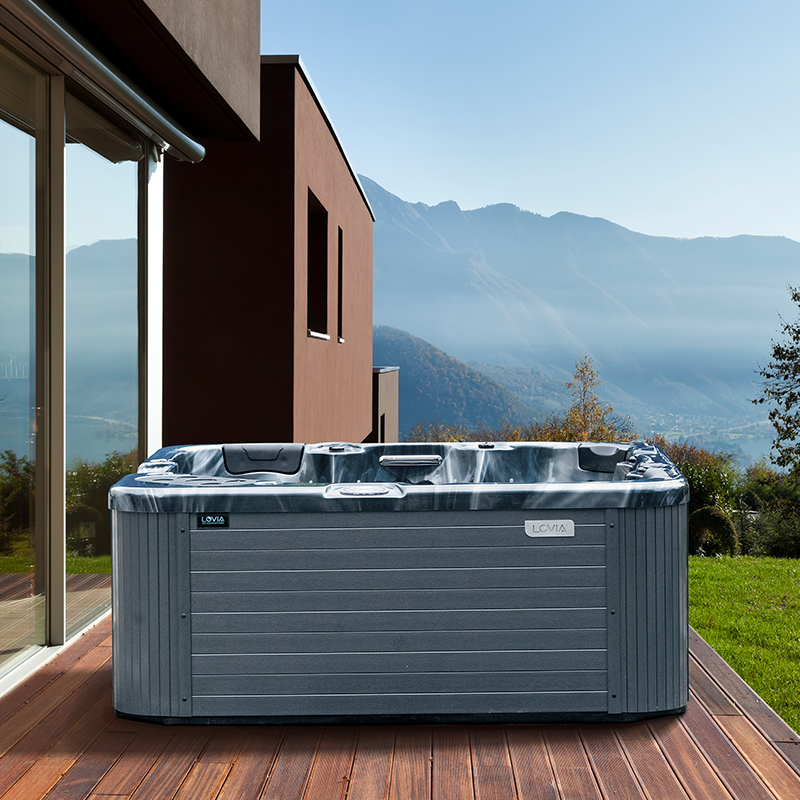
Why does calcium deposit occur on a black acrylic spa hot tub?
To avoid calcium buildup, we must understand its causes.
Why does hard water more easily form mineral deposits on an acrylic spa hot tub?
Water hardness mainly comes from calcium and magnesium ions. When water is heated, calcium and magnesium will:
1. precipitate from the solution
2. combine with carbonate ions to form white deposits
3. adhere to the surface of the bathtub, nozzles, and edges
The high contrast of a black surface makes the deposits particularly noticeable.
Does using hot water accelerate calcium formation?
Yes.
Because calcium carbonate precipitates more easily from water when heated, hot water bathtubs are more prone to calcium buildup than cold water bathtubs.
Do cleaning products affect calcium buildup?
Some cleaning agents (especially those containing soap) can form "soap scum" with hard water, making it harder to clean and more likely to adhere to black acrylic spa hot tubs.
Does calcium buildup cause acrylic spa hot tubs to discolor?
Acrylic itself doesn't easily discolor, but calcium buildup can cause visual misjudgment.
Why does calcium buildup make black acrylic appear "grayish"?
The reasons are as follows:
1. White deposits covering a black background create a strong contrast.
2. Reduced surface light reflection makes it appear faded.
3. Microscopic particles prevent the bathtub from having a mirror-like effect.
4. Improper cleaning causes scratches, increasing roughness.
However, this "grayish" appearance is usually not due to material discoloration, but rather a visual effect caused by deposit buildup.
How to avoid calcium buildup problems in black acrylic spa hot tubs?
The following methods can significantly reduce calcium buildup.
1. Use soft or filtered water
Lowering the calcium and magnesium content is the fundamental solution.
2. Dry the surface after each use
Wetness is a stage in the calcium formation process; keeping the surface dry will prevent scale buildup.
3. Use a neutral descaling agent regularly
A mild descaling agent effectively removes early deposits.
4. Avoid high-pH cleaners
High pH promotes deposit formation.
5. Keep nozzles and pipes clean
Reduce mineral buildup in circulating water.
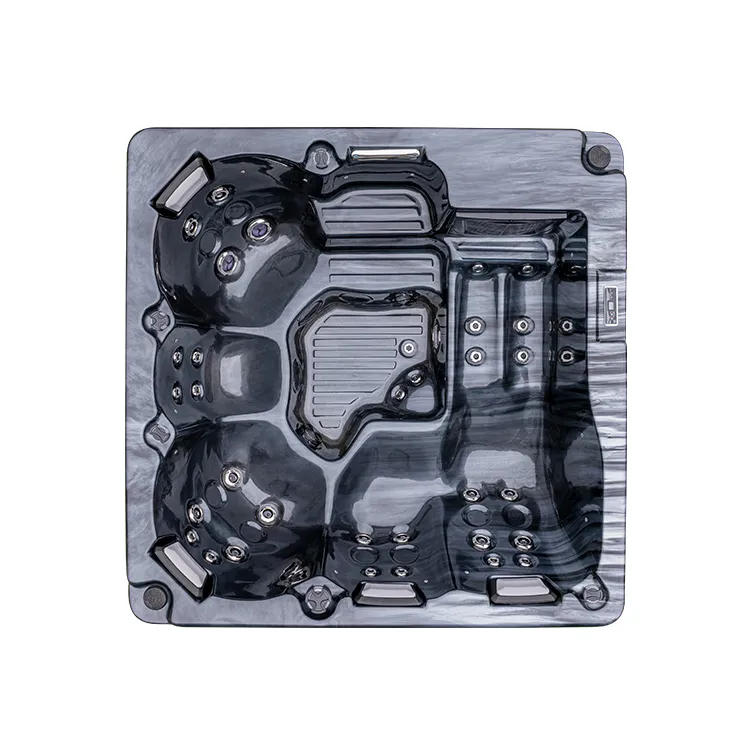
How to safely remove calcium from black acrylic spa hot tubs?
Key point: Avoid damaging the acrylic.
What methods can be used to remove calcium?
Suitable cleaning agents:
• Neutral acrylic cleaner
• Diluted white vinegar
• Non-abrasive soft cloth
• Sponge
• Rinse with warm water
Unsuitable cleaning agents:
• Strong acids (hydrochloric acid, sulfuric acid, etc.)
• Abrasive powder
• Steel wool
• Scraper
• Stain remover/abrasive products
Calcium deposits will significantly affect the appearance, but will not damage the acrylic itself.
In summary:
• Calcium will not corrode acrylic.
• However, it will severely affect the gloss and appearance of a black acrylic spa hot tub.
• Long-term neglect will cause the surface to become dull and rough.
• Incorrect cleaning methods are the main cause of damage.
• Keeping the surface dry and preventing limescale formation is key.
With proper maintenance, a black acrylic spa hot tub can still maintain a bright, high-end, and beautiful appearance.