


A Guide for Distributors on Bulk Purchasing Outdoor Spa Hot Tubs
2026-11-21 15:35As outdoor leisure lifestyles gain popularity, outdoor spa hot tubs have become an essential feature for villas, private gardens, hotels, resorts, and high-end residences. For distributors, importers, and wholesale buyers, outdoor hot tubs represent not only a high-value product but also a significant long-term market opportunity.
However, bulk purchasing outdoor spa hot tubs involves more than just comparing prices and selecting models. These products comprise various components, including acrylic shells, water pumps, heaters, massage jets, filtration systems, insulation structures, and electrical control systems. A supplier’s production capacity, product quality, lead times, and after-sales support directly impact a distributor’s profit margins and brand reputation.
So, how should a distributor select a reliable outdoor hot tub supplier? What key parameters should be evaluated during bulk procurement? And how can one manage procurement costs, mitigate inventory risks, and establish a stable, long-term supply chain?
This article addresses practical B2B procurement needs, providing a comprehensive guide for distributors of outdoor hot tubs.
A professional outdoor hot tub manufacturer must possess capabilities in R&D, production, quality testing, supply chain management, and export services—going well beyond merely providing price quotes. LOVIA has long specialized in the R&D and manufacturing of outdoor spa equipment. Leveraging a large-scale production system and extensive experience in the international market, LOVIA provides OEM/ODM solutions for outdoor hot tubs and swim spas to distributors worldwide.
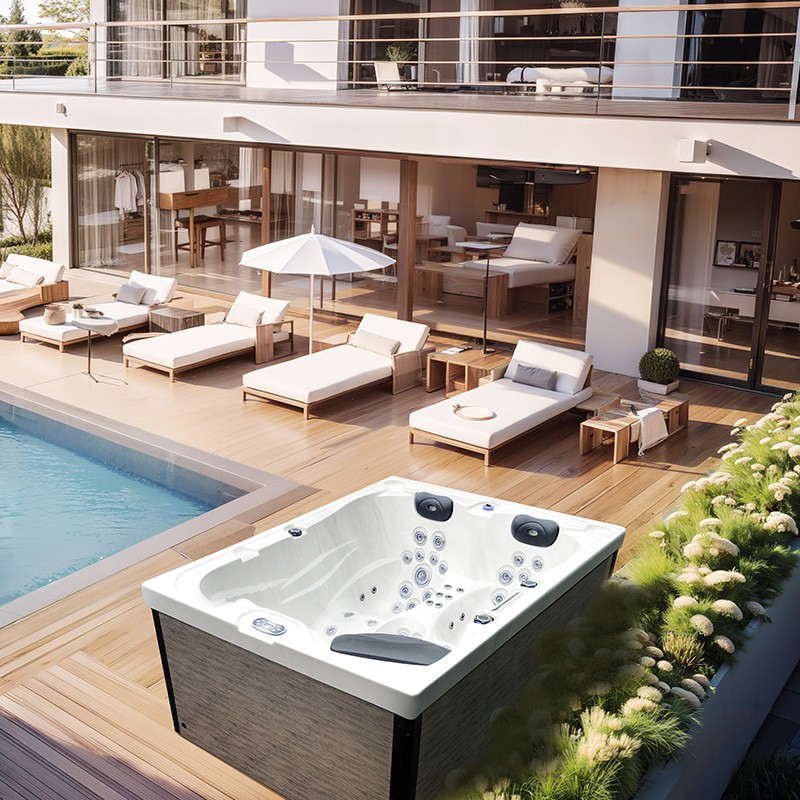
Why is caution necessary when purchasing outdoor hot tubs in bulk?
While procurement price is certainly important, product quality and supply chain stability are often even more critical.
Outdoor spa hot tubs are complex pieces of equipment; their production, transport, installation, and after-sales support require seamless coordination across multiple stages. Any issues on the supplier’s end can lead to product damage, order delays, customer complaints, and additional repair costs.
Currently, bulk procurement of outdoor hot tubs typically presents four main challenges:
1. Inconsistent product quality. Some suppliers may offer attractive price quotes, yet the materials and core components used can vary significantly between batches. Examples include inconsistent quality in acrylic surfaces, fluctuating performance in water pumps, or a risk of leaks at plumbing connections. These issues may not be readily apparent at the time of delivery, but they often emerge gradually during long-term use.
2. Uncertain delivery lead times. Distributors typically need to stock up in advance based on market demand and peak sales seasons. If a supplier’s production schedule is unstable, it can disrupt order fulfillment and sales planning.
3. Inadequate after-sales service. Over time, outdoor hot tubs may require the replacement of components such as filters, pumps, heaters, control panels, or massage jets. If a supplier cannot provide consistent access to spare parts and technical support, the distributor will face higher after-sales costs.
4. Non-compliance with target market requirements. Different countries and regions have varying standards for voltage, frequency, electrical safety, and product certification. Failing to verify local market standards prior to procurement can render products unsalable.
Therefore, when purchasing outdoor spa hot tubs in bulk, the priority should not be finding the lowest price, but rather identifying a supplier capable of providing consistent product quality and professional service over the long term.

Define Your Target Market and Product Positioning Before Bulk Purchasing Outdoor Hot Tubs
Before contacting suppliers, distributors should gain a clear understanding of their target customers' specific needs. Preferences regarding product features, dimensions, and pricing vary significantly across different markets.
(1) Residential Market: Focuses primarily on outdoor spa hot tubs designed for 2–3, 4–5, or 6+ people. Consumers in this segment prioritize seating comfort, massage functionality, thermal insulation, and price.
(2) High-End Villa Market: Customers here typically place greater emphasis on aesthetics, acrylic color options, LED lighting, massage configurations, and customization services. Distributors should consider mid-to-high-end products that highlight superior design and user experience.
(3) Hospitality (Hotels & Resorts) Market: These clients prioritize equipment durability, operational stability, ease of maintenance, and rapid after-sales response. Procurement should focus on suppliers with mature production capabilities and a reliable supply of spare parts.
It is advisable for distributors to curate a product portfolio—spanning entry-level, mid-range, and high-end models—tailored to their target market, rather than purchasing an excessive quantity of similar models. This approach allows for broader coverage of diverse customer segments while minimizing inventory pressure.
How to Choose a Reliable Outdoor Hot Tub Supplier?
Selecting the right supplier is the most critical step in the bulk procurement process. It is recommended to evaluate potential partners based on the following five criteria.
1. Verify the Supplier’s Production Capacity
First, determine whether the supplier is a manufacturer or a trading company. Manufacturers typically have direct control over product design, raw material procurement, production, and quality inspection, whereas trading companies may offer a broader range of products and export services.
Regardless of the business model, you should always verify the actual supply chain.
Request that the supplier provide their factory address, photos of the production workshop, business credentials, details on production equipment, and examples of past deliveries. If feasible, arrange an on-site factory visit or a third-party factory audit.
Additionally, inquire about their monthly production capacity, current order volume, and production arrangements for peak seasons. Do not rely solely on the annual production capacity claimed by the supplier to gauge their actual delivery capability.
2. Examine Core Materials and Components
The quality of an outdoor hot tub depends on several key components. When sourcing, pay close attention to the following:
•Acrylic Shell: Material brand, thickness, molding process, and surface quality.
•Internal Frame: Structural support, material strength, and corrosion resistance.
•Pump System: Brand, quantity, rated power, and operational performance.
•Heater: Heating capacity, electrical configuration, and safety protection features.
•Massage Jets: Material, quantity, layout, and adjustability.
•Insulation System: Design of the shell, base, plumbing, and thermal cover.
•Filtration System: Filter specifications, cleaning methods, and the availability of replacement parts.
It is advisable to request a detailed Bill of Materials (BOM) from the supplier to ensure that the materials and components included in the quote match those in the final delivered product, helping to avoid hidden discrepancies in specifications that might be masked by a low initial price.
3. Evaluate Quality Control Processes
When purchasing in bulk, the most critical issue to avoid is a discrepancy between the quality of the samples and that of the mass-produced goods.
A reliable outdoor hot tub supplier should have established quality control processes, including raw material inspection, in-process production checks, electrical testing, plumbing inspections, full-unit water testing, and pre-shipment inspections.
Full-unit water testing is particularly important; the supplier must verify that the unit—under actual operating conditions—is free from leaks, unusual noise, pump malfunctions, or issues with the heating system. Distributors may request factory inspection records from suppliers and arrange for third-party random inspections based on the size of the order.
4. Verify Product Certification and Market Compliance
Outdoor spa hot tubs involve electrical and plumbing systems, and safety standards can vary by market.
For instance, in the North American market, it is necessary to verify the applicable UL or ETL electrical safety certifications; for the European market, one must confirm the relevant CE compliance documentation; and for the Australian market, local electrical compliance requirements must be checked.
It is important to note that one should not rely solely on certification marks displayed on product promotional pages. Instead, verify the certificate number, the issuing body, the product model, and the applicable standards to ensure that the certification documents cover the specific products being purchased.
5. Assess After-Sales Support and Spare Parts Availability
A long-term partnership depends not only on product quality but also on the supplier’s ability to provide ongoing maintenance support.
Before purchasing, clarify the warranty periods for various components, the procedures for handling malfunctions, the lead times for spare parts, and the methods for obtaining technical support. It is especially critical to ensure that replacement parts for key components—such as water pumps, heaters, filters, and control systems—will remain readily available in the future.
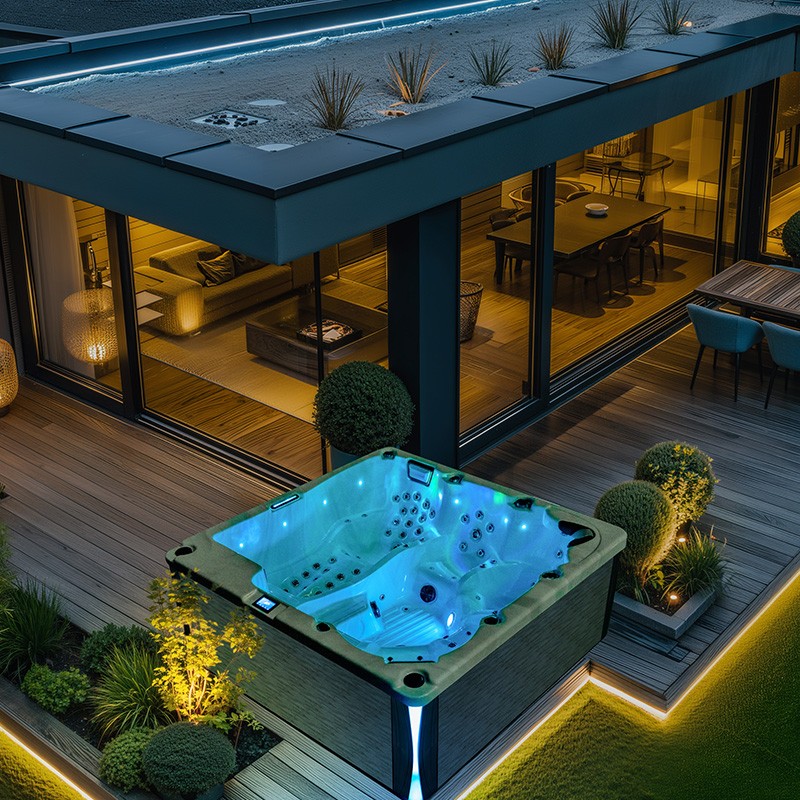
What parameters should be compared when purchasing outdoor hot tubs in bulk?
Product configurations can vary significantly between suppliers. To avoid making decisions based solely on price, distributors should create a standardized comparison table for product parameters.
| Evaluation Category | Key Specifications |
| Shell | Acrylic brand, thickness, surface quality |
| Frame | Material, strength, corrosion resistance |
| Water Pump | Brand, quantity, rated power |
| Heater | Power, voltage, safety protection |
| Massage Jets | Quantity, material, layout |
| Filtration | Filter type, maintenance requirements |
| Insulation | Shell, base and plumbing insulation |
| Dimensions | External size and seating capacity |
| Water Capacity | Liters or gallons |
| Electrical System | Voltage and frequency |
| Warranty | Shell, structure and electrical components |
| Accessories | Cover, steps, headrests and filters |
These parameters should be evaluated in the context of actual usage scenarios. For example, a higher number of massage jets does not necessarily guarantee a better massage experience, and a more powerful water pump does not automatically equate to superior overall performance.
Distributors should focus on whether the core configuration is well-designed and whether the product aligns with the specific needs of their target customers.
How can distributors control costs when purchasing outdoor hot tubs in bulk?
For a distributor, the factor that truly impacts profit is not the ex-factory price of a single unit, but the total cost incurred from the time the product leaves the supplier until it reaches the end customer.
It is recommended to use the "landed cost" model for calculations, which encompasses the product purchase price, international shipping, insurance, import duties, customs clearance fees, warehousing, local transportation, and after-sales costs. For example, if an outdoor whirlpool hot tub has a purchase price of $2,500, with $400 for shipping and insurance, $100 for customs clearance and other charges, and $200 for warehousing and local transport, the landed cost per unit would be $3,200. This is merely an illustrative calculation; actual costs will vary based on the sourcing region and the specific logistics strategy employed.
Furthermore, while bulk purchasing often secures price discounts, a larger order quantity is not always better. If inventory turnover is slow, the costs associated with tied-up capital and warehousing may negate any gains from the purchase discounts.
A more prudent approach is to procure in phases—based on historical sales data and market demand—and gradually scale up order sizes.
Standard Process for Bulk Purchasing Outdoor Hot Tubs
To mitigate procurement risks, outdoor hot tub distributors can implement the following seven-step purchasing process:
1.Market Research: Define your target customers, product positioning, procurement budget, and projected sales volume.
2.Supplier Screening: Identify 3–5 potential suppliers with relevant manufacturing or export experience in the outdoor whirlpool hot tub industry.
3.Product Comparison: Evaluate core materials, technical specifications, certifications, and warranty policies.
4.Sample Testing: Inspect the product’s appearance, operational performance, heating system, and the integrity of the plumbing seals.
5.Contract Review: Clearly define the Minimum Order Quantity (MOQ), pricing, payment terms, lead times, and after-sales responsibilities.
6.Bulk Inspection: Monitor production progress and verify product configurations, packaging, and quality prior to shipment.
7.Long-term Evaluation: Adjust procurement scale based on product quality, delivery reliability, and customer feedback.
This progression—from sample testing to bulk purchasing and, ultimately, long-term partnership—effectively reduces the uncertainty inherent in initial procurement.
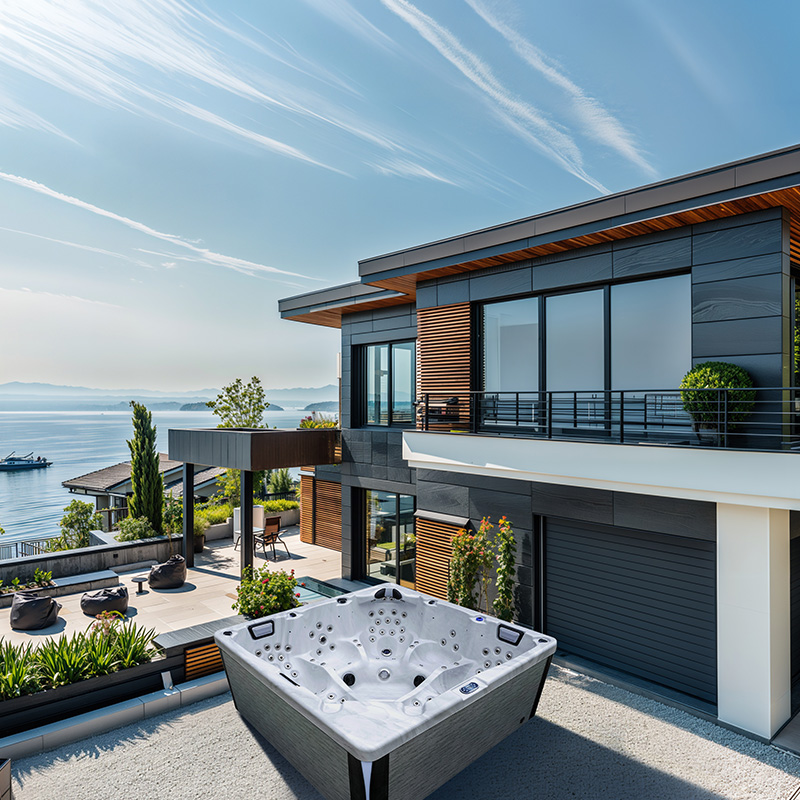
Frequently Asked Questions (FAQ) About Bulk Purchasing Outdoor Hot Tubs
Q1: Why is it crucial to choose an outdoor hot tub manufacturer with actual production capabilities?
Bulk purchasing requires a stable, long-term supply. Manufacturers with their own production facilities are better positioned to ensure product consistency, reliable lead times, and consistent after-sales support.
Q2: What types of outdoor hot tub distributors are a good fit for a partnership with LOVIA?
Suitable for outdoor spa equipment distributors, swimming pool equipment suppliers, vendors for hotel projects, home furnishing retailers, and partners looking to establish their own outdoor whirlpool hot tub brand.
Q3: What certifications are required for bulk procurement of outdoor whirlpool hot tubs?
This depends on the target market. For North America, you must verify the applicable UL or ETL certifications; for Europe, you need to confirm the relevant CE compliance documentation. Before purchasing, ensure that the certifications cover the specific product models and electrical configurations.
Q4: How can one achieve long-term growth in an outdoor hot tub distribution business?
The key lies in establishing a stable supply chain, a well-balanced product portfolio, and a robust after-sales service system, while simultaneously developing diverse sales channels—such as retail for residential use, as well as projects for hotels, resorts, and other commercial ventures.
Q5: Can distributors create their own outdoor whirlpool hot tub brand?
Yes. Through OEM/ODM partnerships, distributors can customize product aesthetics, functional features, and branding elements to meet specific market demands.