


Why Production Capacity Matters for Outdoor Spa Equipment Delivery?
2026-08-25 15:35Driven by the global rise of healthy lifestyles, outdoor leisure consumption, and the high-end residential market, the demand for outdoor spa equipment continues to grow. From outdoor hot tubs in private backyards to outdoor swim spas used in hotels, resorts, and wellness centers, these products have evolved from simple leisure items into vital facilities that integrate health management, athletic recovery, family entertainment, and commercial value.
However, alongside the industry's rapid expansion, a persistent issue facing buyers, brands, and distributors has emerged: why can some suppliers ensure consistent delivery, while others—faced with rising order volumes—frequently struggle with delays, quality fluctuations, or even an inability to maintain supply?
When seeking manufacturers, many enterprises prioritize product price, aesthetics, or unit quotes, hoping to boost market competitiveness by minimizing procurement costs. Yet, in actual operations, the factors that truly impact profitability go beyond the purchase price; they include the supplier's production stability, ability to meet delivery deadlines, and capacity to consistently provide high-quality products.
Some suppliers rely on low prices to attract customers but lack the necessary production infrastructure. Issues such as limited manufacturing space, an over-reliance on manual labor for critical processes, underdeveloped supply chains, and inadequate quality control capabilities can plague their operations. While these problems may remain unnoticed during periods of low order volume, they become critical bottlenecks when brands enter a rapid growth phase—requiring the continuous procurement of dozens, hundreds, or even more units.
For a brand expanding into overseas markets, a delay in delivering a batch of outdoor spa equipment could mean missing the peak sales season. For hotel or wellness center projects, such delays can disrupt the entire construction schedule. For distributors, unstable supply can lead to inventory shortages and reduced customer satisfaction. Consequently, production capacity has become a crucial benchmark for assessing the reliability of an outdoor spa equipment manufacturer. As a company long dedicated to the R&D and manufacturing of outdoor spa equipment, LOVIA® continuously builds large-scale production systems. Focusing on outdoor hot tubs, outdoor swim spas, and OEM/ODM customization services, the company leverages standardized manufacturing processes and supply chain management to ensure a stable product supply for global customers.
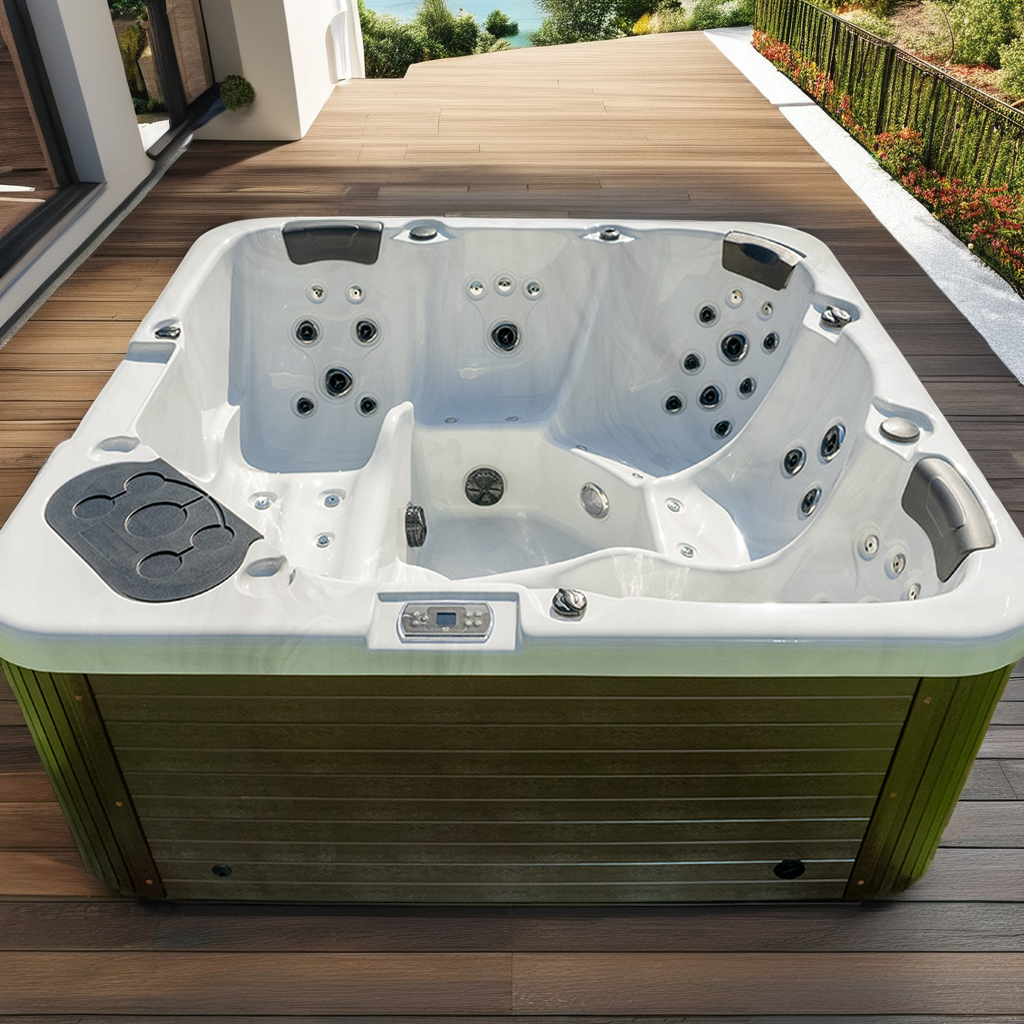
Why does outdoor spa equipment rely so heavily on a manufacturer's production capabilities?
When first encountering outdoor spa equipment, many buyers might view these products simply as large bathtubs equipped with massage jets, pumps, and control systems, assuming the manufacturing process is straightforward. In reality, however, a high-quality outdoor spa is a product of multi-system integration, involving expertise across various specialized fields.
A complete outdoor spa unit undergoes numerous production stages, including acrylic shell forming, fiberglass reinforcement, plumbing installation, electrical system wiring, heating system configuration, filtration and circulation design, thermal insulation, and comprehensive unit testing. A production bottleneck at any stage can jeopardize the final delivery.
For instance, insufficient capacity in the acrylic thermoforming stage directly disrupts downstream assembly; unstable supplies of critical components—such as pumps or control systems—can prevent the unit from being completed; and inadequate testing capabilities may result in post-shipment issues like leaks, heating malfunctions, or control system failures.
Therefore, manufacturing outdoor spa equipment is not merely a simple assembly task but a comprehensive industrial manufacturing system. A manufacturer's production capability signifies more than just daily output volume; it reflects their ability to coordinate raw materials, production personnel, technical teams, quality control, and logistics.
This is particularly crucial for OEM clients, as OEM partnerships typically involve long-term supply relationships rather than one-off purchases. Brand owners require a partner capable of consistently supplying products to keep pace with market growth, not just a factory that can manufacture goods.
What problems arise for outdoor spa equipment buyers due to insufficient production capacity?
In the actual market, insufficient production capacity typically impacts customer interests in several ways.
First and foremost is the issue of unpredictable delivery timelines. Outdoor spa equipment consists of large-scale products, and international orders involve multiple stages—including production, packaging, ocean freight, and customs clearance. If delays occur during the manufacturing phase, the time available for subsequent logistics is inevitably compressed. For instance, an overseas brand planning to launch a new line of outdoor spa equipment in the spring aims to have inventory ready before the peak summer sales season. If a supplier experiences delays of 30 or even 60 days due to insufficient production capacity, the brand risks missing the optimal sales window.
Secondly, insufficient production capacity can compromise product quality consistency. When faced with a sudden surge in orders, smaller manufacturers might resort to hiring temporary workers or outsourcing production; however, without mature training systems or standardized management, this often leads to variations between product batches.
For outdoor spa equipment, such inconsistencies can manifest in several ways, including:
•Variations in water circulation system pressure;
•Differences in thermal insulation performance;
•Inconsistent stability of electronic control systems;
•Discrepancies in product appearance and detailing.
While minor variations might have a limited impact on ordinary products, product consistency is crucial for OEM clients focused on building a strong brand image.
Furthermore, insufficient production capacity can affect after-sales support. Without a stable production system, the subsequent supply of spare parts may also be compromised. If customers cannot obtain timely support when needing to replace control systems, water pumps, or other components, it places additional operational pressure on the brand.
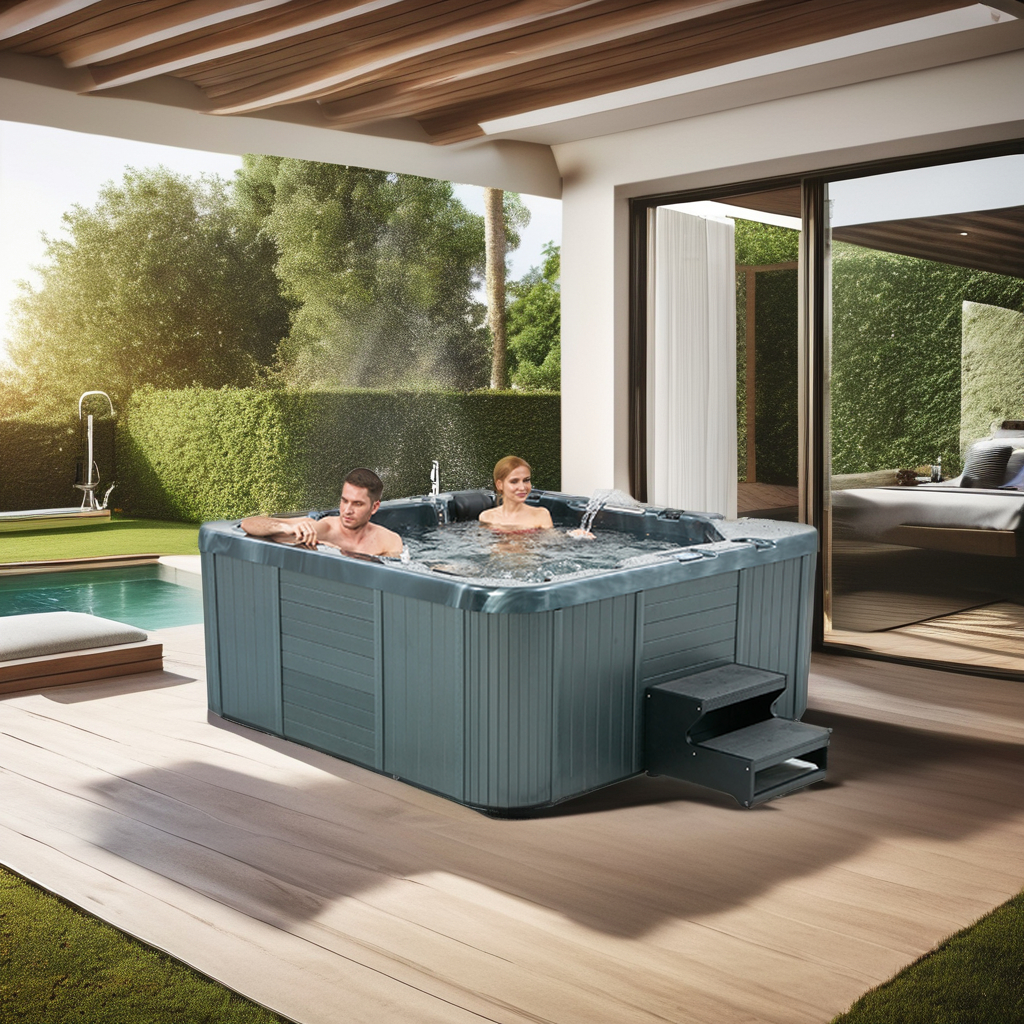
How can one determine if an outdoor spa equipment manufacturer possesses stable production capacity?
When selecting a supplier, one should not rely solely on sales pitches claiming "strong production capabilities" but should instead evaluate the manufacturer based on concrete indicators.
Key among these are the scale of the production facility and the layout of the production lines.
A mature outdoor spa equipment manufacturer typically requires comprehensive production areas, including zones for raw material storage, acrylic processing, product assembly, plumbing and electrical testing, finished goods storage, and packaging.
If the production space is too small, the manufacturer may struggle to handle long-term market growth, even if they can currently fulfill small-volume orders.
LOVIA® operates a production facility spanning approximately 45,000 square meters and has established a robust production management system dedicated to the R&D and manufacturing of products such as outdoor hot tubs and swim spas. This large-scale production environment enables the company to optimize production workflows and enhance coordination across different orders.
In addition to the size of the facility, the number of production lines is a critical factor. Different models of outdoor spa equipment vary in terms of structural design, assembly processes, and testing requirements. If a manufacturer operates only a single production line, scheduling conflicts can easily arise when multiple customers place orders simultaneously.
Manufacturers with multiple production lines can optimize scheduling based on order types—for instance, using fixed workflows for standard models while creating dedicated production plans for OEM custom products—thereby enhancing overall delivery flexibility.
Supply Chain Management Capabilities Determine Delivery Stability for Outdoor Spa Equipment
Beyond a factory's internal production capacity, supply chain management is another critical factor influencing delivery.
Outdoor spa equipment comprises numerous key components, including water pumps, controllers, heaters, filtration systems, jets, acrylic materials, and electronic components. A shortage of any single core component can halt the production of the entire unit.
Smaller suppliers, due to limited procurement volumes, often lack the bargaining power and inventory management capabilities needed to handle supply chain fluctuations. Consequently, sudden spikes in market demand or disruptions in international logistics can easily derail production schedules.
Established manufacturers typically build long-term supply chain networks, securing the supply of key components through stable procurement channels. For example, high-quality outdoor spas often utilize control systems and pumps from reputable brands alongside specialized spa materials to ensure consistent product performance.
Throughout its long-term manufacturing history, LOVIA® has continuously refined its supply chain management and maintained partnerships with suppliers across various sectors, thereby mitigating the impact of component supply instability on production.
For OEM clients, a stable supply chain translates to more reliable delivery timelines, enabling brands to plan market sales with greater accuracy.
Why Do Quality Control Capabilities Affect the Production and Delivery of Outdoor Spa Equipment?
Many people view quality control solely as a means to ensure product quality; in reality, however, quality management systems also impact production efficiency.
Without robust inspection processes, manufacturers might only discover defects after production is complete, necessitating disassembly, repairs, or even rework. This not only drives up manufacturing costs but also extends delivery times.
Professional outdoor spa manufacturers typically implement multiple quality inspection stages.
At the raw material stage, key components—such as acrylic materials, electronic assemblies, and water pumps—are inspected for compliance with specifications.
During production, checks are performed on plumbing connections, electrical installations, and structural integrity. Before leaving the factory, the complete unit undergoes comprehensive testing, including:
•Water-filling tests;
•Water circulation tests;
•Massage system tests;
•Heating function tests;
•Electrical safety inspections.
LOVIA® employs standardized quality management processes throughout production, verifying product performance at multiple stages to minimize maintenance risks after the product enters the market.
A robust quality system not only boosts customer satisfaction but also reduces rework and enhances overall delivery efficiency.
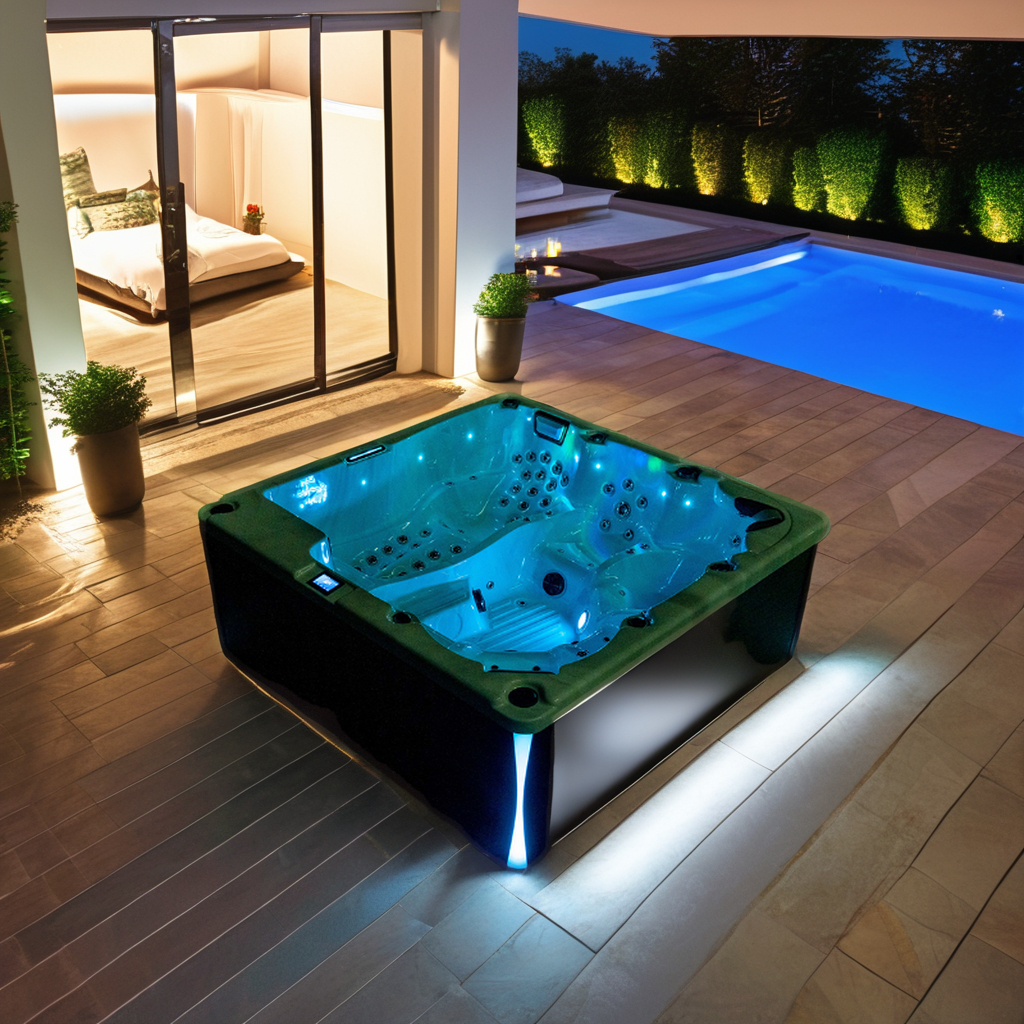
Why do OEM clients prioritize the production capacity of outdoor hot tub manufacturers?
While ordinary consumers might focus primarily on features and price when buying an outdoor hot tub, OEM brand clients have a completely different set of priorities.
OEM clients must consider market growth over the coming years. For instance, a brand might sell 500 outdoor spa units in the first year, with sales potentially rising to 2,000 or more in the second year. If the manufacturer lacks sufficient production capacity, the brand's growth will be constrained.
Therefore, OEM partners need to possess:
Stable production capacity;
Continuous R&D capabilities;
Agility in product adjustment;
Long-term supply capabilities.
An excellent manufacturer must not only fulfill current orders but also possess the capacity to support the client's future growth.
LOVIA® has a long history of providing OEM and ODM services, offering product configuration adjustments—such as exterior design, feature combinations, branding, and packaging—tailored to diverse client needs and providing flexible outdoor spa solutions for various markets.
How does LOVIA® ensure the supply of outdoor spa equipment through its manufacturing capabilities?
As a manufacturer of outdoor spa equipment, LOVIA® consistently enhances its overall manufacturing capabilities by focusing on product R&D, production management, and supply chain development.
Currently, the company primarily manufactures:
•Outdoor Spa Hot Tubs;
•Outdoor Swim Spas;
•Outdoor hot tubs;
•Outdoor spa pools.
With a 45,000-square-meter production facility, multiple production lines, and a professional manufacturing team, LOVIA® is equipped to handle orders of varying scales.
Simultaneously, the company prioritizes product R&D and manufacturing optimization, continuously improving structural design, water circulation systems, energy-saving insulation technology, and smart control systems.
For international brands and distributors, a stable manufacturing partner for outdoor spa equipment does more than just supply products; it helps mitigate supply chain risks. Therefore, when selecting an OEM partner, production capacity is not merely a figure representing output volume; rather, it encompasses comprehensive capabilities including R&D, manufacturing, quality control, supply chain management, and service.
FAQ
Q1: Why does the production capacity of an outdoor spa equipment manufacturer affect delivery times?
Because the production of outdoor spa equipment involves multiple stages, including material processing, plumbing installation, electrical assembly, and full-unit testing. If a manufacturer lacks sufficient capacity, a bottleneck at any stage can cause overall delays.
Q2: How can one assess whether an outdoor spa equipment manufacturer has adequate production capacity?
A comprehensive assessment can be made by evaluating factors such as factory size, the number of production lines, workforce size, monthly production capacity, supply chain systems, and quality inspection processes.
Q3: How long does it typically take to produce an OEM order for outdoor spa equipment?
Depending on the product model and customization requirements, it usually takes about 45 to 60 days; complex OEM projects may require more time.
Q4: Why do major outdoor spa equipment brands place such high importance on a supplier's production scale?
Because stable production capacity ensures a consistent long-term supply, preventing market sales from being disrupted by stock shortages, delays, or fluctuations in quality.
Q5: Is price the most important factor when selecting an outdoor spa equipment manufacturer?
No. Purchase price is only one component of the total cost; product quality, delivery capability, maintenance costs, and the supplier's capacity for long-term partnership are more critical.