


Why does my spa hot tub foam when it sprays water?
2026-04-20 15:35Many users encounter this phenomenon during daily use of whirlpool spa hot tubs: when the spray system is turned on and the strong water flow begins to circulate, a large amount of foam suddenly appears on the water surface, sometimes accumulating rapidly within a short period. This is not only unsightly but also raises concerns about water quality.
So, why does a spa hot tub foam when it sprays water? Where does this foam come from? Does foaming indicate that the water is unclean? Will it affect the equipment or user safety?
This article will systematically and professionally answer this question from multiple perspectives, including the physical properties of water, water composition, usage habits, and system operating principles.
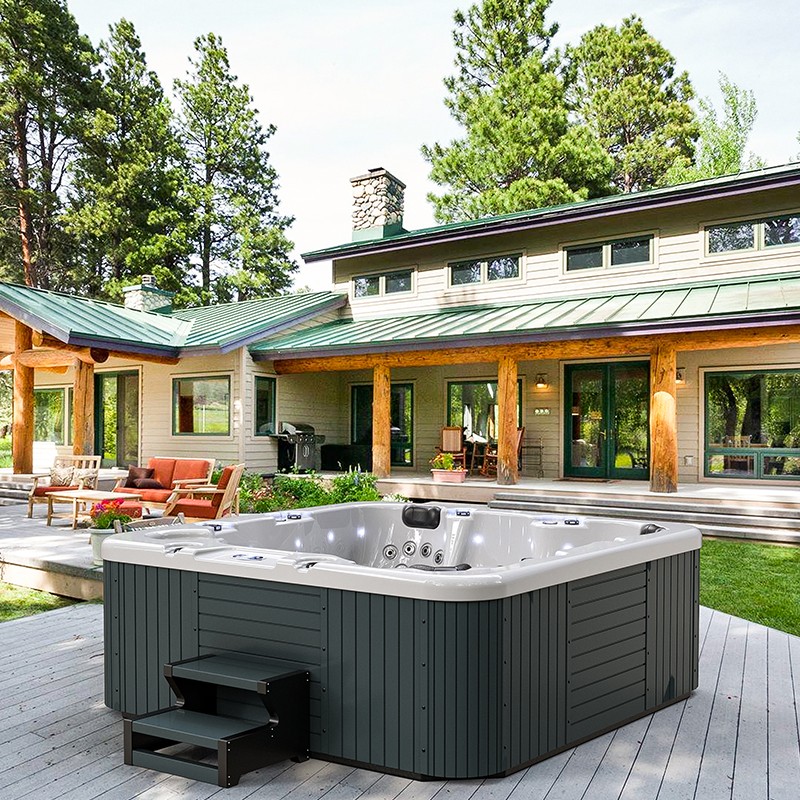
Is foaming in a spa hot tub a common phenomenon?
First, it's important to clarify that foaming in a whirlpool spa hot tub when spraying water is not uncommon.
Unlike regular bathtubs, spa hot tubs have the following characteristics:
• Higher water temperature
• Strong water jets
• High air-water mixing
• Frequent water circulation
These factors combine to make whirlpool spa hot tubs more prone to foaming than static water. The key is not "whether there are bubbles," but "why they appear, and whether the foam is abnormal."
What is the essence of foam in a spa hot tub?
From a physical perspective, foam formation requires three basic conditions:
1. Air
2. Water
3. A substance that can stabilize the bubbles
When a whirlpool spa hot tub sprays water, it injects a large amount of air into the water. If the water contains substances that reduce surface tension and help stabilize the bubbles, foam will quickly form and remain on the surface.
Therefore, foaming is not a problem with the water spray itself, but a reflection of the "composition" in the water.
Why is foaming only noticeable when spraying water?
This is a question many users have: The water looks normal when still, but foams up as soon as the spray is turned on. What is the reason?
The answer lies in the change in the intensity of the disturbance.
When the whirlpool spa hot tub is still:
• The water is relatively stable
• Less air is mixed in
• Foam is difficult to form
However, when the spray is turned on:
• The water circulates at high speed
• A large amount of air is drawn in
• Surface-active substances in the water are fully activated
This rapidly amplifies foaming, making previously "latent" problems immediately apparent.
What substances in a spa hot tub are most likely to cause foaming?
In a whirlpool spa hot tub, the most likely cause of foam is not the water itself, but certain substances dissolved or suspended in the water, mainly including:
• Residues brought in by the human body
• Cleaning or care product residues
• Oils and organic matter
• Dissolved impurities in the water
These substances usually have surface-active properties, which significantly enhance foaming ability when agitated by the spray.
Why is the human body a significant source of foam in a spa hot tub?
This is an often overlooked but crucial reason.
Before entering a whirlpool spa hot tub, the human body often carries:
• Residue from skincare products
• Residue from shampoo and shower gel
• Conditioner and body lotion
• Sunscreen or massage oil ingredients
These substances, even if invisible to the naked eye, are rapidly released and dispersed in hot water. When water is sprayed from the spa hot tub, they easily form stable foam.
Why does water temperature exacerbate foaming in a spa hot tub?
Water temperature is one of the key factors that distinguishes a whirlpool spa hot tub from ordinary water.
Higher water temperatures will:
• Reduce the surface tension of water
• Accelerate the dissolution and reaction of substances
• Make oily substances more easily dispersed
Therefore, under the same water quality conditions, foaming is often more pronounced and faster in a whirlpool spa hot tub than in a cold water environment.
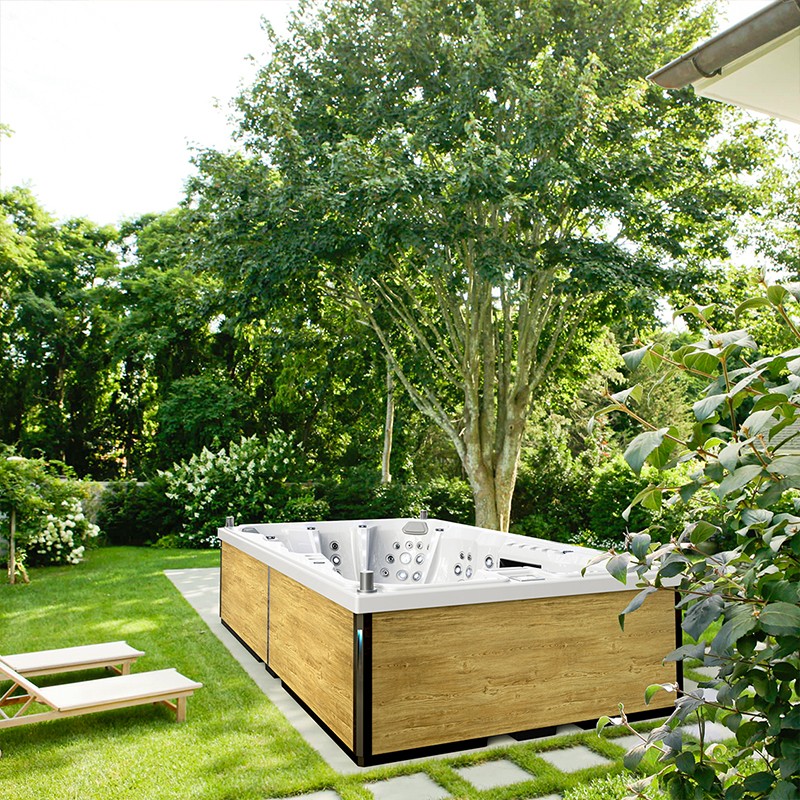
Does foaming mean the water in the spa hot tub is "unclean"?
This is a question that needs to be considered rationally.
Foaming doesn't necessarily mean the water is dirty, but it usually indicates:
• High levels of dissolved organic matter in the water
• Accumulated water load
• Water quality is deteriorating
In other words, foam is a "signal" of changes in the whirlpool spa hot tub's water quality, not a sudden malfunction.
Why does foam sometimes increase with spraying?
When a whirlpool spa hot tub sprays water, the appearance and continuous increase of foam is usually related to the following factors:
• High concentration of surfactants in the water
• Continuous agitation of the water by the spray intensity
• Foam bursting rate is lower than its formation rate
As long as the rate of foam formation exceeds the rate of foam dissipation, the water surface will exhibit a "the more you spray, the more you get" phenomenon.
Will foaming in a spa hot tub affect the equipment?
In the short term, foam itself will not immediately damage the whirlpool spa hot tub.
However, if foaming persists for a long time, it may indirectly lead to the following effects:
• Increased burden on the filtration system
• Reduced water clarity
• Accelerated water aging
• Impact on the overall user experience
Therefore, persistent foaming should not be ignored.
Will foaming affect the spray performance of a spa hot tub?
With more foam:
• Water flow resistance may change slightly.
• The appearance of the water surface will be affected.
• The spray experience may not be as noticeable as with clear water.
While it may not necessarily affect the spray function itself, it will reduce the comfort that a whirlpool spa hot tub should provide.
Why does foaming in a spa hot tub decrease significantly after simply changing the water?
This is because changing the water can:
• Directly remove the source of foam.
• Reduce the concentration of dissolved organic matter.
• Restore the natural surface tension properties of water.
When these conditions are restored to normal, the whirlpool spa hot tub is less prone to foaming, even when spraying.
How to fundamentally reduce foaming in a spa hot tub?
To reduce foaming, you need to address both the "source" and the "process":
• Reduce the entry of foreign substances into the water.
• Monitor the cumulative load on the water body.
• Regularly maintain the filtration system.
• Maintain a reasonable water quality balance.
Foam is not a sudden problem, but rather the result of gradual accumulation over long-term use.
Why is foaming considered a "water quality warning signal" in a spa hot tub?
In a spa hot tub, the water is a dynamic system.
The appearance of foam often means:
• A certain amount of impurities has accumulated in the water.
• The current state has deviated from the ideal equilibrium.
• Maintenance or adjustment is needed.
Therefore, instead of viewing foaming as a "troublesome" issue, consider it the whirlpool spa hot tub reminding you to pay attention to the water quality.
What certifications do your spa products have?
Our high-quality spa products are certified with international standards such as CE, ETL, SAA, RoHS, REACH, and ISO9001. These certifications demonstrate our commitment to safety, environmental responsibility, and manufacturing excellence. As a reliable manufacturer and supplier, we ensure that all products meet global compliance requirements, making it easier for customers to purchase, import, and sell in different markets.