


Why Does an Outdoor Whirlpool Hot Tub Pump Need to Be Reset?
2026-10-26 15:30The pump in an outdoor whirlpool hot tub is a core component responsible for water circulation, filtration, and powering the massage jets—all essential for the system's proper operation. If a pump suddenly stops, requires a manual reset, or shuts down again shortly after being reset, it typically indicates that a safety mechanism has been triggered or an underlying operational fault remains unresolved.
For residential users, hotels, and resorts, frequent pump resets not only disrupt the user experience but can also lead to inadequate water circulation and the failure of the heating system, ultimately increasing maintenance costs. Common causes include motor overheating, clogged filters, airlocks in the plumbing, insufficient water levels, power supply irregularities, or malfunctions within the motor or control components.
It is important to note that resetting a pump merely restores its operation; it does not resolve the underlying fault. The correct approach is to first identify the cause of the issue and then follow the manufacturer’s instructions for a reset, thereby avoiding further damage caused by repeated, improper restarts.
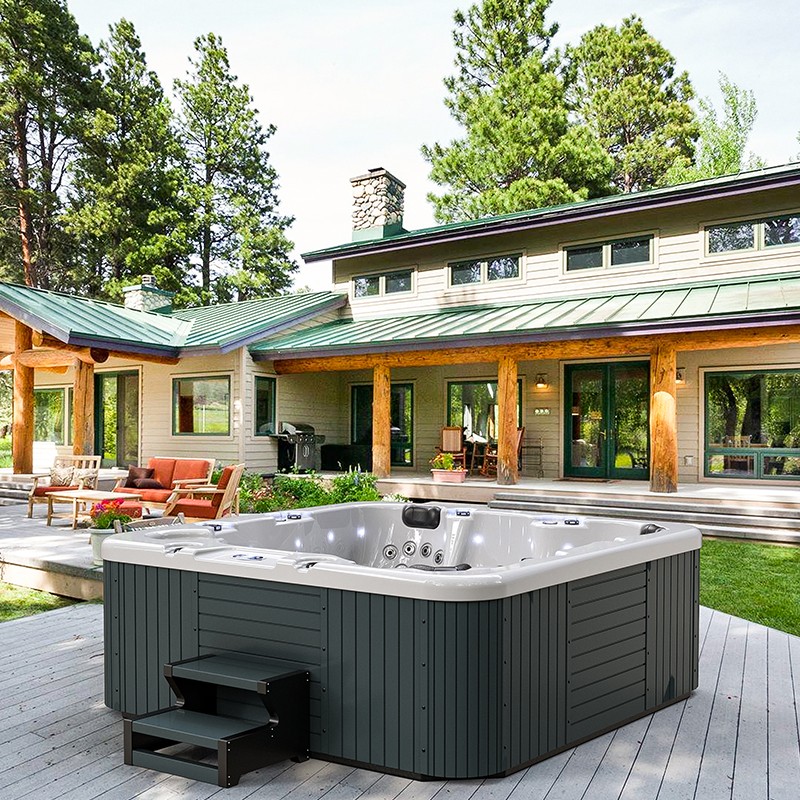
What Is a Hot Tub Pump Reset?
Outdoor whirlpool hot tubs are typically equipped with circulation pumps and massage jet pumps, with some models utilizing integrated pump units. The circulation pump drives water through the filtration and heating systems, while the massage jet pump provides the water pressure required for the jets.
If the motor temperature becomes too high, water flow is insufficient, or an electrical anomaly occurs, the system may automatically cease operation. A "pump reset" refers to the process of restoring normal operation—after the cause of the fault has been identified and safety conditions are met—by using a designated button, the control panel, or a specific power-cycling procedure outlined by the manufacturer.
There are three primary scenarios that necessitate a hot tub pump reset:
•Thermal Protection Reset: The motor has overheated, causing a thermal protection device to cut off operation.
•Control System Reset: A temperature sensor, flow switch, or controller has detected an operational anomaly.
•Electrical Protection Reset: A circuit breaker or residual current device (RCD/GFCI) has tripped, cutting off power to the unit.
Each of these scenarios requires a different approach. For instance, motor overheating may be linked to poor heat dissipation, whereas a repeatedly tripping circuit breaker or RCD could indicate a fault in the electrical components. Users should first identify which protective device has been triggered; not every instance of the system shutting down is necessarily due to a pump failure.
Six Common Reasons for Outdoor Hot Tub Pump Resets
1. Motor Overheating (Thermal Protection Triggered)
Motor overheating is a frequent cause of an outdoor whirlpool hot tub pump ceasing operation. When a motor runs continuously, lacks adequate heat dissipation, or encounters increased mechanical resistance, its temperature may rise. Once it reaches a specific threshold, the protective mechanism activates, causing the pump to stop.
Common triggers include blocked ventilation vents, insufficient space around the equipment, worn-out bearings, or the motor operating under an abnormal load for an extended period. High ambient temperatures during the summer can further hinder heat dissipation.
Solution: Stop the system and disconnect the power, then allow the pump to cool down completely. Check for any obstructions in the ventilation vents, ensure there is sufficient space around the pump unit for heat dissipation, and then follow the manufacturer’s instructions to perform a reset. If the pump consistently overheats after running for a period, investigate the motor load, bearings, and power supply conditions rather than repeatedly attempting to restart it.
2. Clogged Filter (Insufficient Water Flow)
Filters trap hair, skin cells, dust, and other suspended debris. If left uncleaned for too long, the filter element’s resistance increases, leading to a reduction in water circulation.
Insufficient water flow impairs both filtration efficiency and the heating system. Many outdoor above ground jacuzzis are designed to stop heating or trigger protective protocols when abnormal flow is detected. Common signs include weaker water pressure from massage jets, slower heating, or a flow-related alarm on the control panel.
Solution: Shut down the system according to the manufacturer’s instructions and clean the filter; inspect the filter element for any damage or deformation. If water flow remains insufficient after cleaning, check the suction inlets, plumbing, and valves—replacing the filter element if necessary. Do not automatically assume the pump is damaged simply because the water flow has weakened.
3. Air Trapped in the Plumbing (Air Lock)
Air can become trapped in the plumbing of an outdoor above ground jacuzzi during initial filling, maintenance (such as draining), filter replacement, or repairs. If this air is not properly purged, the pump may be unable to establish a stable flow of water. Typical signs of an air lock include the pump running without producing a steady flow of water, intermittent water flow from the nozzles, or the pump stopping shortly after startup. If a pump continues to run while starved of water, it may suffer damage to its mechanical seal or experience motor overheating.
Solution: Ensure the water level meets the equipment's requirements, and follow the manufacturer’s instructions to vent air or re-prime the system. Venting procedures vary by pump model; do not disassemble pipe fittings arbitrarily. If the pump continues to run dry or fails to establish water flow, shut it down and contact a professional technician.
4. Abnormal Power Supply Voltage or Inadequate Electrical Wiring
Pumps for outdoor whirlpool hot tubs require a stable power supply that meets the equipment's specifications. Low voltage, loose wiring, insufficient circuit capacity, or improper electrical configuration can cause difficulty in starting the pump, unstable operation, or motor overheating.
Pumps typically draw a surge of current upon startup. If the electrical circuit cannot handle this demand, it may cause a voltage drop, which can trigger protective devices.
Solution: Check for issues such as a complete loss of power, the control panel repeatedly restarting, or the circuit breaker tripping. Any inspections involving line voltage, grounding, or residual current protection (RCD/GFCI) must be performed by a qualified electrician. Do not use extension cords not approved by the manufacturer, and do not attempt to keep the equipment running by repeatedly resetting the circuit breaker.
5. Low Water Level or Obstructed Suction Intake
If the water level in the above ground jacuzzi falls below the required threshold, the pump may not receive sufficient water flow. Water levels can drop due to evaporation, splashing, or leaks, while debris such as leaves or hair can obstruct the suction intake.
Different models of outdoor above ground jacuzzis have varying water level requirements; therefore, a single, universal water level value cannot be used to determine if any given unit is low on water.
Solution: Verify that the water level is within the range specified in the manual, and ensure the suction intake is free of debris. If the water level continues to drop, inspect the hot tub, piping, and fittings for leaks. If the system still fails to operate correctly after adding water, check for an air lock or issues with the flow detection system.
6. Motor Aging or Control Component Malfunction
If an outdoor whirlpool hot tub has been in use for many years, issues requiring a pump reset may be linked to the aging of mechanical components. For instance, worn bearings, a jammed impeller, or a damaged mechanical seal can increase operational resistance, placing a higher load on the motor.
Additionally, malfunctions in flow switches, temperature sensors, relays, or the control board can trigger false alarms or prevent the equipment from starting properly.
If the pump produces noticeable friction-related noises, exhibits abnormal vibrations, cycles on and off frequently, or triggers an alarm again immediately after a reset, further professional diagnosis is required.
Solution: Once common issues—such as water level, filter condition, and heat dissipation—have been ruled out, a professional should inspect the motor, impeller, bearings, and control system. Based on their findings, you can decide whether to repair or replace specific components; avoid replacing the entire pump without a clear diagnosis.

How can you determine the cause of a hot tub pump reset based on its symptoms?
The symptoms exhibited by an outdoor above ground jacuzzi pump can help narrow down the scope of troubleshooting, though they cannot replace a professional inspection.
| Observed Symptom | Possible Cause | Recommended Action |
| Pump stops after prolonged operation | Motor overheating or poor ventilation | Allow cooling and check ventilation |
| Weak water flow or low jet pressure | Dirty filter, low water level or blocked inlet | Check water level, filter and inlet |
| Pump runs but no water flows | Airlock or insufficient water supply | Stop the pump and follow the priming procedure |
| Breaker or GFCI repeatedly trips | Electrical leakage or wiring fault | Disconnect power and contact a qualified electrician |
| Grinding or humming noise | Impeller blockage, worn bearings or motor damage | Stop operation and arrange professional inspection |
| Flow or temperature alarm | Insufficient flow, overheating or sensor fault | Follow the model-specific troubleshooting instructions |
| Pump restarts but quickly stops again | Underlying fault remains unresolved | Stop repeated resets and arrange diagnosis |
For example, reduced water flow could stem from a clogged filter or a decline in pump performance; a temperature alarm might be related to insufficient water flow or a faulty sensor. Therefore, you should evaluate the situation by considering error codes, the duration of operation, and the actual performance of the unit.
Error codes vary by brand and model; always refer to the manual specific to your equipment’s model when interpreting these codes.
Steps for Properly Resetting an Outdoor Hot Tub Pump
If the manufacturer permits user-performed resets—and provided there are no signs of electrical leakage, water ingress, or other hazards—you may follow the steps below.
Step 1: Document the symptoms. Observe any error codes on the control panel, check for unusual noises or water leaks, and note whether the circuit breaker or residual current device (RCD) has tripped.
Step 2: Disconnect the power. Turn off the dedicated circuit breaker or unplug the unit as directed by the manufacturer to ensure the pump is completely de-energized. Never disassemble the pump housing or open the control box while the unit is powered.
Step 3: Inspect external conditions. Verify that the water level meets the requirements, check the filter and suction inlets for blockages, and ensure that the equipment’s ventilation openings are not obstructed by debris. If the system has just finished draining or filling, consider the possibility of an airlock in the plumbing.
Step 4: Perform a reset according to the instruction manual. Some water pumps feature a dedicated reset button, while others may require a reset via the control panel or a specific power-cycling procedure. Always refer to the manual for your specific model; do not attempt procedures that are not applicable to your unit.
Step 5: Monitor the operating status. After restarting, check whether water flow has been restored, listen for any unusual noises, and observe whether the equipment continues to trigger alarms. If the pump shuts down again, discontinue use and arrange for a professional inspection.
If you notice a burning smell, exposed wiring, water ingress into the pump housing, or if the residual current device (RCD/GFCI) trips repeatedly, do not attempt to reset the unit yourself. Stop using the equipment immediately and contact a qualified technician or electrician.
How can you reduce the need to reset the water pump on an outdoor hot tub?
Preventive maintenance is generally more cost-effective than repairs following a breakdown. For residential users, the following measures are recommended:
1. Clean the filter regularly. Schedule cleanings based on usage frequency, water quality, and the manufacturer’s recommendations. For high-usage settings like hotels or resorts, increase the frequency of inspections to prevent filter clogs that could restrict water flow.
2. Maintain the correct water level. Check the water level before each use and watch for any noticeable drop in the flow from the massage jets. If you observe abnormal water flow, first check the water level, filter, and suction inlets.
3. Ensure proper ventilation. Maintain the clearance around the pump unit as specified by the manufacturer to allow for adequate ventilation and service access; keep vents free of debris. Do not modify the cabinet structure or cooling components.
4. Pay attention to unusual sounds and alarms. If the pump begins to make strange noises, vibrate, or cycle on and off frequently, investigate the issue promptly rather than waiting for a complete system failure.
5. Keep maintenance records. For commercial outdoor whirlpool hot tub installations, maintain a log of malfunctions, error codes, filter cleaning dates, and repair outcomes.
This helps identify recurring issues and improves the efficiency of future repairs. The actual service life of a water pump depends on factors such as product design, duration of operation, water quality, installation environment, and the quality of maintenance; therefore, it is not appropriate to determine whether a replacement is necessary based on a fixed, universal timeframe.
Frequently Asked Questions (FAQ)
Q1: If an outdoor hot tub pump operates normally after being reset, does it still require inspection?
Yes, it does. While a one-off protective shutdown might resolve itself once the underlying cause is addressed, if the pump shuts down again shortly thereafter, you should investigate the water flow, heat dissipation, and power supply.
Q2: Why might an outdoor hot tub pump require a reset only after running for a period of time?
This could be related to motor overheating, inadequate ventilation, increased mechanical resistance, or a gradual decline in water flow. You should note the approximate time elapsed from startup to shutdown and check the condition of the filter and the overall operating status of the equipment.
Q3: What should I do if an outdoor hot tub pump still won’t start after a reset?
First, check for any error alerts, unusual odors, or water leaks, and consult the user manual for troubleshooting steps that you can perform yourself. If the pump still fails to start, contact customer support or a professional technician; do not attempt to force it to run.
Q4: Will a clogged filter in an outdoor hot tub always cause the pump to reset?
Not necessarily. Some systems may stop heating or display an error alert due to insufficient water flow, but this does not always trigger the pump’s internal thermal protection. This depends on the specific plumbing design and control logic of the equipment.
Q5: If an outdoor whirlpool hot tub pump requires frequent resets, must it be replaced?
Not necessarily. Issues such as low water levels, clogged filters, or airlocks can often be resolved through proper maintenance or corrective action. However, if the malfunction stems from the motor, bearings, mechanical seal, or control system, repairs or the replacement of specific components may be required.