


Why are custom outdoor spa hot tubs becoming increasingly popular?
2026-10-08 15:35The professional solution lies in selecting an outdoor spa manufacturer with strong R&D capabilities and extensive production experience. By employing a comprehensive customization process—spanning needs analysis, structural design, and feature configuration through to production and testing—manufacturers can achieve an optimal balance of product performance, spatial fit, and user experience.
LOVIA® has long focused on the R&D and manufacturing of outdoor spa tubs and swim spas. While serving clients across diverse markets, the company continuously refines product designs to meet the specific requirements of residential homes, commercial projects, and brand partners, ensuring that custom outdoor spa hot tubs are perfectly suited to various application scenarios.
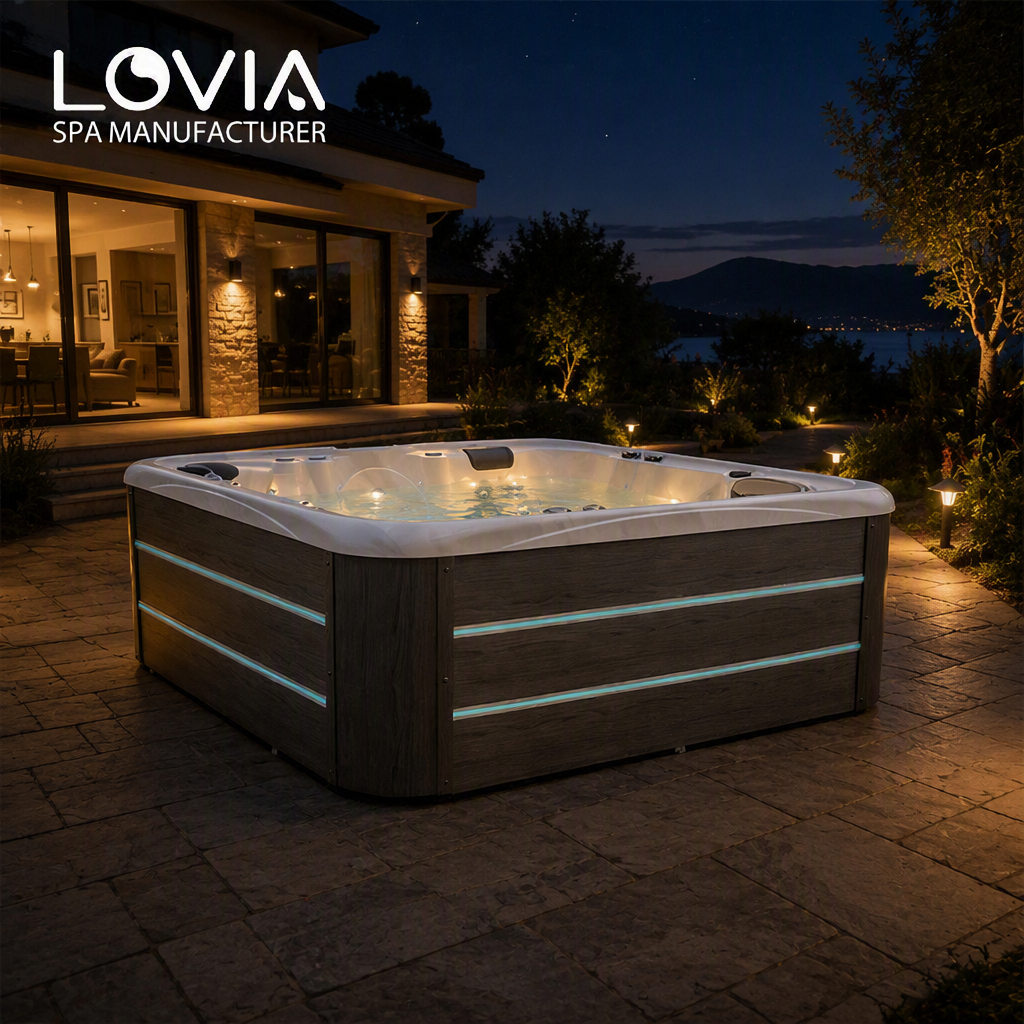
Why are more and more customers choosing custom outdoor hot tubs?
The rise of custom outdoor hot tubs stems fundamentally from shifting consumer needs. In the past, users purchased spa equipment primarily for massage and relaxation; today, however, outdoor spa tubs have become integral elements of residential design, healthy lifestyles, and commercial experiences.
The first key reason is the increasing complexity of spatial requirements.
Installation environments vary significantly between different homes and commercial venues. For instance, a spacious villa garden might accommodate a large 8-person outdoor spa tub, whereas a courtyard or balcony in an urban residence may have limited space, necessitating a compact design tailored to specific dimensions.
While standard models meet most needs, they cannot perfectly fit every space.
Customization allows customers to adjust the length, width, and height of the unit based on site dimensions. Some projects might require a large 2400mm x 2400mm spa, while others are better suited to a smaller, 1800mm x 1800mm residential version.
The second reason is the rising consumer demand for a superior wellness experience.
Modern users are no longer satisfied with simple water-jet massages; they prioritize factors such as massage positioning, water flow intensity, temperature control, and overall comfort.
Different areas of the body have distinct massage needs: the neck and shoulders require targeted massage, the lower back benefits from steady, supportive water flow, and the legs are best suited for circulating massage patterns. Consequently, professional customization allows for the adjustment of jet layouts to suit the specific needs of the target user group.
For example, high-end residential users might prioritize a soothing massage experience, whereas sports and wellness projects might focus more on deep-muscle relaxation.
The third reason is that competition in the commercial market drives the need for differentiation.
For hotels, resorts, and spas, an outdoor spa tub is more than just a piece of equipment; it is a key facility for enhancing the guest experience.
If every hotel uses products with identical appearances and specifications, it is difficult to stand out. Consequently, an increasing number of commercial clients are opting for custom outdoor spas, creating unique experiences through tailored dimensions, branded logos, custom colors, and specific feature combinations.
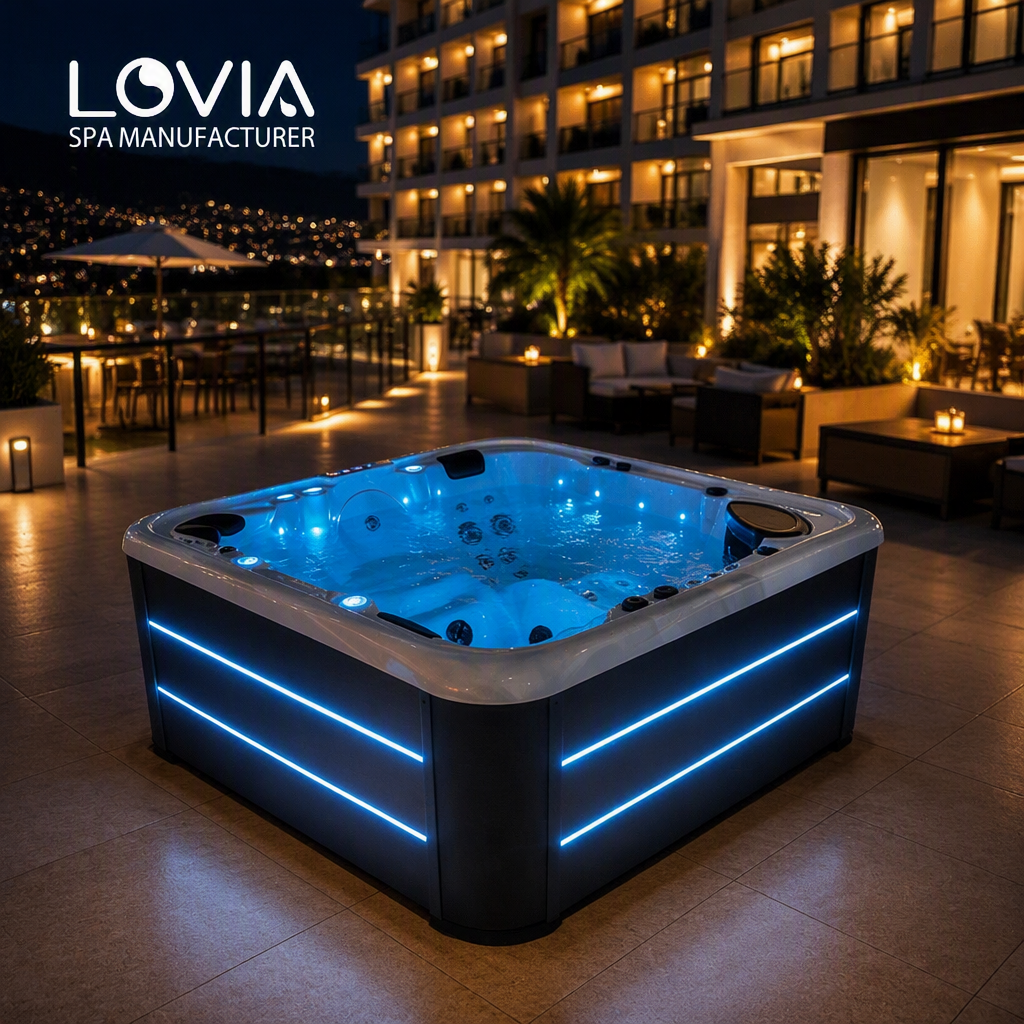
Custom Outdoor Spas: Beyond Aesthetics to System-Level Optimization
Many people view custom outdoor spas merely in terms of aesthetics—such as changing colors, shapes, or adding decorative elements. However, true professional customization begins with optimizing the product's internal structure.
An outdoor spa tub is a complex system comprising several key components:
Water circulation system;
Massage system;
Heating system;
Filtration system;
Control system;
Thermal insulation structure;
Shell and support structure.
Adjusting any single component requires consideration of the system as a whole.
For instance, if a client wants to increase the number of massage jets, it is not simply a matter of adding a few more. Increasing the jet count necessitates recalculating pump flow rates, piping layouts, and pressure distribution; otherwise, massage intensity in certain areas could diminish.
While a standard residential outdoor spa tub might feature 20–50 jets, high-end commercial models can exceed 60. Different jet configurations must be designed in tandem with pump power.
Similarly, if a product is intended for cold climates, the insulation strategy must be adjusted. Standard models may use basic insulation materials, whereas custom outdoor spas for cold regions typically require enhanced insulation for the sidewalls, base, and plumbing.
Top-tier outdoor spa manufacturers achieve true customization through rigorous engineering design rather than simple modifications.
How Do Custom Outdoor Spas Meet Diverse Market Needs?
Demand for outdoor spa tubs varies significantly across global regions, making customization a crucial trend in the international market.
In the North American market, where large homes with spacious yards are common, consumers generally prefer higher-capacity outdoor spa tubs. Models accommodating 5–7 people are very popular, with a strong emphasis on massage functionality, smart controls, and outdoor weather resistance.
In the European market, users place greater importance on energy efficiency, environmental performance, and aesthetic design. Given the low winter temperatures in some regions, thermal insulation capabilities and heating efficiency are critical performance indicators. In Middle Eastern and Southeast Asian markets, users place a high premium on equipment stability in high-temperature environments—specifically regarding UV resistance, heat dissipation design, and long-term outdoor performance.
Consequently, a seasoned manufacturer of custom outdoor spa hot tubs must understand these distinct market characteristics and provide tailored solutions.
LOVIA® has served the global market for years, adjusting product designs to align with varying national voltage standards, climatic conditions, and user habits. For instance, the company offers products in diverse specifications and supports OEM/ODM partnerships, helping clients develop outdoor spa products that are precisely aligned with local market positioning.
What value do custom outdoor hot tubs offer to brands and distributors?
For brands and distributors, custom outdoor spas represent not merely a product choice, but a strategic competitive advantage.
As competition in the outdoor spa market intensifies, selling standard models often leads to price wars. In contrast, custom products featuring unique designs and functionalities make it easier to establish brand differentiation.
For example, a spa brand can develop exclusive product lines based on its specific market positioning:
High-end residential series: emphasizing aesthetics and a luxurious, comfortable experience;
Commercial hotel series: emphasizing durability and the ability to operate continuously;
Wellness series: emphasizing massage functionality and the user experience.
By offering custom outdoor hot tubs, distributors can reduce product homogenization relative to competitors and enhance their market recognition.
Furthermore, customization partnerships help brands build long-term supply chain relationships. A professional outdoor spa factory does more than just manufacture; it participates in product development and continuously optimizes products based on market feedback.
For enterprises aiming for long-term growth, partnering with a manufacturer that possesses R&D capabilities is far more valuable than simply seeking out the lowest-cost supplier.
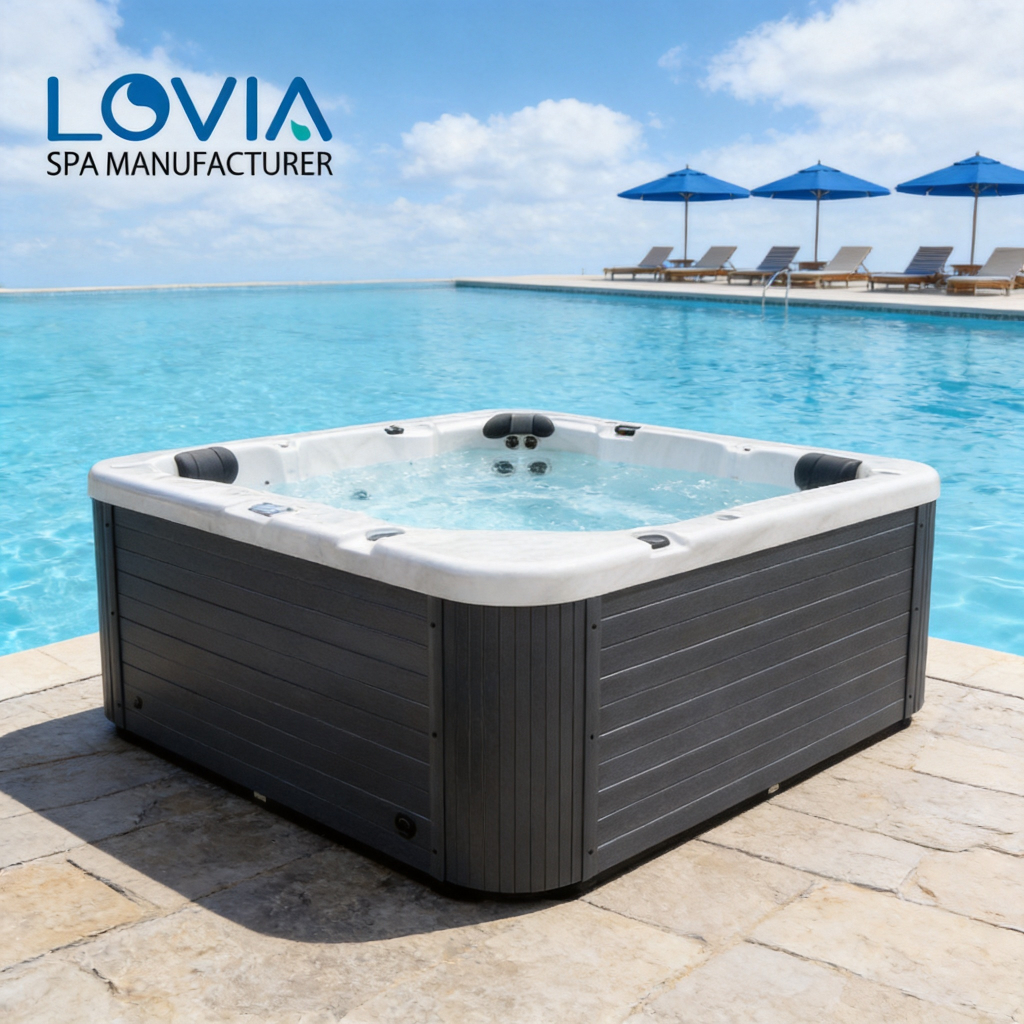
How does LOVIA® support custom outdoor spa requirements?
For a professional outdoor spa factory, the customization process encompasses multiple stages: needs analysis, conceptual design, structural development, functional validation, prototype testing, mass production, and after-sales support. A lack of professional expertise at any stage can compromise the final product's performance.
For example, when a client requests an outdoor spa tub for a high-end villa project, the manufacturer must look beyond aesthetics to analyze factors such as the installation environment, user capacity, frequency of use, and local climate. If the unit is to be installed in a cold region, thermal insulation performance becomes a priority; for hotel projects, equipment durability is paramount; and for the residential market, ease of use and comfort are the key considerations. LOVIA® has long focused on the R&D and manufacturing of outdoor spa tubs and swim spas, accumulating extensive experience across diverse market applications. The company currently operates a 45,000-square-meter production facility and maintains comprehensive R&D, production, and quality management systems, enabling the provision of both standard products and custom development services tailored to client needs.
For custom outdoor spa hot tub projects, LOVIA® prioritizes practical performance and real-world application. During the design phase, for instance, the company analyzes dimensions, jet layouts, water circulation systems, and functional configurations based on the client's target market—rather than simply modifying the product based on aesthetic requests alone. This approach ensures clients receive more stable and reliable product solutions.
Why do custom outdoor hot tubs require robust supply chain support?
The complexity of custom outdoor spas necessitates a stable supply chain for the manufacturer. A complete outdoor spa tub comprises numerous core components, including acrylic materials, pumps, motors, control systems, heaters, filtration equipment, and various plumbing assemblies.
Without adequate supply chain management, even an excellent design can be compromised by inconsistent component quality, ultimately affecting the final product.
Professional outdoor hot tub manufacturers typically establish long-term supplier partnerships and rigorously vet key components. For example, pumps must offer operational stability and low noise levels; control systems must ensure waterproof safety and reliable operation; and acrylic materials must demonstrate excellent weather resistance and durability against aging.
Supply chain capabilities also dictate the speed of response for custom products. If a client needs to adjust product specifications, the manufacturer's ability to quickly source and integrate new components directly impacts the project timeline.
Throughout years of manufacturing outdoor spa tubs, LOVIA® has continuously optimized its supply chain, implemented strict quality control for key materials and core components, and enhanced order delivery reliability through robust production management systems. This provides a crucial foundation for successful market operations for brand owners, distributors, and project clients seeking long-term partnerships.
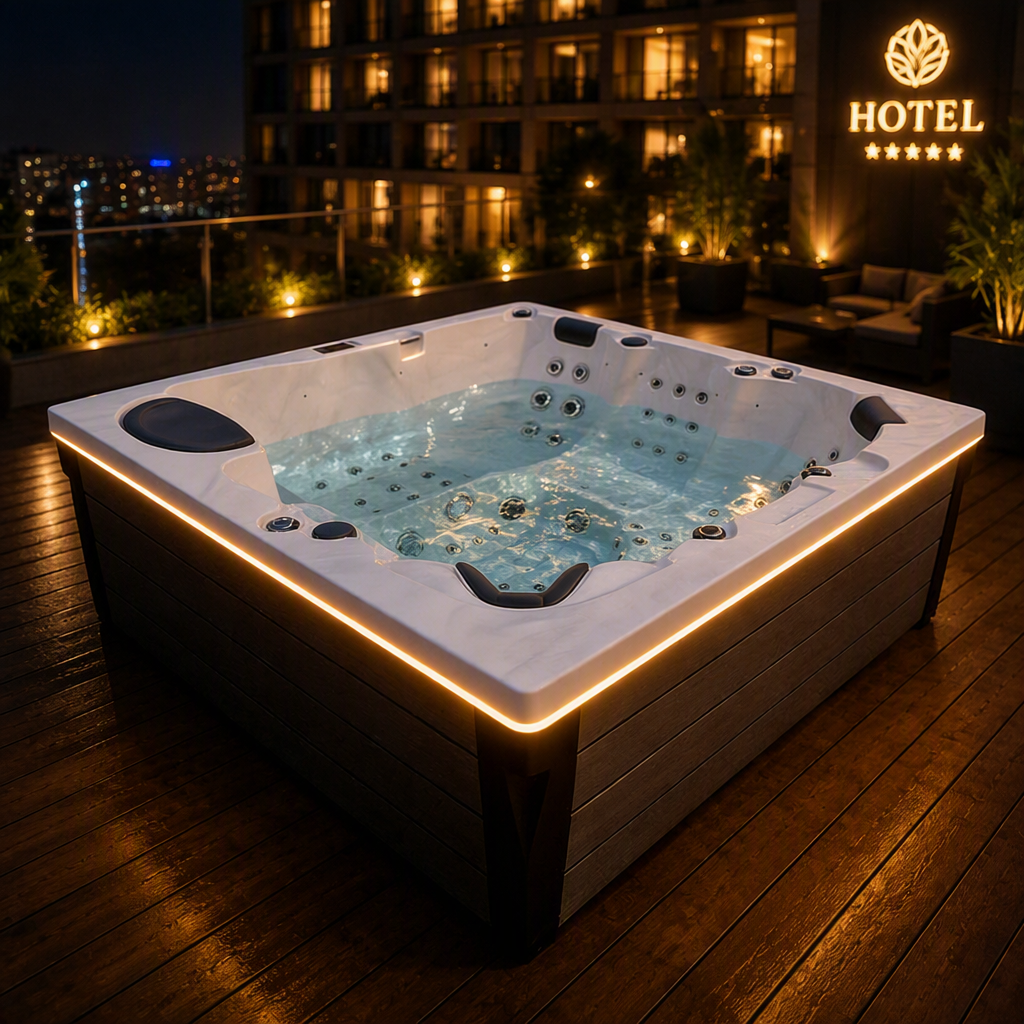
FAQ: Common Questions About Custom Outdoor Hot Tubs
Q1: What is the difference between a custom outdoor hot tub and a standard outdoor spa tub?
Standard outdoor spa tubs typically feature fixed dimensions and configurations, whereas custom outdoor spa hot tubs allow for adjustments to size, functionality, aesthetics, water circulation systems, and control setups, making them better suited for unique spaces and differentiated market demands.
Q2: What information is required for a custom outdoor spa tub project?
Clients typically need to provide information such as the target market, available installation space, intended user capacity, functional requirements, voltage specifications, and aesthetic preferences. Professional manufacturers will then develop a product proposal based on these details.
Q3: Does customizing an outdoor hot tub extend the production lead time?
Customized products often require additional design and testing, so the production cycle may be longer than that of standard models. The exact timeframe depends on the level of customization, order volume, and technical complexity.
Q4: Which clients are best suited for custom outdoor spa hot tubs?
Customized products are ideal for high-end residential clients, hotels and resorts, spas, real estate developers, and distributors looking to establish their own brands.
Q5: What are the most important factors when selecting a manufacturer for custom outdoor hot tubs?
The most critical factors are the manufacturer's R&D capabilities, production experience, quality control systems, and capacity for long-term service. An excellent manufacturer does more than just produce goods; they also assist clients in addressing challenges related to design, application, and market demands.