


What's the difference between ODM and OEM outdoor spa hot tubs?
2026-08-07 15:35The past few years have seen the rapid development of the global backyard economy, health and wellness industries, and outdoor lifestyles. As a result, outdoor spa hot tubs have become one of the important elements in Western homes, luxury villas, spa resorts, B&B guesthouses, resort hotels, and health wellness centers. According to public information available from Grand View Research and Fortune Business Insights, the global spa hot tub and spa market have sustained a compound annual growth rate of approximately 5%-7% in recent years. North America remains the major consumer market region, with a stable growth in Europe, Australia, and the Middle East, and the Asian market gradually tapping into its consumption potential. The rising market demand is driving more and more brand owners, importers, cross-border e-commerce sellers, and project acquisition companies to create their outdoor spa hot tub brands.
A buyer new to this market would be very likely to run into the following two business terms when buying equipment—OEM (Original Equipment Manufacturer) and ODM (Original Design Manufacturer).Many think that the difference between the two is only the name. In fact, the distinction between OEM and ODM is quite substantial in the areas such as development/product creation, branding, production patterns, development time frames, and cost investment. Not having an understanding of both cooperative models may affect your product launch speed, brand positioning, and even business strategies in the long run.
So what are the exact differences between OEM and ODM outdoor spa hot tub models? Which type of model fits your business best? This article presents a complete and realistic comparison of the two models, highlighting their respective characteristics, advantages, and best-suited scenarios to help you choose the optimal method of cooperation.
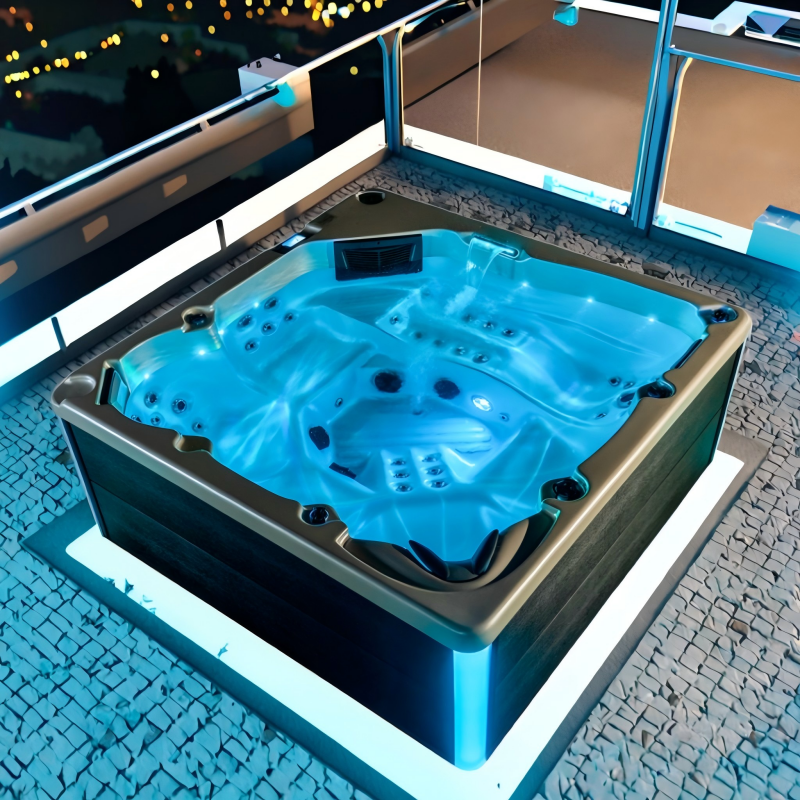
What drives both OEM and ODM to be the leading methods of cooperation?
Unlike household gadgets, outdoor spa hot tubs are products that are highly technical. A regular hot tub generally combines multiple system components including the bathtub, the steel frame, insulation system, the water pump & filtration system, massage system, the electrical control and heating system, and the disinfection system. If it's a family hot tub, the tank capacity usually ranges from 800 to 1800 liters, while a massage nozzles count can go up from 30 to over 100 and water pumps are also multiple. It comes with the control panel and thermostats. Large family spa tubs can even serve 7 to 8 adults at the same time, making their manufacturing much more complicated and technical compared with ordinary bath products.
If a brand decides to set up its own factory, besides the high investment cost of building a production base, the company also has to assemble a dedicated R&D team, procure material suppliers, take up international certification, and hire production staff. Overall investment may well exceed millions, while R&D period is likely to stretch to one year or so. Hence, a growing number of international brands are turning to the OEM or ODM business model to reduce the burden by offloading the manufacturing to factories and concentrate on product development and marketing activities only.
Today, virtually all the famous overseas spa hot tub manufacturers are either doing OEM or ODM on a regular or occasionally basis, making it the prevalent industry norm.
What is an OEM outdoor spa hot tub?
OEM stands for Original Equipment Manufacturer.
In short, the OEM type means that the brand owner is quite certain of their product positioning, brand planning or even product design, and the manufacturer is to do all the production work as per the customer requirement. The brand owner owns their own brand, market strategy, and sales channels. On the other hand, the manufacturer takes up product production, quality inspection, and shipment duties.
In the outdoor spa hot tub business, the OEM deal often includes changing product specifications, putting brand mark, changing design of packaging, custom manuals, and some improvements to functionalities. Clients are free to, for instance, change number of massage jets, water pump setting, LED, color of basin, material of skirt, or control system, in line with the requirement of the target market, and sell the product under their own brand name.
This model is a good fit for a company that has both an existing brand and a sales channel, and it allows the OEM model to combine with manufacturing of the product by the professional manufacturer which leads to faster time to market.
What is an ODM outdoor spa hot tub?
ODM is the abbreviation of Original Design Manufacturer.
The main advantage of ODM over its counterparts is the product design being provided solely by the manufacturer. The manufacturer has already developed a comprehensive outdoor hot tub product lineup comprising product structure, look & feel, technical solutions, and manufacturing techniques. A client just needs to tailor their product to the brand requirements to get their own quick launch.
For example, a brand new to outdoor spa hot tub business with no R&D team or product design experience can take the ODM route to directly use the manufacturer's products. They only need to tweak the logo, product hue, some features and packaging design to launch their brand very fast.
The main benefits of this model are a short development cycle, low investment, and reduced R&D risks.
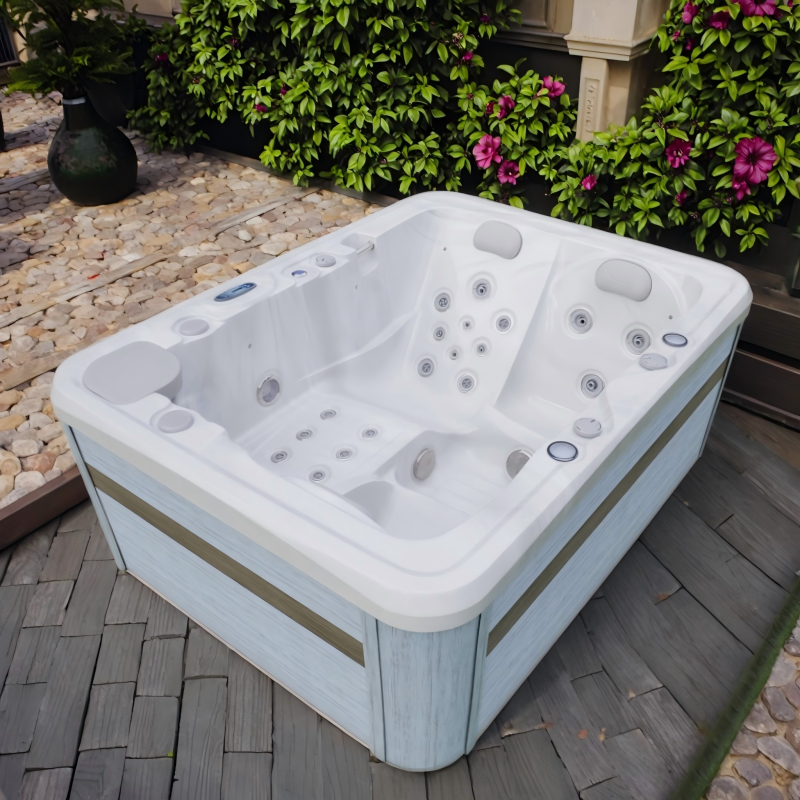
What is the most significant difference between an OEM and an ODM outdoor hot tub?
OEM and ODM often get mixed by buyers. In fact, the biggest difference between them is who has the lead role in product development.
In the OEM model, the brand owner plays a more active role in product development and planning by making specific requests according to the market situation, e.g., more nozzles, a change in the control system, improved seat layout or even the development of completely new sizes/product dimensions. The task of the manufacturer is to comply with these requests.
Meanwhile, in the case of ODM, the product design work is basically carried out on behalf of the client, and the client mainly focuses on customization work based on the established product portfolio to achieve their brand purposes. Hence, it is quicker to get the product on the market at the expense of a lower scope of personalization of its product compared to OEM.
Summing up, OEM suits companies with strong brand planning abilities who are striving for product differentiation; while ODM suits new brands or a small/medium sized buyers wanting to get their feet wet at speed.
I. R&D investment-wise: how do the two models actually differ?
The ability of R&D work is another key area that contributes to the difference in product competitiveness between OEM and ODM products.
The OEM clients get involved in the process of product development themselves, for instance, they ask manufacturers to produce the product to their target market’s specifications like the appearance or function upgrade. A certain period of time will therefore be spent on discussions, sampling and trials.
Conversely, ODM goods are ready-developed and certified through a series of tests like water tests, electrical tests, long durability testing, and getting necessary foreign certifications. For this reason, customers rarely have to spend money on the development of a product.
For small-scale enterprises that run out of money quite soon after launching a business, adopting of ODM products significantly helps them in keeping their development costs low. Meanwhile, large firms wanting to develop a strong brand image over time usually choose OEM to achieve product differentiation.
II. Which model results in faster product marketing?
For many customers, getting your product out in time is perhaps an equally important consideration.
In general, a well-developed ODM outdoor spa hot tub can be mass-produced and delivered in about 30 days on average from the finalization of product specifications. This is ideal for customers who want to enter the market as soon as possible by taking advantage of a brief market window like joining a mega exhibition or the seasonal peak sales.
However, the production of OEM products goes through several phases like adjusting the product, confirming samples and testing for optimization. Therefore, it is expected that the overall time of a project may take 45-90 days and in case complicated works are involved, it can even be more.
So it is clear that if there is a short window of opportunity in the market, such as when getting ready for a major fair or in a selling peak, ODM is most of the times a better solution.
III. Which model helps you establish a stronger brand?
Taking note of the fierce competition among brands in the international market of outdoor spa hot tubs, only setting products apart by lowering prices will no longer keep your customers interested for the long run.
The biggest strength of the OEM model is its ability to enable companies to offer products of a high degree of differentiation and uniqueness in the market.
Possibly, companies will design products in such a way that their size matches well the consumer habits of different countries. Some may offer the seats with better ergonomics for the comfort of the bather who is using the spa hot tub; the heat insulation structures may also undergo modification to get a higher level of thermal retention of such a waterbody system. The other features that could be added at the product level and which help in creating product differentiation would be such advanced ones as the Wi-Fi remote, the ozone sterilization unit, the UV disinfection facility, or just a luxury hi-fi system on board!
However, as far as the ODM goes, although there is some level of product customization that one can make, the overall product remains more or less the same. As a result, similar products across different brands are quite common.
Consequently, if a company wants to build a high-end brand and establish long-lasting technical barriers in the market against competitors, it is usually more profitable to go in for the OEM option.
IV. Both OEM and ODM modes have their own share of focus on product certification!
Irrespective of choosing OEM or ODM, in the international market, you definitely have to take notice of the regulations in that particular market of the product you are about to export.
The major certification required when exporting spa hot tubs to the EU is the CE Certification; for US and Canada, ETL certification or similar safety certifications are usually needed; Australian export compliance requires meeting the local electrical safety standards. Apart from that, many international buyers have been recently focusing their attention at the RoHS and REACH environmental legislations.
Established manufacturers of outdoor spa hot tubs are usually able to provide products already with certificates relevant to their client's target markets, and they are also capable of assisting the client in preparing documents required for certification so that the whole export procedure goes on a much fewer risky footing.
Therefore, it is also very important to factor in this partner certification ability when selecting an OEM or ODM supplier.
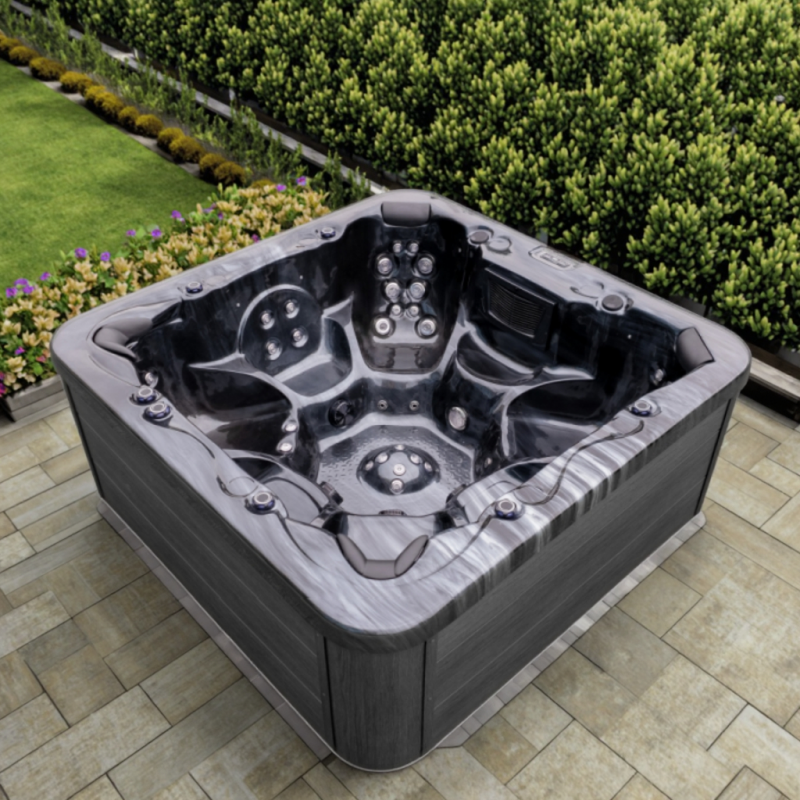
How to Make the Right Choice of Cooperation Mode on the Purchase of Outdoor Hot Tub Baths?
In fact no one model is the "right and absolutely better" choice; the choice is to be made based on the company's own condition and stage of development.
Creative brands who are just breaking into the market of outdoor spa hot tubs and who don't have enough R&D capacity and are only looking on how to launch a product very quickly so that the market can be validated, the ODM option is surely the way to go as it saves much time and money for the company.
If you have already a brand foundation and have a plan based on continuously launching new products for different markets in order to create a competitive advantage, the OEM path is better for long-term.
As many large international brands have taken the same growth path, the first step was the ODM method to quickly capture the market while having sales, and then the switch to the OEM or even R&D with the partner has gradually been made when the sales increased to a certain level in order to achieve the brand upgrade.
How does LOVIA® outdoorspa bath support OEM as well as ODM modes of operation?
LOVIA® being a specialist of outdoor spa hot tubspas and other related products, has long offered OEM and ODM services to international customers and our product lines feature family-type hot tubs, commercial spas, outdoor swimming pools as well as indoor swimming spa facilities, etc.
LOVIA® owns a manufacturing plant of about 45,000 m², has a dozen or so dedicated production lines and 200+ employees and is capable of producing roughly about 1,200 units per month. We keep pouring money in R&D in order to keep upgrading our products, for instance, the product structure, insulation system, water circulation system, intelligent control technology etc are all continuously optimized.
From the point of view of ODM cooperation, LOVIA® is also able to offer clients a rich and mature product platform as a great helping in quick market entry as well as product development cycle. As for cooperation via OEM, LOVIA® is able to provide product customization according to the clients' market requirements, such as product size, acrylic colour, skirt material, control system, massage configuration, brandmark and packaging design. The company has extensive international market experience and it is possible to give comprehensive manufacturing support to the brand owners, helping them satisfy product certification standards and export requirements according to the laws of different countries and regions.
Thus, this integrated manufacturing system of OEM & ODM is not only catering for the diverse needs of clients at different phases but also helping them gradually elevate the quality of the products as well as develop their brands in accordance with the changes of the market.
Q & A
Q1: What is the fundamental difference between OEM and ODM?
Design ownership is the main differentiation point. In an OEM, you provide the specification while someone else does the manufacturing. An ODM, however, involves your manufacturing partner developing the design which you later customize. The product cycle here is quicker. However, you will get a very limited degree of product personalization.
Q2: Which is suitable for OEM or ODM for outdoor spa hot tub new brands?
ODM will better serve a company at the beginning stage for its quick market introduction using already developed products. With this approach, it is possible both to reduce R&D investment and R&D risks at the same time. After the brand becomes more mature, international brands often change over to OEM when sales have increased to the level that requires this change.
Q3: What can be customized for OEM spas?
In general, the customizable parts are as follows, such as size, layout of the bathers, number of massage jets, pump configuration, acrylic color, skirt material, LED lighting color, brand identity of the products, and the like.
Determining all the above according to the needs of a specific market is going to produce a highly differentiated brand product that stands out from the rest.
Q4: Is it necessary for both OEM and ODM outdoor spa hot tubs product development to obtain international certification?
Yes. Whether it's OEM or ODM as model of cooperation used, if the goods are meant to be exported outside borders, regulations of the importing countries shall have to be satisfied through corresponding certification.
CE, ETL, or environmentally-related standards are examples.
The well-run manufacturers may be able to complete certifications and also help clients to prepare the documents which are a must for such a procedure.
Q5: What OEM/ODM services are available at LOVIA for outdoor spa hot tubs?
We at LOVIA® are engaged mainly in research and development as well as manufacturing of outdoor spa hot tubs and related hot tub equipment. Apart from these functions, we are also capable of providing complete OEM/ODM packages as per the client's wishes. Our service covers product development, design customization for branding, product and configuration optimization, packaging design, certification support and also supply chain support. As a result, it is a perfect scenario for the brand owner, the importer as well as the engineering client to more easily set up and develop the brand in a way that is quite efficient.