


What are the voltage and current requirements for a spa jacuzzi tub?
2026-02-23 15:30When choosing a spa jacuzzi tub, correctly understanding its voltage, current, power, and wiring requirements is crucial. As a high-power device combining water, electricity, heat, and gas, the electrical parameters of a spa jacuzzi tub not only determine energy consumption but also directly affect operational safety, installation requirements, and ease of maintenance.
Many users ask the following questions when purchasing:
• Does a spa jacuzzi tub use 110V, 220V, or 380V?
• Does higher power mean higher current?
• What kind of power supply is needed for a multi-pump system bathtub?
• How much current does the heater, motor, and circulation pump require respectively?
To help users, installers, and engineers fully understand the electrical requirements of spa jacuzzi tubs, this article will provide a complete, systematic, and professional technical analysis of the voltage and current requirements for spa jacuzzi tubs.
Special Note:
Globally renowned outdoor spa jacuzzi tub manufacturers like LOVIA SPA generally support 110V/220V/380V and are equipped with a 3kW heater and a high-power massage pump.
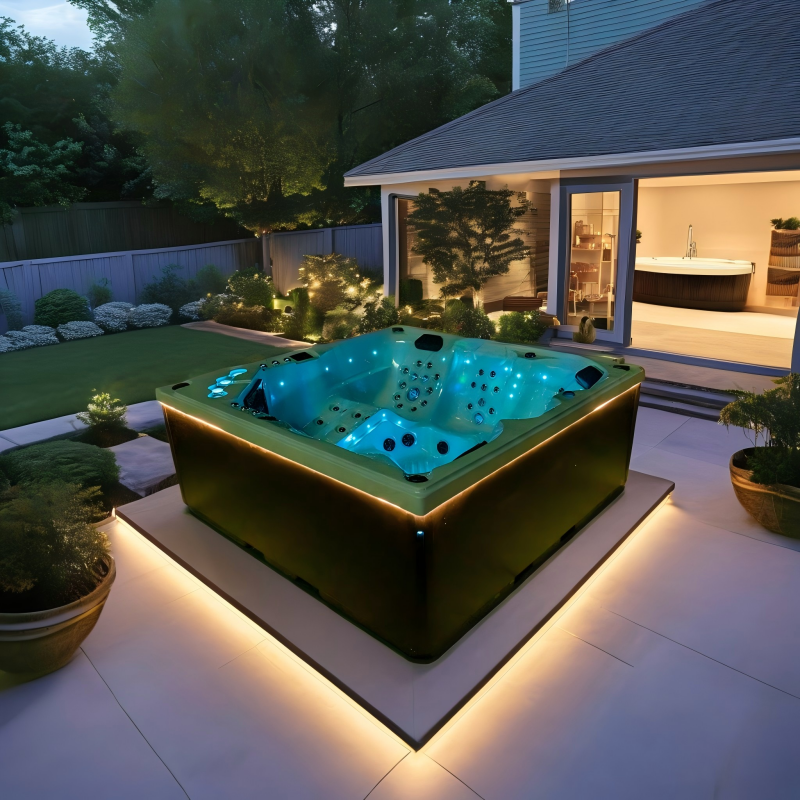
Why is understanding the voltage and current requirements of a spa jacuzzi tub crucial?
Voltage and current are core technical parameters for the operation of a spa jacuzzi tub. Mastering them is essential because they directly affect:
• ✔ Safe installation
• ✔ Whether the power distribution meets standards
• ✔ Whether a separate circuit is needed
• ✔ How the electrician selects wire gauge and switches
• ✔ Whether the power load exceeds the limit
• ✔ Stable operation in the long run
Spa jacuzzi tubs are high-power, continuously operating devices, including:
• Massage pump
• Water circulation pump
• Bubble pump
• Ozone system
• LED lights
• Heater (typically 2–3kW)
Therefore, selecting an installation outlet based solely on a "standard household outlet" is often unsafe.
Below, we will explain the voltage and current requirements for a spa jacuzzi tub.
What voltage does a spa jacuzzi tub typically use? Why are there 110V/220V/380V options?
The voltage of a spa jacuzzi tub depends on the country/region, product specifications, heater power, and number of water pumps.
The mainstream voltages are as follows:
Does a spa jacuzzi tub support 110V? Which countries and regions is it suitable for?
Yes.
Many spa jacuzzi tub manufacturers (including LOVIA SPA) offer 110V versions, primarily for:
• USA
• Canada
• Japan
• Parts of Taiwan
Characteristics of 110V:
• Lower voltage, therefore relatively safe
• Higher current draw
• Limited power output
110V is commonly used in:
• Small spa jacuzzi tubs
• Single-pump designs
• Lower heater power
If the spa jacuzzi tub contains multiple high-power pumps, 110V is usually insufficient.
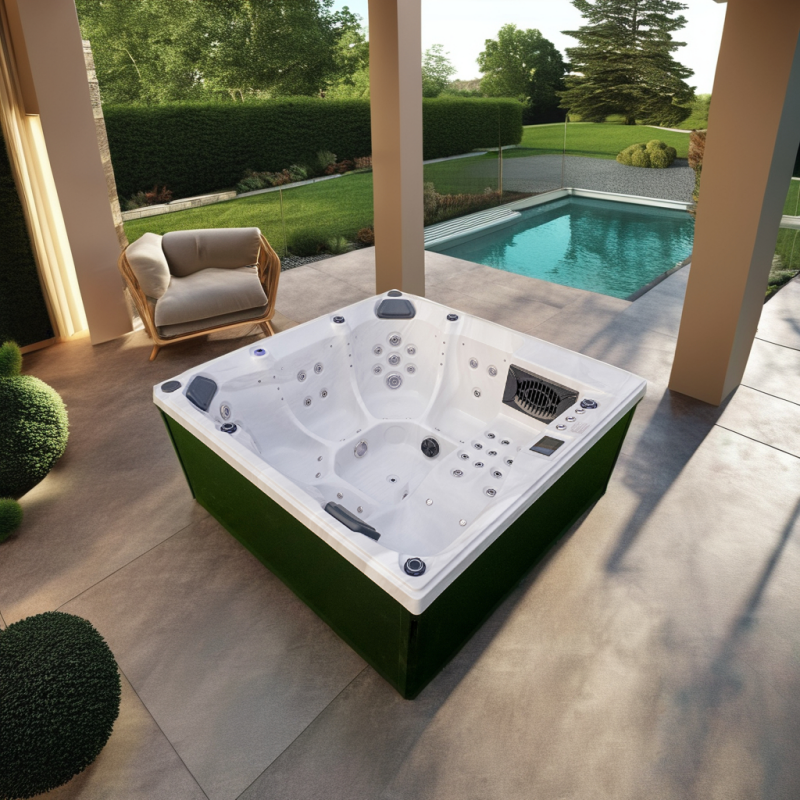
Is 220V more common for spa jacuzzi tubs?
Yes, 220V is the most common voltage for spa jacuzzi tubs internationally.
Applicable regions include:
• China
• Europe
• Australia
• Southeast Asia
• Middle East
• Most South American countries
220V Features:
• Can drive higher power heaters
• Supports multi-pump designs
• Relatively low current
• More suitable for large outdoor spa jacuzzi tubs
For example, many LOVIA SPA models use 220V + 3kW heaters, which is a very typical configuration in the industry.
Why would a spa jacuzzi tub still use 380V?
380V (or 400V, 415V) is primarily a three-phase power supply used for:
• Large commercial spa jacuzzi tubs
• High-power configurations with multiple pumps
• Scenarios with a large number of devices and high power
Advantages of 380V:
• More stable operation of high-power equipment
• Lower current
• More balanced load distribution
For example:
• Three or more massage pumps
• High-power circulation systems
• Multi-heater structures
Using 380V is safer for these large-scale spa jacuzzi tubs.
What is the current of a spa jacuzzi tub? How to calculate it based on voltage and power?
After understanding the voltage, we need to calculate the current (Amps).
Current calculation formula:
Current (A) = Power (W) ÷ Voltage (V)
For example, a 3kW heater from a LOVIA SPA:
• Operating at 220V: 3000 ÷ 220V ≈ 13.6A
• Operating at 110V: 3000 ÷ 110V ≈ 27.2A
The current difference is significant, so lower voltage (e.g., 110V) requires higher current, placing greater strain on the wiring.
What are the main power-consuming components of a spa jacuzzi tub?
How much current does each component require?
A typical spa jacuzzi tub includes the following power-consuming components:
• Heater (2–3kW)
• Massage pump (1–3HP)
• Circulation pump (0.35–1HP)
• Bubble pump (400–700W)
• Control system (50–150W)
• Sterilization equipment (ozone/UV)
• Lighting system (LED)
The current and power relationship for each component is analyzed below.
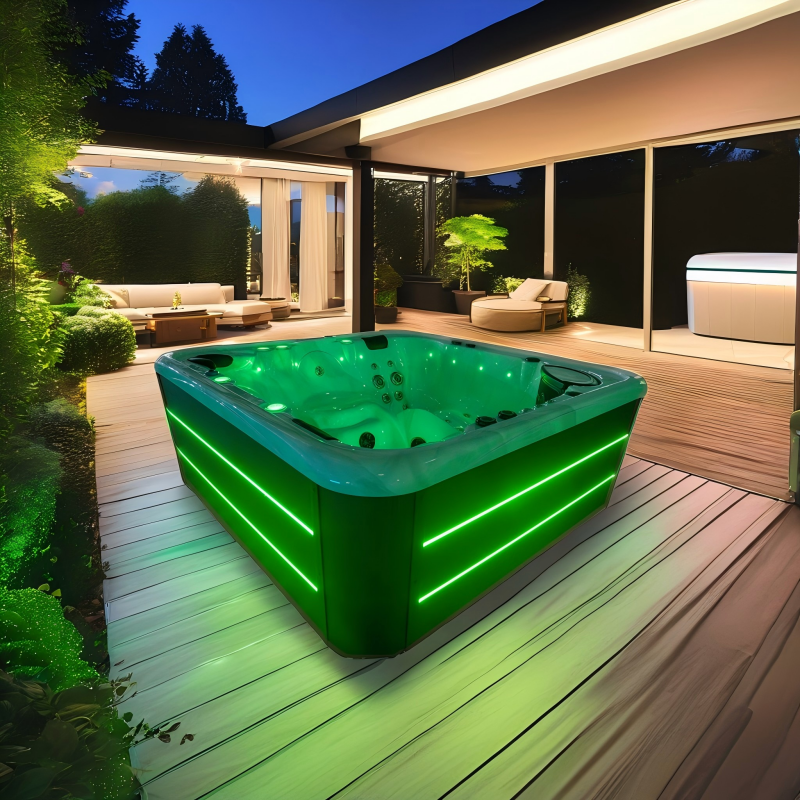
What are the voltage and current of the heater? (Taking 3kW as an example)
Taking a common 3kW heater in LOVIA SPA as an example:
Voltage Heater Power Current
110V 3kW ≈ 27A
220V 3kW ≈ 13.6A
380V 3kW (Three-phase) ≈ 4.5A/phase
As can be seen:
• The lower the voltage, the higher the current.
• 380V three-phase electricity is the most current-efficient.
This is why large spa jacuzzi tubs commonly use 380V.
What is the current of a massage pump?
Typical configurations of massage pumps range from 1HP to 3HP.
Conversions:
• 1HP ≈ 750W
• 2HP ≈ 1500W
• 3HP ≈ 2200W
Assuming 220V:
• 1HP pump: 750W ÷ 220V ≈ 3.4A
• 2HP pump: 1500W ÷ 220V ≈ 6.8A
• 3HP pump: 2200W ÷ 220V ≈ 10A
If a spa jacuzzi tub is equipped with three massage pumps, the total current can exceed 20A.
What is the current of the circulation pump?
The circulation pump has a relatively low power consumption (0.35–1HP), calculated at 220V:
• 0.35HP (250W) ≈ 1.1A
• 0.5HP (370W) ≈ 1.7A
• 1HP (750W) ≈ 3.4A
The circulation pump typically runs 24 hours a day, so its power consumption is relatively stable.
What is the current draw of the bubble pump?
The bubble pump is approximately 400W–700W:
• 400W ÷ 220V ≈ 1.8A
• 700W ÷ 220V ≈ 3.2A
Are the control system and LED lights power-consuming?
Not much, typically:
• 50–150W, total current 0.3–0.6A
• LEDs have extremely low power consumption
This is negligible.
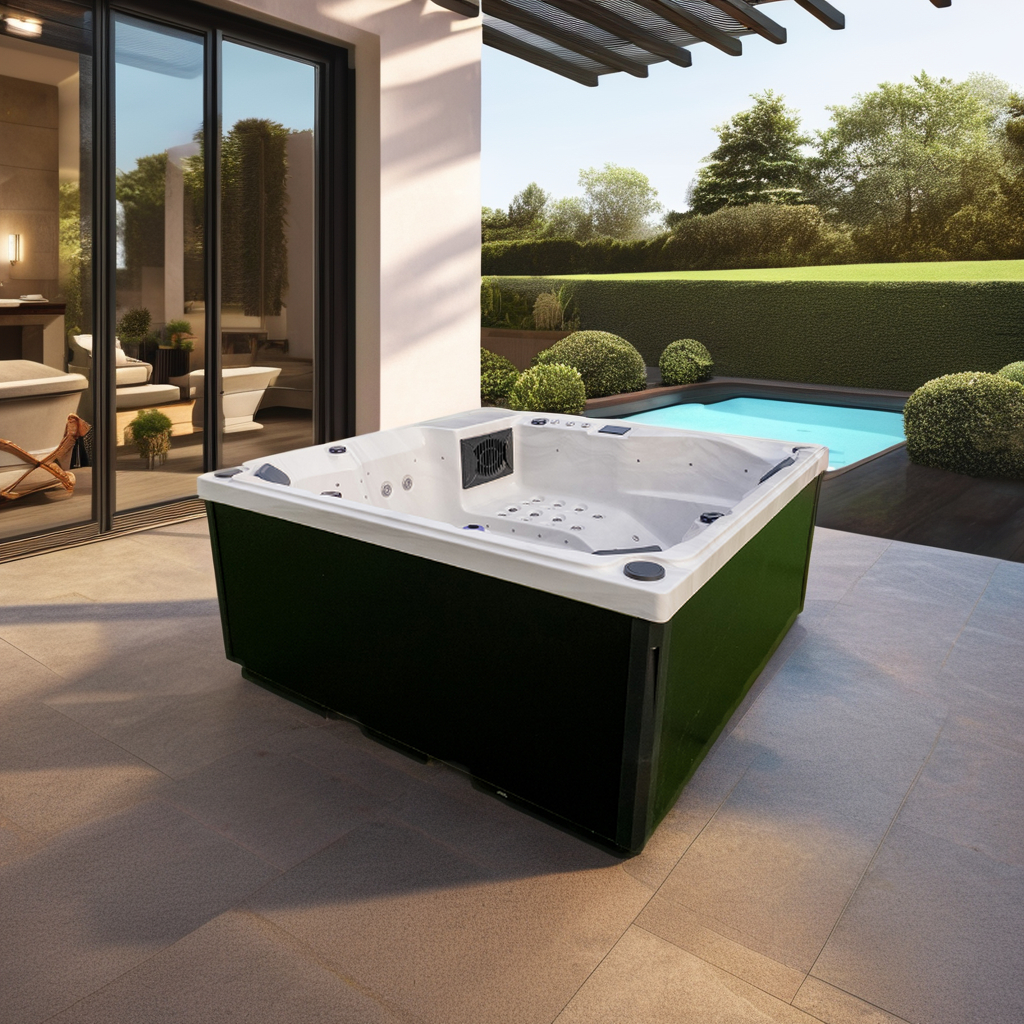
What is the total current required for a spa jacuzzi tub? How to estimate it?
Below are calculations based on a typical configuration:
• 3kW heater (13.6A)
• Two massage pumps (2HP × 2 = 13.6A)
• One circulation pump (1HP = 3.4A)
• Bubble system (3A)
• Other systems (1A)
Total current ≈ 34A–36A
Therefore, most spa jacuzzi tubs require:
✔ A dedicated 32A–40A circuit (220V country)
✔ A dedicated 50A–60A circuit (110V country)
The higher the current, the more professional the electrician is required for installation.
Why can't spa jacuzzi tubs use ordinary household outlets?
Very important technical warning:
Spa jacuzzi tubs must never be used with ordinary 10A–16A household outlets.
Reasons include:
• Heater power is too high
• High instantaneous pump starting current
• Total power far exceeds that of ordinary household appliances
• High risk of socket overheating
• Potential for circuit breakers or fire hazards
Required:
• Independent circuit
• Independent circuit breaker
• Dedicated wire gauge
• Dedicated residual current device (RCD/GFCI)
This is an internationally accepted standard.
Why is 380V more stable for large spa jacuzzi tubs?
Reasons are as follows:
• Three-phase power shares the load
• Lower current
• More stable operation of multiple pumps simultaneously
• Longer lifespan for heaters and motors
• Industrial-grade power supply is suitable for commercial spa jacuzzi tubs
For large outdoor spas or commercial massage tubs, 380V is the optimal choice.
What safety features are required for the voltage and current of spa jacuzzi tubs?
International standards require spa jacuzzi tubs to be equipped with the following safety devices:
Is a residual current device (RCD) mandatory?
Yes, an RCD/GFCI is mandatory. Functions:
• Protection against electric shock
• Protection against leakage current
• Ensuring safety in wet environments
General Requirements:
• 30mA rating
• Response time < 0.04 seconds
Is a separate circuit mandatory?
Yes.
Spa jacuzzi tubs must not share circuits with kitchens, air conditioners, or electrical outlets.
Required:
• Independent circuit breaker
• Independent wiring
• Independent grounding
Otherwise, tripping or even electrical failure may occur.
Is grounding of spa jacuzzi tubs important?
Extremely important.
In a water + electricity environment:
• All metal parts must be grounded.
• Water pumps, heaters, and other equipment must be connected to a grounding wire.
• Prevent leakage risk.
Poor grounding is a major safety hazard.
What voltage and current parameters should be confirmed before installing a spa jacuzzi tub?
The main items to check are:
• Power supply voltage (110V/220V/380V)
• Heater power (e.g., 3kW for LOVIA SPA)
• Total water pump power
• Total current requirement
• Wire gauge requirement
• Circuit breaker specifications
• RCD/GFCI type
• Three-phase power required (for larger models)
Based on these parameters, the electrician can install correctly.
What voltage and current does a spa jacuzzi tub require?
A brief summary below:
✔ Spa jacuzzi tub voltage
Primarily 110V / 220V / 380V
For example: LOVIA SPA supports three power supply specifications.
✔ Current depends on power
Current calculation: A = W ÷ V
✔ Typical heater
3kW heater current:
• 110V: ≈27A
• 220V: ≈13.6A
• 380V (three-phase): ≈4.5A/phase
✔ Multi-pump systems draw higher current
Most spa jacuzzi tubs require:
• 220V: 32A–40A circuit
• 110V: 50A–60A circuit
✔ A dedicated circuit must be used
Including:
• Dedicated wiring
• Residual current device (RCD)
• Good grounding
✔ Using ordinary household outlets is not recommended
Because the power is too high and does not meet safety standards.