


OEM vs. ODM for Outdoor Hot Tubs: Which Model Suits Your Business?
2026-10-17 15:30Driven by global trends in wellness consumption and rising demand for outdoor leisure, home patio upgrades, and commercial wellness projects, outdoor spa hot tubs have evolved from niche luxury items into key products for residential homes, resorts, fitness centers, spas, and real estate developments. For brands, importers, and distributors looking to enter the spa equipment market, selecting the right manufacturer and partnership model is crucial; these choices directly impact product competitiveness, marketing efficiency, and long-term profitability.
Currently, the international market primarily utilizes two production models for outdoor spa hot tubs: OEM (Original Equipment Manufacturer) and ODM (Original Design Manufacturer). While both enable rapid market entry, they differ significantly in terms of product control, R&D investment, time-to-market, brand building, and long-term strategic development.
In short, the OEM model prioritizes client-led product development, where the manufacturer handles design optimization and mass production based on the client's specifications. Conversely, the ODM model relies on the manufacturer's existing, mature product solutions, allowing clients to customize branding and optimize features. Neither model is inherently superior; the best choice depends on a company's specific business goals, market positioning, and investment capabilities.
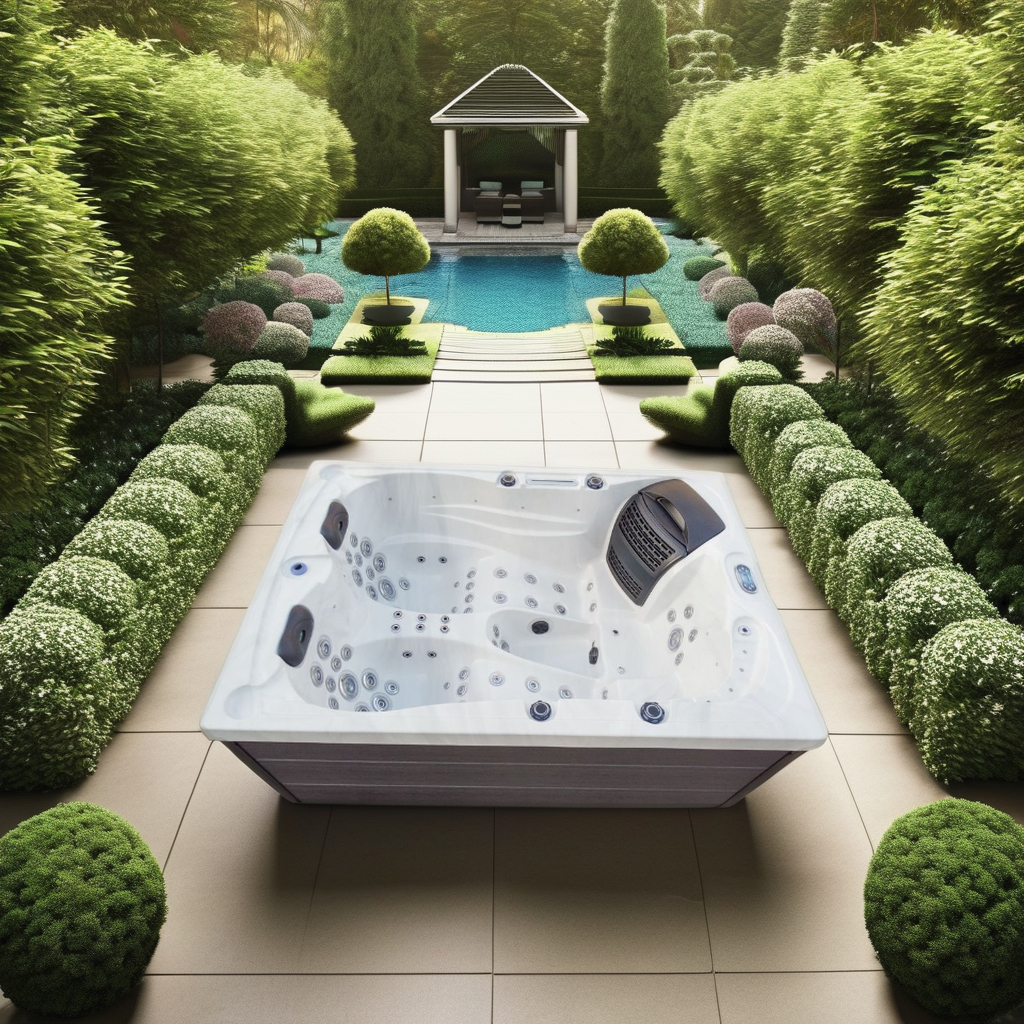
Why is the outdoor hot tub industry increasingly relying on OEM and ODM models?
In the past, entering the outdoor spa hot tub market typically required companies to build their own manufacturing facilities. This entailed significant investment in capital and technical personnel across a wide range of processes—from product design, mold development, acrylic processing, and insulation structure design to the integration of pump systems, electronic controls, plumbing, and quality assurance. This approach not only involved long lead times for setup but also required the long-term accumulation of manufacturing expertise.
A fully developed outdoor spa hot tub actually involves a multitude of complex processes. For instance, the product shell typically utilizes high-strength acrylic material requiring vacuum thermoforming; the internal structure requires fiberglass reinforcement to enhance overall load-bearing capacity; the water circulation system demands a well-designed layout of jets, pump power, and filtration; and electrical components must comply with safety standards across different regions, such as CE, ETL, and SAA certifications.
For companies lacking manufacturing experience, establishing an in-house factory entails significant investment in fixed assets and presents challenges regarding supply chain management, quality control, and after-sales maintenance. Consequently, an increasing number of brands are partnering with specialized outdoor hot tub manufacturers to enter the market rapidly through OEM or ODM models.
Currently, Europe and North America remain key markets for modern outdoor jacuzzi tubs, while demand is also rising in Australia, the Middle East, and the high-end residential sectors of certain Asian countries. Driven by consumer interest in home wellness, outdoor lifestyle quality, and private leisure spaces, outdoor hot tubs are evolving from mere luxury items into high-quality lifestyle amenities.
In this market landscape, OEM and ODM outdoor hot tubs have become vital strategies for brands to optimize their supply chains and mitigate production risks.
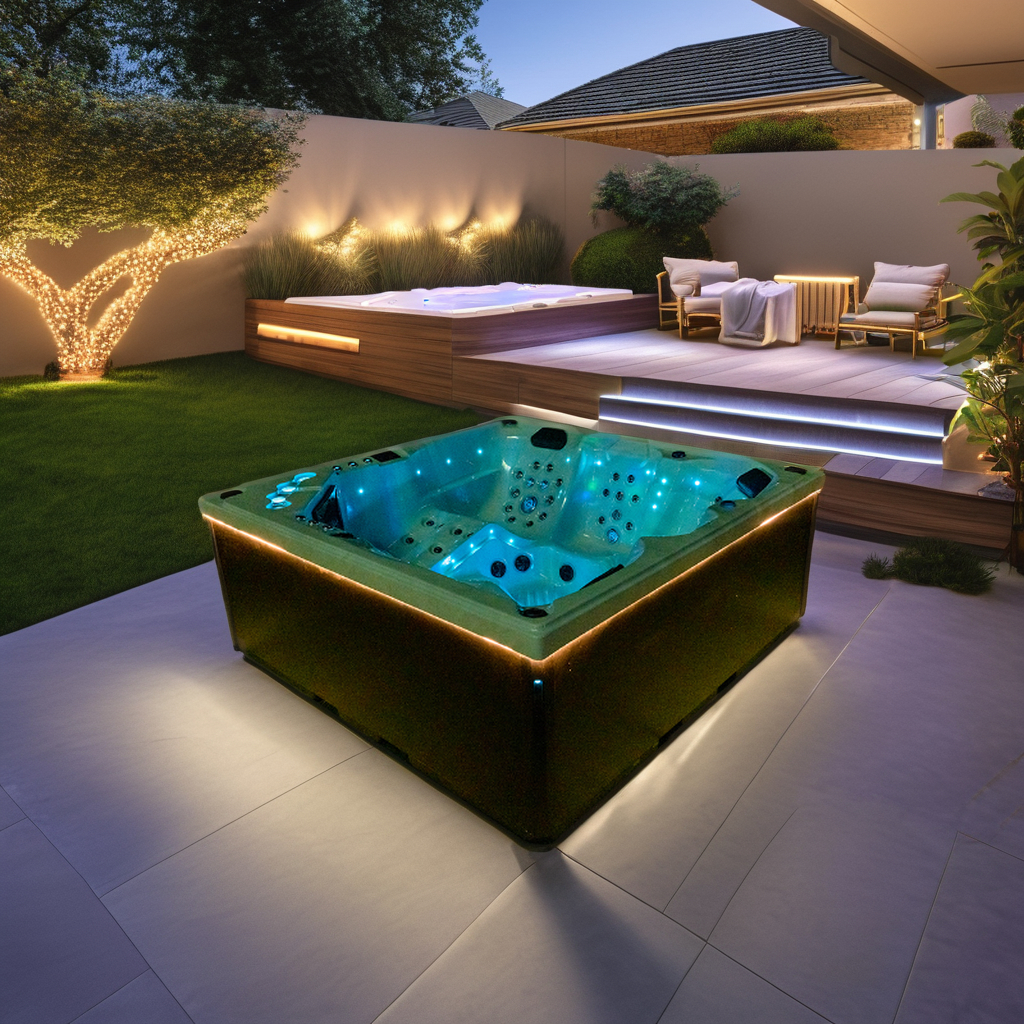
What is an OEM outdoor hot tub?
An OEM (Original Equipment Manufacturer) outdoor spa hot tub is one where the client defines the product requirements, and the manufacturer produces the unit based on the client's design specifications, technical standards, and branding requirements.
Under the OEM model, the client typically holds greater control over the product. For example, an overseas spa brand wishing to develop a proprietary modern outdoor jacuzzi tub can provide the manufacturer with specific requirements, including:
•Product dimensions;
•Seating capacity;
•Massage jet layout;
•Acrylic color;
•Skirt design;
•LED lighting system;
•Smart control system;
•Insulation solution;
•Branded packaging.
The manufacturer then handles engineering design, prototype development, testing and validation, and mass production based on these requirements.
The primary advantage of OEM outdoor hot tubs is the potential for strong product differentiation. For companies that already possess brand influence or established sales channels, unique product designs can help avoid the pitfalls of commoditized competition. For instance, even with a standard six-person outdoor hot tub, different brands can create distinct market offerings through the OEM process. Some brands might prioritize home comfort by incorporating ergonomic seating designs that enhance massage effectiveness for the shoulders, lower back, and legs. Others might target markets in colder regions by reinforcing thermal insulation structures, ensuring the unit maintains high energy efficiency even in low-temperature environments. Still others might boost the product's added value through unique aesthetics, smart control features, and the use of premium materials.
Consequently, OEM outdoor hot tubs are particularly well-suited for companies aiming to establish a unique brand identity and build long-term competitive advantages.
What is an ODM outdoor hot tub?
An ODM outdoor hot tub is one where the manufacturer already possesses a mature product design and production plan; the client can select an existing model and make minor adjustments based on market demand.
Compared to the OEM model, the ODM approach places greater emphasis on rapid time-to-market and reduced development costs.
For example, consider an importer entering the spa industry who wishes to sell outdoor spa hot tubs but lacks an in-house R&D team and prefers not to invest heavily in product development. This company could select a mature model already offered by a manufacturer and create its own product by adjusting elements such as:
•Changing the brand logo;
•Modifying product colors;
•Adjusting packaging design;
•Adding specific features or configurations;
•Customizing sales and marketing materials.
Since ODM products have already undergone R&D and testing by the manufacturer, companies can significantly shorten the product development cycle.
Typically, a brand-new OEM outdoor hot tub requires multiple stages—including requirements definition, structural design, prototyping, testing and refinement, and full-scale production. In contrast, ODM hot tubs are based on existing, mature products that can be optimized, resulting in a faster time-to-market.
For new brands entering the market, distributors, or companies looking to quickly validate market demand, the ODM model helps minimize the costs associated with trial and error.
OEM vs. ODM Outdoor Hot Tubs: What’s the Difference?
While both OEM and ODM are forms of custom manufacturing, there are distinct differences in how the actual collaboration unfolds.
First and foremost, the primary difference lies in who controls the product design.
In the OEM model, the client is typically responsible for defining the product direction, while the manufacturer handles the actual production. For instance, if a client wishes to develop an outdoor spa hot tub with a unique appearance, advanced massage features, or specific dimensions, the manufacturer must be involved in the engineering and development process.
In the ODM model, the manufacturer holds more initiative, as the product design is already complete, leaving the client primarily responsible for selection and minor adjustments.
Secondly, the two models differ in terms of cost investment.
OEM outdoor hot tubs typically entail higher upfront costs due to the need for new product development—covering design, prototyping, mold modification, and testing.
Conversely, ODM outdoor hot tubs utilize established designs, thereby reducing R&D investment; this makes them a more suitable choice for companies with limited budgets or those just entering the market.
Thirdly, there is a distinction regarding product uniqueness.
OEM products foster stronger brand identity, as they can be designed in alignment with the company's specific strategy.
While ODM products allow for rapid sales, their designs originate with the manufacturer, meaning similar products may already exist in the market.
Therefore, OEM is generally better suited for companies aiming to build long-term brand equity, whereas ODM offers a clear advantage for those prioritizing a quick market entry.
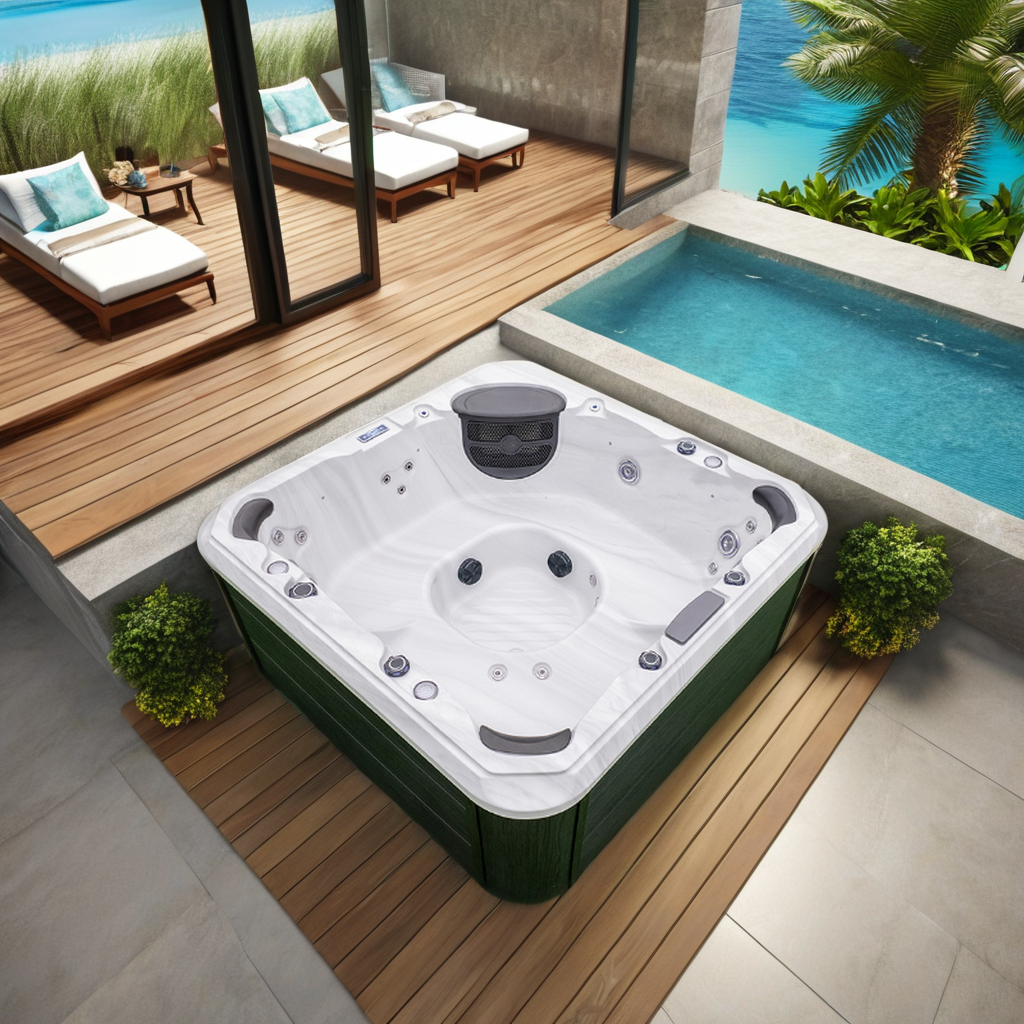
Which companies are best suited for OEM outdoor hot tubs?
Not every company needs to start with OEM, yet the model offers significant value to the following types of businesses:
First, for companies that already possess an established brand system, OEM can facilitate the creation of independent product lines.
For example, established European and American spa brands with loyal customer bases need to continuously launch new outdoor spa hot tub models to meet diverse consumer demands. Relying solely on generic market products risks eroding a brand's competitive edge; thus, developing exclusive products through OEM becomes a crucial strategy.
Second, OEM offers greater design flexibility for companies targeting the high-end market.
Premium consumers value not only functionality but also aesthetics, user experience, and brand value. A deeply customized OEM outdoor hot tub can enhance product value through the use of premium materials, smart systems, and unique designs.
Furthermore, OEM is a common choice for hotels, resorts, and commercial wellness projects.
Commercial projects often have specific requirements—such as a unified design style, large-scale equipment, a mix of models, or specialized feature configurations—that standard ODM products often cannot fully satisfy.
Which companies are best suited for ODM outdoor hot tubs?
Compared to the OEM model, ODM outdoor hot tubs are a better fit for companies looking to launch their business quickly.
First, new entrants to the industry often lack product R&D experience.
Modern outdoor jacuzzis are technically complex products that require careful consideration of plumbing and electrical systems, safety standards, and long-term operational stability. Developing a product in-house would require a significant investment of time to acquire the necessary industry expertise.
The ODM model allows companies to leverage a manufacturer's proven solutions, thereby reducing the complexity of R&D.
Second, ODM is ideal for companies that want to test the market quickly.
For instance, an overseas distributor planning to enter the local outdoor spa market might be unsure of consumer acceptance for a specific type of product. Launching a market-ready product via the ODM model enables rapid feedback.
If market performance is strong, the company can subsequently transition to an OEM model to develop products that better align with their specific brand positioning.
Third, the ODM model helps control initial investment costs.
Companies can reduce expenses related to product R&D, testing, and engineering, allowing them to allocate more capital toward marketing and building sales channels.
What challenges do companies face when sourcing OEM and ODM outdoor hot tubs?
1. Focusing solely on price while overlooking manufacturing capabilities
Many buyers prioritize product quotes when selecting a modern outdoor jacuzzi tub supplier. However, outdoor hot tubs are products designed for long-term use, and quality directly impacts customer satisfaction.
If a manufacturer cuts material costs to lower the price, it can lead to:
•Reduced insulation performance;
•Inefficient water circulation;
•Shorter pump lifespan;
•Increased risk of leaks;
•Higher after-sales maintenance costs.
Therefore, companies should evaluate a manufacturer's overall production capabilities rather than simply comparing prices.
2. "OEM" services that amount to nothing more than private labeling
Some suppliers claim to offer OEM services but are actually only capable of swapping logos and making minor adjustments to packaging.
A manufacturer with genuine OEM capabilities for modern outdoor jacuzzi tubs should possess:
•A product R&D team;
•Engineering design capabilities;
•Mold development capabilities;
•A production management system;
•Quality inspection processes.
Only with these capabilities can a company truly achieve product differentiation.
3. Risks Associated with International Shipping and Delivery
Modern outdoor jacuzzi tubs are bulky, requiring careful planning for export and shipping.
A standard outdoor hot tub typically measures around 2000mm x 2000mm, while large swim spa products can exceed 4000mm in length. Due to their large size, factors such as packaging methods, container space utilization, and protective measures during transit impact the final cost.
Professional manufacturers typically mitigate shipping risks through reinforced packaging, shock-resistant designs, and extensive export experience.
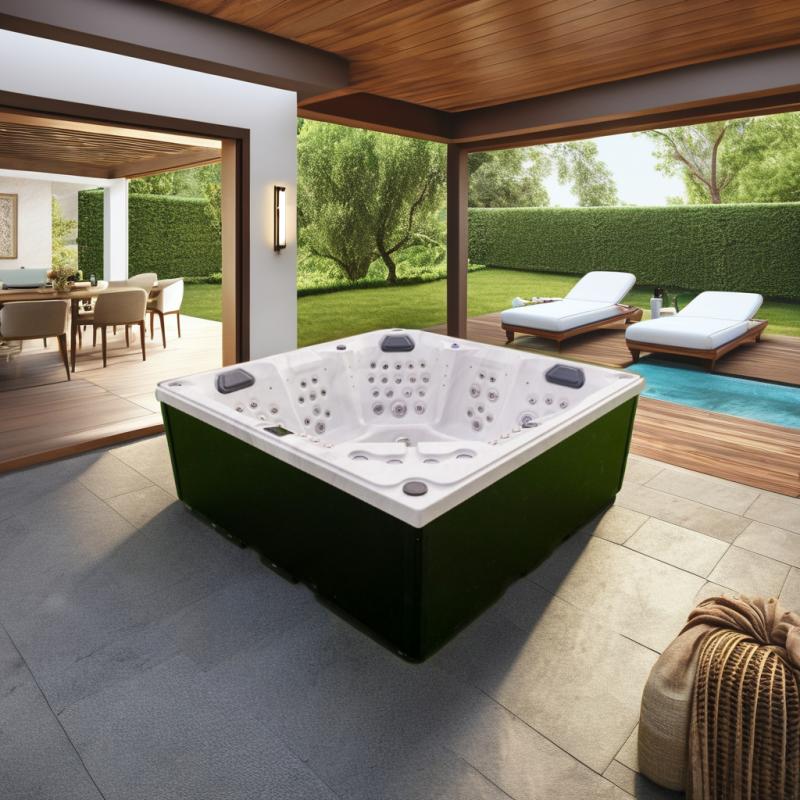
FAQ: Common Questions About OEM and ODM Outdoor Hot Tubs
Q1: What is the difference between OEM and ODM outdoor hot tubs?
For OEM outdoor hot tubs, the client provides the design specifications, and the manufacturer handles production; for ODM outdoor hot tubs, the process is based on the manufacturer's existing product designs with modifications, placing greater emphasis on rapid development and cost control.
Q2: Which model should a new brand choose when entering the modern outdoor jacuzzi tub industry?
If a company lacks product R&D experience and wishes to test the market quickly, the ODM model is a good starting point. If a company has a clear brand positioning and aims to create unique products, the OEM model is worth considering.
Q3: What is the typical development cycle for OEM outdoor hot tubs?
Depending on the product's complexity, the process generally takes anywhere from a few weeks to several months, covering design confirmation, prototyping, testing, and preparations for mass production.
Q4: What aspects of ODM outdoor hot tubs can be customized?
Typically, elements such as branding/logos, colors, packaging, certain specifications, and sales materials can be adjusted; the specific scope depends on the manufacturer's development capabilities.
Q5: Are OEM outdoor hot tubs necessarily better than ODM products?
Both models cater to different business needs. OEM emphasizes product uniqueness, while ODM prioritizes development efficiency; companies should choose the model that best aligns with their market strategy.