


Is sunlight good or bad for outdoor spa hot tub water?
2026-07-20 15:35Outdoor spa hot tubs, as an important part of modern backyard leisure life, not only provide a comfortable spa experience but also serve as essential facilities for family relaxation, social entertainment, and health management. Since most outdoor spa hot tubs are installed in patios, terraces, gardens, or around pools, they are inevitably exposed to the natural environment for extended periods. Sunlight is one of the most significant factors affecting the operating environment of jacuzzi outdoor spa hot tubs.
Many consumers have similar questions when purchasing and using outdoor spa hot tubs: Is sunlight a good thing or a bad thing? Will prolonged exposure to sunlight directly change the water quality of outdoor hot tubs? Should outdoor spa hot tubs be installed in locations with full sunlight all day, or should they be placed in shady areas as much as possible?
These questions cannot be answered with a simple "yes" or "no." In fact, the impact of sunlight on outdoor spa hot tubs is clearly dual. On the one hand, moderate sunlight can increase water temperature, reduce the activity of some microorganisms, and improve the overall user experience; on the other hand, prolonged and intense sunlight may lead to rapid decomposition of disinfectants, excessively high water temperatures, easier algae growth, and even accelerated equipment aging. Therefore, sunlight itself is not the sole factor determining the water quality of outdoor hot tubs. It indirectly alters water quality by affecting water temperature, chemical balance, biological activity, and equipment operation.
According to publicly available research data from some swimming pool and spa industries, in high UV environments during summer, without stabilizers or shading measures, free chlorine in outdoor spa hot tubs can be lost by more than 50% within hours, and in extreme cases, even up to 70%. Simultaneously, when water temperatures consistently exceed 40°C, the rates of bacterial growth, water evaporation, and disinfectant consumption all increase significantly. Therefore, understanding the relationship between sunlight and jacuzzi outdoor spa hot tubs is crucial for maintaining stable water quality, extending equipment lifespan, and reducing maintenance costs.
This article will provide a comprehensive analysis of the impact of sunlight on outdoor spa hot tub water quality, covering aspects such as water chemistry, UV radiation, water temperature changes, algae control, equipment protection, and daily maintenance. This will help you scientifically manage your outdoor spa hot tub and ensure the equipment always operates at its optimal condition.
Does sunlight directly change the water quality of outdoor hot tubs?
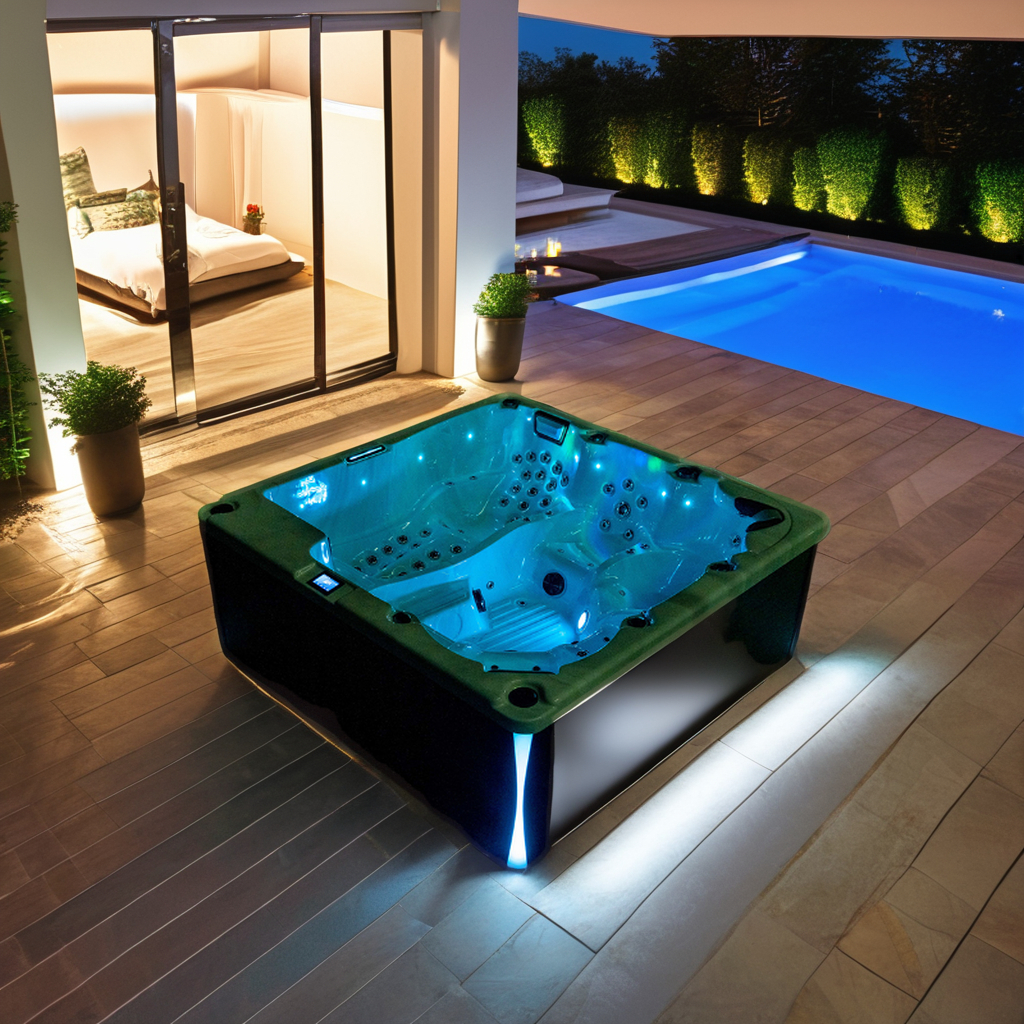
Strictly speaking, sunlight doesn't directly alter the water quality of an outdoor hot tub like adding chemicals, but it indirectly affects the water balance through various physical and chemical processes, ultimately leading to changes in water quality.
Sunlight primarily consists of visible light, infrared radiation, and ultraviolet radiation. Of these, ultraviolet radiation and heat have the greatest impact on outdoor hot tubs. Ultraviolet radiation participates in some chemical reactions, accelerating the decomposition of certain disinfectants, while infrared radiation raises water temperature. Simultaneously, sunlight promotes water evaporation, causing changes in mineral concentration, total dissolved solids (TDS), and some chemical indicators.
For a well-maintained outdoor spa hot tub, short-term exposure to sunlight usually doesn't cause rapid water quality deterioration because the circulation, filtration, and disinfection systems continuously maintain water balance. However, prolonged exposure to strong sunlight without timely monitoring and maintenance will gradually reveal its cumulative effects. For example, decreased disinfectant concentration, sustained increases in water temperature, accelerated evaporation, and concentration of organic pollutants can all destabilize the water quality of an outdoor spa hot tub.
Therefore, rather than saying sunlight directly changes the water quality of outdoor spa hot tubs, it's more accurate to say that sunlight alters several key conditions affecting water quality.
What are the positive effects of sunlight on outdoor spa hot tubs?
Many people, when discussing sunlight, often only focus on its negative effects. However, in fact, moderate sunlight also has certain positive aspects for jacuzzi outdoor spa hot tubs.
First, sunlight provides natural heat energy. In spring and autumn, adequate sunshine helps outdoor spa hot tubs maintain a higher base water temperature, thus reducing the operating time of the heating system. According to some energy management studies, in areas with suitable climates, the rational use of natural sunshine can reduce heating energy consumption by approximately 5% to 15% per day. This has certain energy-saving value for families who use outdoor spa hot tubs long-term.
Second, ultraviolet rays themselves have a certain bactericidal ability. Although natural sunlight cannot completely replace professional ultraviolet disinfection equipment, moderate ultraviolet radiation can reduce the activity of some microorganisms. However, this effect is far from sufficient to maintain the water quality of outdoor spa hot tubs, so disinfection cannot be relied upon solely for sunlight.
Furthermore, sunlight can improve the overall user experience. Many users enjoy outdoor hot tubs on sunny days because natural light enhances visual comfort and helps the body synthesize Vitamin D, further enhancing the outdoor leisure experience. Of course, this is a benefit of sunlight to the human body, not a direct improvement in water quality.
Why does sunlight accelerate the consumption of disinfectants in outdoor hot tubs?
This is one of the most important aspects of how sunlight affects outdoor spa hot tubs.
Currently, most outdoor spa hot tubs primarily use chlorine or bromine as disinfectants. Chlorine is particularly susceptible to ultraviolet (UV) radiation. When UV rays from sunlight hit the water, they accelerate the decomposition of hypochlorous acid and hypochlorite, causing a rapid decrease in free chlorine concentration.
Publicly available research data shows that under strong UV conditions at midday in summer, free chlorine without stabilizer protection can be lost by more than half within two to three hours. If exposed to continuous sunlight all day, the loss rate can even reach around 70%. This means that disinfectants that are originally effective at killing bacteria and viruses quickly become ineffective under sunlight, thus increasing the risk of microbial growth.
In contrast, bromine is relatively less affected by UV radiation, so some outdoor spa hot tubs exposed to sunlight for extended periods prioritize bromine disinfection systems. Regardless of the disinfection method used, it's crucial to replenish disinfectant promptly based on test results, rather than relying entirely on automatic dosing systems.
Many users find that outdoor spa hot tubs require more frequent disinfectant replenishment in summer. This is primarily due to sunlight accelerating disinfectant consumption, rather than a malfunction in the equipment itself.
Does sunlight make outdoor hot tubs more prone to algae growth?
Under certain conditions, yes.
Algae growth requires three basic conditions: sunlight, suitable temperature, and nutrients. While outdoor spa hot tubs don't have the large volume of water of swimming pools, algae can still develop if exposed to sunlight for extended periods, coupled with insufficient disinfectant and the accumulation of organic pollutants.
However, it's important to note that compared to large swimming pools, outdoor spa hot tubs typically have higher water temperatures, faster circulation rates, and higher disinfectant concentrations, thus generally resulting in less algae problems. The real cause of algae blooms is often a combination of factors, such as decreased filtration system efficiency, lack of water replacement over a long period, pH imbalance, and continuous sunlight exposure.
Once algae begin to grow, it not only turns the water green and cloudy but also increases the burden on the filtration system and further depletes disinfectant. Therefore, for outdoor hot tubs installed in sunny areas, water quality testing and regular flushing disinfection should be strengthened.
Does sunlight raise the water temperature of outdoor spa hot tubs?
The answer is yes, and the effect is more pronounced than many consumers realize.
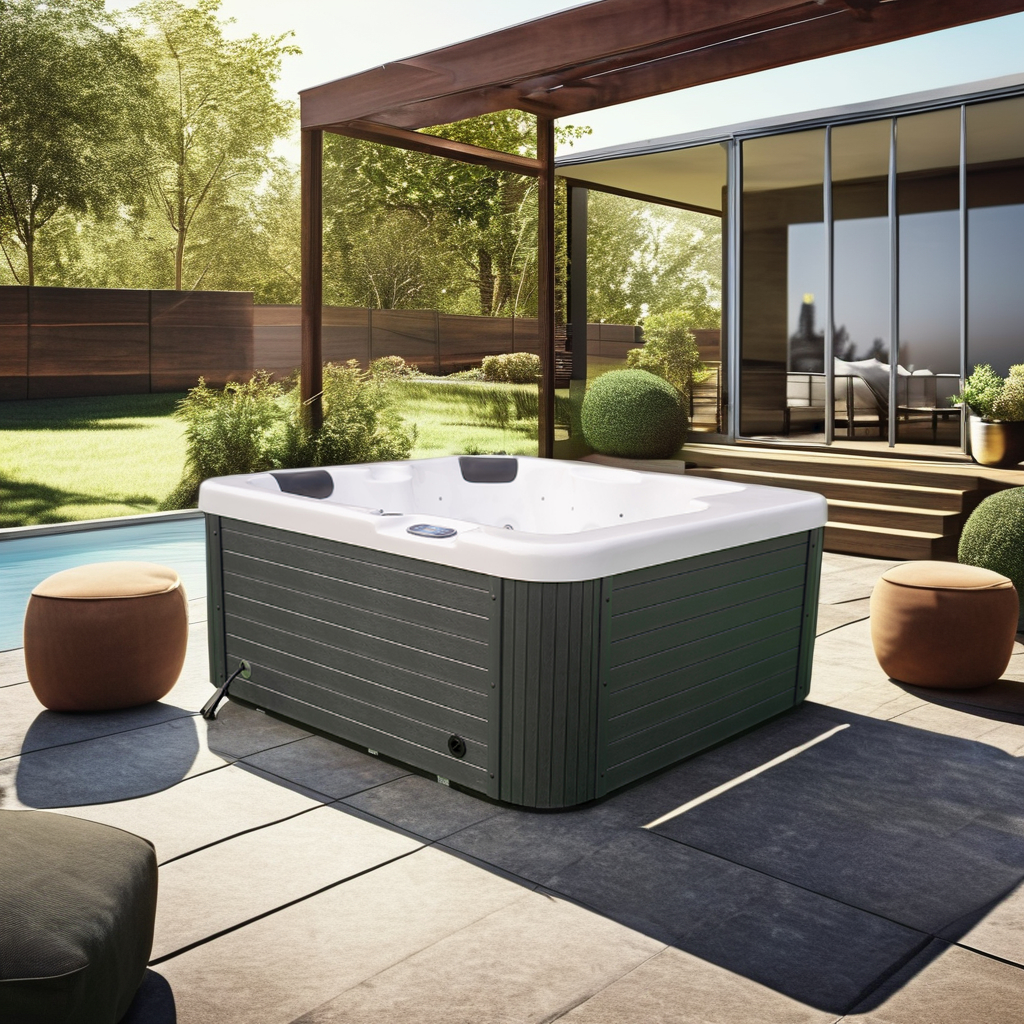
Although outdoor spa hot tubs are equipped with thermostats, prolonged exposure to direct sunlight will continuously transfer heat into the water. When the ambient temperature reaches above 35°C, the water temperature in some jacuzzi outdoor spa hot tubs without heaters may still rise naturally by several degrees Celsius.
A rise in water temperature is not inherently bad, but exceeding the recommended range can lead to a series of problems. For example, increased disinfectant evaporation, faster water evaporation, decreased comfort, and increased bacterial growth.
It is generally recommended to maintain the water temperature of outdoor spa hot tubs between 37°C and 40°C. If the natural water temperature in summer is already close to this range, the heater setting can be appropriately lowered to reduce energy waste.
Does sunlight affect the pH and chemical balance of outdoor spa hot tubs?
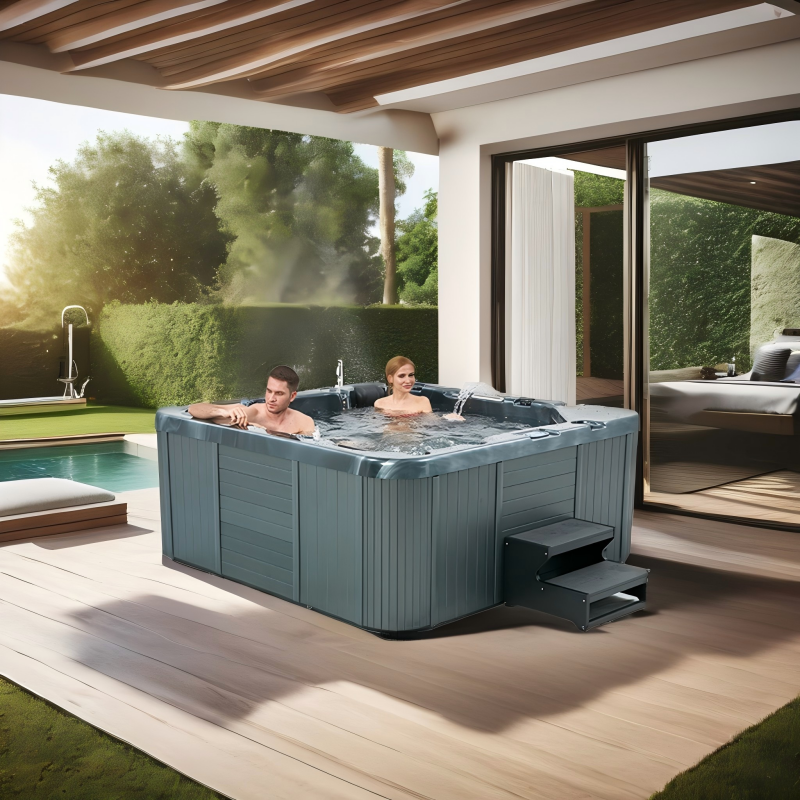
Sunlight doesn't directly change pH, but it can indirectly alter the chemical balance of water by affecting water temperature, evaporation rate, and disinfectant decomposition.
For example, as water evaporates, the concentration of minerals and dissolved solids increases. If users only add tap water and neglect overall water quality testing, over time, total alkalinity, calcium hardness, and total dissolved solids may gradually deviate from recommended ranges.
Furthermore, the continuous decomposition of disinfectants alters the rates of some chemical reactions, making the water more prone to pH fluctuations. Therefore, during seasons with strong sunlight, it is recommended to increase the frequency of testing, checking free chlorine, pH, and total alkalinity at least two to three times per week, rather than strictly adhering to the winter maintenance schedule.
Methods to Reduce the Adverse Effects of Sunlight on Outdoor Hot tubs
Reducing the impact of sunlight doesn't mean installing jacuzzi outdoor spa hot tubs in completely sunless locations; rather, it's about achieving a proper balance between light and protection.
Firstly, using a high-quality insulated cover is one of the most effective methods. When the jacuzzi outdoor spa hot tub is not in use, the insulated cover should be promptly placed over it. This not only reduces UV exposure but also decreases evaporation, maintains temperature, and minimizes the entry of debris into the water.
Secondly, partial shade can be provided using gazebos, awnings, retractable awnings, or garden landscaping plants. This ensures natural light is not completely lost while reducing the impact of strong midday sunlight.
Additionally, maintenance frequency should be adjusted according to the season. In summer, due to stronger sunlight, it is recommended to increase the frequency of disinfectant testing and filter cleaning, and to perform regular shock disinfection to maintain good water quality in the jacuzzi outdoor spa hot tub.
For users in areas with high UV radiation, a stable disinfection solution suitable for outdoor hot tubs can be used according to the manufacturer's recommendations to reduce the impact of UV radiation on the disinfectant.
Outdoor Hot Tub Installation Location: Sunlight or Shade?
This is a question many consumers consider before installation. In reality, there is no single answer suitable for every household; the decision should be made based on a comprehensive consideration of the local climate, usage habits, and garden layout.
If the area experiences cold winters, moderate sunlight can help raise the water temperature and reduce energy consumption; therefore, installation in a location that receives partial daily sunlight is usually more reasonable.
If the local summer is hot and UV radiation is strong, it is recommended to choose a location with sunlight in the morning and evening and shade at midday. This allows you to enjoy the natural environment while minimizing the long-term impact of sunlight on the water quality and equipment of the jacuzzi outdoor spa hot tub.
At the same time, privacy, wind protection, drainage, power supply layout, and ease of maintenance should also be considered, rather than using sunlight as the sole installation criterion.
FAQ
Does sunlight directly change the water quality of a jacuzzi outdoor spa hot tub?
Sunlight does not directly change the water quality, but it indirectly affects the water's chemical balance and overall water quality by accelerating disinfectant decomposition, increasing water temperature, and promoting evaporation.
Why do jacuzzi outdoor spa hot tubs need more frequent disinfectant replenishment in summer?
Because stronger UV radiation in summer accelerates the decomposition of disinfectants such as free chlorine, causing their concentration to drop more quickly. Therefore, timely replenishment based on test results is necessary.
Will jacuzzi outdoor spa hot tubs grow algae if exposed to direct sunlight for extended periods?
Insufficient disinfectant, inadequate water maintenance, and prolonged exposure to sunlight can indeed increase the risk of algae growth. However, well-maintained outdoor hot tubs generally do not easily develop algae problems.
Is it better to install a jacuzzi outdoor spa hot tub in a shady location?
Not necessarily. Moderate sunlight can help save energy and improve the user experience. It's recommended to choose a location that provides natural light while avoiding prolonged exposure to direct sunlight, which is more conducive to the long-term operation of the equipment.
How to protect jacuzzi outdoor spa hot tubs from sunlight?
It is recommended to use insulated covers, properly install sunshades, strengthen water quality monitoring in summer, replenish disinfectant promptly, and clean the filtration system regularly. These measures can effectively reduce the adverse effects of sunlight on jacuzzi outdoor spa hot tubs.