


How to Use Essential Oils in an Outdoor Spa Hot Tub?
2026-11-09 15:30With the growing popularity of home spas and wellness, more consumers are looking for ways to enhance their experience in outdoor jacuzzi hot tubs. Beyond standard features like hydro-massage jets, temperature control, and LED lighting, aromatherapy has emerged as a sought-after addition. By incorporating scents such as lavender, eucalyptus, or citrus, users can create a more comfortable and relaxing environment while soaking in warm water.
However, using essential oils in an outdoor hot tub is not as straightforward as using them in a standard bathtub. Outdoor whirlpool spa hot tubs are equipped with pumps, filters, heaters, massage jets, and complex internal plumbing. Adding the wrong type of essential oil—or using it incorrectly—can lead to oily residue, clogged filters, excessive foaming, and complications with water quality management or equipment maintenance.
Therefore, it is essential to understand the characteristics of various aromatic products and the proper methods for using them, ensuring that you can enjoy an enhanced spa experience without compromising water quality or the integrity of your equipment. This article covers the selection of essential oils, application methods, frequently asked questions, and equipment maintenance.

Why are more people interested in using essential oils in their outdoor hottubs?
Traditionally, outdoor whirlpool spa hot tubs help users relax through warm-water immersion and hydro-massage. As expectations for home spa experiences rise, basic massage functions are no longer enough for some users; elements like temperature, lighting, music, and fragrance have become integral parts of the overall experience.
1. Enhancing the Relaxation Experience
After a long day, many people turn to their outdoor jacuzzi hot tubs to relieve fatigue. While warm water provides physical comfort, the right fragrance enriches the sensory experience. For instance, the gentle floral notes of lavender or the crisp, fruity aroma of citrus can help set the perfect mood for your spa session.
It is important to note that aromatherapy is primarily a sensory experience; it is not a substitute for medical treatment and should not be viewed as a cure for conditions like insomnia or muscular disorders.
2. Enriching Home Spa Scenarios
Consumers can select different fragrances to suit various occasions or settings. For instance, using a fresh, crisp scent during the day and a soft floral fragrance in the evening can tailor the outdoor hot tub experience to your personal relaxation preferences.
3. Enhancing Product Value
For outdoor hot tub manufacturers, aromatherapy can serve as a key differentiator. Developing dedicated aromatherapy diffusers or including a guide on compatible aromatic products in the user manual can help create a more comprehensive home spa solution.

Why shouldn’t you add regular essential oils directly to an outdoor hot tub?
This is a point consumers frequently overlook. Many assume that because essential oils are natural plant extracts, adding a small amount won’t harm the hot tub equipment. In reality, however, standard pure essential oils are generally not suitable for direct use in outdoor whirlpool spa hot tubs.
1. Essential oils are not water-soluble and can create an oily film
Most pure essential oils are hydrophobic—they do not dissolve in water. When added to an outdoor whirlpool spa hot tub, they tend to float on the surface, forming an oily film.
These oils can also adhere to the tub’s interior walls, filters, massage jets, and internal plumbing. Over time, this accumulation can lead to:
•An oily film on the water surface, compromising water clarity.
•Greasy residue on the tub walls, making cleaning more difficult.
•A buildup of oils and other contaminants in the filters.
•Residue accumulating within internal pipes and jets.
•The formation of unusual foam or the development of unpleasant odors.
For outdoor jacuzzi hot tubs equipped with multiple massage jets and complex circulation systems, the long-term use of unsuitable oil-based additives can lead to higher maintenance costs.
2. Potential complications for water quality management
Outdoor jacuzzi hot tubs typically rely on chlorine or bromine to control microorganisms. Some aromatic products contain organic compounds that, when introduced to the water, may increase the demand for disinfectants and potentially destabilize water quality.
According to the U.S. Centers for Disease Control and Prevention (CDC), water quality in hot tubs should be maintained within the following ranges:
| Water Quality Parameter | Recommended Range |
| Water Temperature | ≤40°C (104°F) |
| pH Value | 7.0–7.8 |
| Free Chlorine | At least 3 ppm |
| Bromine | 4–8 ppm |
Specific requirements should also be followed in accordance with the equipment manufacturer’s instructions and local regulations.
3. High temperatures accelerate the evaporation of essential oils
Outdoor whirlpool spa hot tubs generally operate at elevated water temperatures. High temperatures accelerate the evaporation of certain aromatic compounds, making the scent more intense—though this may also cause the fragrance to dissipate more quickly.
Furthermore, an overly strong scent can lead to headaches, eye irritation, or respiratory discomfort for some users. Consequently, increasing the amount of essential oil used is not a recommended way to intensify the fragrance.
4. Potential for Skin Irritation
Essential oils are concentrated plant extracts; some of their components can cause skin irritation or allergic reactions. If undiluted essential oils are added, they may float on the water's surface, potentially exposing the user's skin to localized, high-concentration droplets.
Therefore, you should never add standard, undiluted essential oils directly into an outdoor hot tub. Even a small amount could compromise the safety of the equipment or the quality of the water.
What types of aromatic products are suitable for outdoor hottubs?
If you wish to use aromatic products in an outdoor hot tub, you should make your selection based on the product's formulation, intended method of use, and compatibility with your equipment.
1. Specialized Hot Tub Aromatherapy Products
These are the preferred choice if you want to infuse the water itself with fragrance. However, be aware that not all products labeled "Spa Aromatherapy" are suitable for outdoor whirlpool spa hot tubs equipped with circulation pumps and filtration systems.
When purchasing, ensure the product is explicitly labeled for use in "hot tubs" or "spas" and is compatible with your specific sanitization system and the materials used in your whirlpool spa hot tub.
Check for the following:
•Suitability for high-temperature spa environments.
•Ease of dispersion in water.
•Likelihood of causing foam or leaving oily residues.
•Compatibility with chlorine or bromine sanitization systems.
•Potential impact on filters and internal plumbing.
2. Water-Soluble Fragrance Products
Water-soluble fragrances are specially formulated to disperse more easily throughout the water. Compared to untreated essential oils, these products are generally better suited for use in water.
However, being "water-soluble" does not mean they leave no residue, nor does it guarantee they are appropriate for an outdoor hot tub. Some products may contain emulsifiers or surfactants, which can still cause foaming or make water maintenance more difficult. Therefore, it is essential to verify that a product is explicitly designed for use in hot tubs, rather than just standard bathtubs.
3. External Aromatherapy Diffuser
For consumers who wish to use authentic essential oils—such as lavender, eucalyptus, or citrus—an external aromatherapy diffuser is generally the safer choice.
These devices work by releasing essential oils into the air, rather than introducing them directly into the water of an outdoor hot tub. This prevents the oils from coming into direct contact with the water pump, filters, or internal plumbing.
Key advantages include:
•No direct alteration of the hot tub water chemistry.
•Reduced risk of oily residue accumulating in filters and plumbing.
•The ability to switch between different scents based on personal preference.
•Easy control over the intensity of the fragrance.
•No need to drain the whirlpool spa hot tub water when changing scents.
Please note that the diffuser should be placed away from areas prone to splashing, and you must ensure the device is rated for outdoor use.
General Recommendation: For outdoor whirlpool spa hot tubs that lack a built-in aromatherapy system, an external diffuser is typically the most highly recommended solution.

How to properly use aromatherapy products in an outdoor hot tub?
Once you have selected an appropriate product, it is important to follow the correct usage procedure to ensure that improper handling does not compromise water quality or damage the equipment.
Step 1: Consult your hot tub’s user manual. Different manufacturers use varying materials for pumps, filters, and plumbing, which means compatibility requirements for aromatherapy products can differ. Before use, confirm whether the addition of such products is permitted and check for any prohibited ingredients.
For example, Intex explicitly advises against adding fragrance oils to the water in certain PureSpa models, as they may damage motor components. This highlights the need for consumers to assess compatibility based on their specific model.
Step 2: Choose the right aromatherapy products. Prioritize products explicitly labeled for use in hot tubs or spas. Never add standard essential oils, shampoos, shower gels, or bubble bath products directly into the hot tub.
Step 3: Check the water quality. Before adding any aromatherapy products, verify the pH level and the concentration of sanitizer. If the water is cloudy, foamy, or has a noticeable odor, address these water quality issues first.
Step 4: Control the dosage. Since the concentration and formulation of aromatic products vary by brand, there is no universal rule for the amount (in milliliters) to add per 1,000 liters of water. Always follow the instructions on the product label and the recommendations provided by the whirlpool spa hot tub manufacturer; avoid using an excessive amount.
Step 5: Monitor the water. After use, check for the appearance of an oily film or foam on the water surface, cloudiness in the water, or any issues with the operation of the massage jets. If any irregularities occur, stop using the product immediately.
Step 6: Post-use inspection and maintenance. Check the disinfectant concentration and pH level according to the product’s requirements, and inspect the filter and the interior walls of the hot tub for any residue. Clean these areas if necessary to ensure the water quality remains optimal for the next use.
Characteristics and Usage Recommendations for Common Essential Oils
Different essential oils have distinct scent profiles and varying levels of potential irritation. While consumers may choose fragrances based on personal preference, it is recommended to use them via a separate, external diffuser rather than adding them directly into an outdoor whirlpool spa hot tub.
| Essential Oil | Aroma Characteristics | Common Preference | Usage Considerations |
| Lavender Oil | Soft floral scent | Evening relaxation | Avoid direct skin contact |
| Eucalyptus Oil | Fresh herbal scent | Fresh atmosphere | Use cautiously around sensitive users |
| Sweet Orange Oil | Sweet citrus scent | Daytime relaxation | Check photosensitivity risks |
| Peppermint Oil | Cool minty scent | Refreshing atmosphere | May irritate sensitive skin |
| Chamomile Oil | Mild floral scent | Gentle atmosphere | Check for plant allergies |
1. Lavender Essential Oil
Lavender essential oil features a gentle floral scent and is a popular choice in aromatherapy. It is ideal for those who prefer a subtle, elegant fragrance and can be used with an external diffuser to create a relaxing evening spa atmosphere.
2. Eucalyptus Essential Oil
Eucalyptus essential oil has a crisp, herbal scent, making it a great choice for those who enjoy natural, botanical aromas. However, some individuals may be sensitive to its scent; therefore, it is important to manage the diffusion concentration and ensure proper ventilation.
3. Sweet Orange Essential Oil
Sweet Orange essential oil offers a fresh, citrusy fragrance, perfect for daytime relaxation. Please note that the phototoxicity levels can vary among different citrus-based essential oils; always consult the specific product’s safety instructions before use.
4. Peppermint Essential Oil
Peppermint essential oil has a distinct, cooling scent, but it may cause irritation to the skin or respiratory tract. Do not mistake its cooling aroma for an actual ability to lower the water temperature in the whirlpool spa hot tub or to alleviate physical overheating.
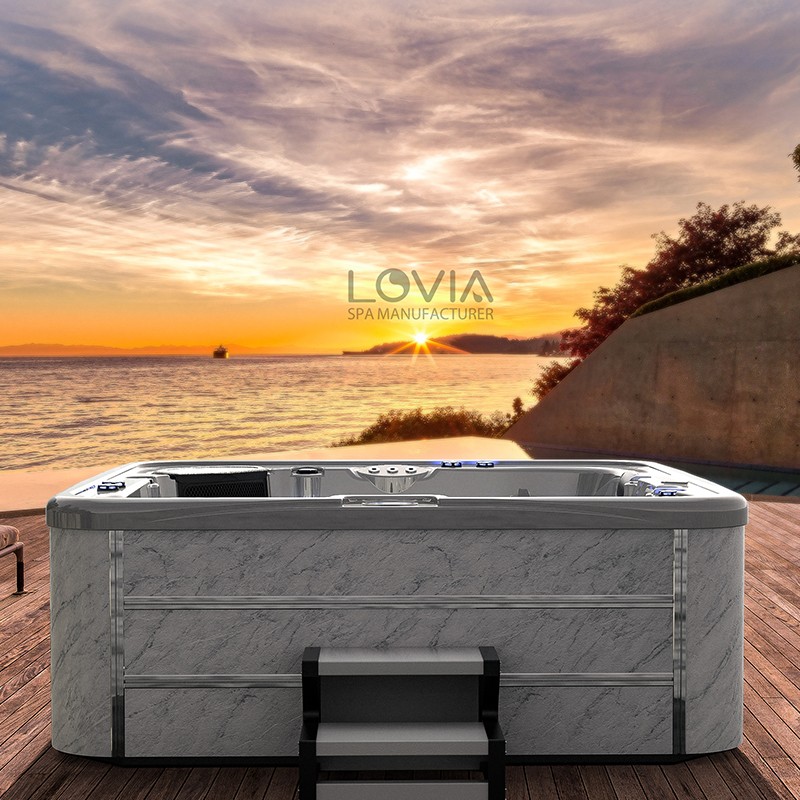
Common Issues and Solutions for Using Essential Oils in Outdoor Hot Tubs
While aromatic products can enhance the spa experience, they can also lead to issues with equipment and water quality.
1. Oily Film on the Water Surface
Cause: Standard essential oils are not water-soluble; they tend to float on the surface and adhere to the inner walls of the whirlpool spa hot tub.
Solution: Stop adding standard essential oils and switch to specialized aromatic products approved by the manufacturer. If an oily film has already formed, drain and clean the hot tub according to the equipment manual—do not attempt to resolve the issue simply by adding more sanitizer.
2. Excessive Foaming from Massage Jets
Cause: Some aromatic products contain surfactants or other additives that create foam when agitated by the air and water flow from the massage jets.
Solution: Use only low-foam or non-foaming products specifically designed for whirlpool spa hot tubs. Never use standard bubble bath, body wash, or shampoo. If foaming persists, check the water quality and replace the water if necessary.
3. Grease/Oil Residue on Filters
Cause: Incompatible oily additives can accumulate in the circulation system and adhere to the surface of the filter.
Solution: Clean the filter regularly as per the manufacturer’s instructions. If the filter cartridge is heavily contaminated, use a cleaning method appropriate for its material, or replace it if necessary.
4. Abnormal Water Quality
Cause: Certain aromatic products can increase the organic load in the water, leading to a higher demand for sanitizer or reduced water stability.
Solution: Test sanitizer levels and pH before and after use. If readings are abnormal, restore proper water quality before considering further use of aromatic products.
| Common Problem | Possible Cause | Recommended Solution |
| Oil film on water | Pure essential oils added directly | Stop adding oils and clean the spa |
| Excessive foam | Incompatible fragrance additives | Use approved low-foam products |
| Cloudy water | Organic residue or poor water balance | Test and correct water chemistry |
| Clogged filter | Oil accumulation | Clean or replace the filter |
| Strong fragrance | Excessive fragrance concentration | Reduce or stop fragrance use |
FAQ: Common Questions About Using Essential Oils in Outdoor Hot Tubs
Q1: Can I add lavender essential oil directly into an outdoor whirlpool spa hot tub?
It is not recommended. Lavender essential oil is not water-soluble and may form an oily film that adheres to filters and internal plumbing. Consider using an external diffuser instead, or opt for specialized aromatic products approved by the manufacturer.
Q2: How many drops of essential oil can be used in an outdoor hot tub?
There is no "safe" dosage for adding standard, pure essential oils to an outdoor hot tub; even a small amount can lead to oily residue. Products specifically designed for aromatherapy in hot tubs should be used strictly according to the dosage instructions on their labels.
Q3: Can water-soluble essential oils be added directly to an outdoor hot tub?
Not necessarily. Being "water-soluble" does not guarantee compatibility with a hot tub’s filtration and sanitization systems. Before use, you must verify that the product is explicitly labeled as suitable for use in whirlpool spa hot tubs or spas.
Q4: Can essential oils damage the pump of an outdoor whirlpool spa hot tub?
Standard essential oils can enter the circulation system and leave behind residues, increasing the maintenance burden on filters and plumbing. The specific impact depends on the product's formulation and the design of the equipment; always follow the manufacturer’s guidelines.
Q5: Can using essential oils affect the effectiveness of hot tub sanitization?
Some aromatherapy products may increase the organic load in the water, which in turn raises the demand for sanitizers. It is recommended to check chlorine or bromine levels as well as the pH value before and after use, and to address any irregularities promptly.