


How to Fit a 6-Person Hot Tub Inside an Indoor Home?
2025-12-16 15:30More and more families are choosing to install 6-person spa hot tubs indoors for greater privacy, better insulation, and year-round convenience. However, moving such a large, multi-ton spa appliance indoors is not a simple matter of "transportation + placement."
In different residential structures, whether detached houses, townhouses, or large apartments, installing a 6-person spa hot tub requires careful planning and consideration of factors such as space dimensions, floor load-bearing capacity, ventilation and dehumidification, electrical wiring, and drainage systems.
This article will provide a professional explanation of how to safely and scientifically move a 6-person spa hot tub indoors and achieve a reasonable installation layout.
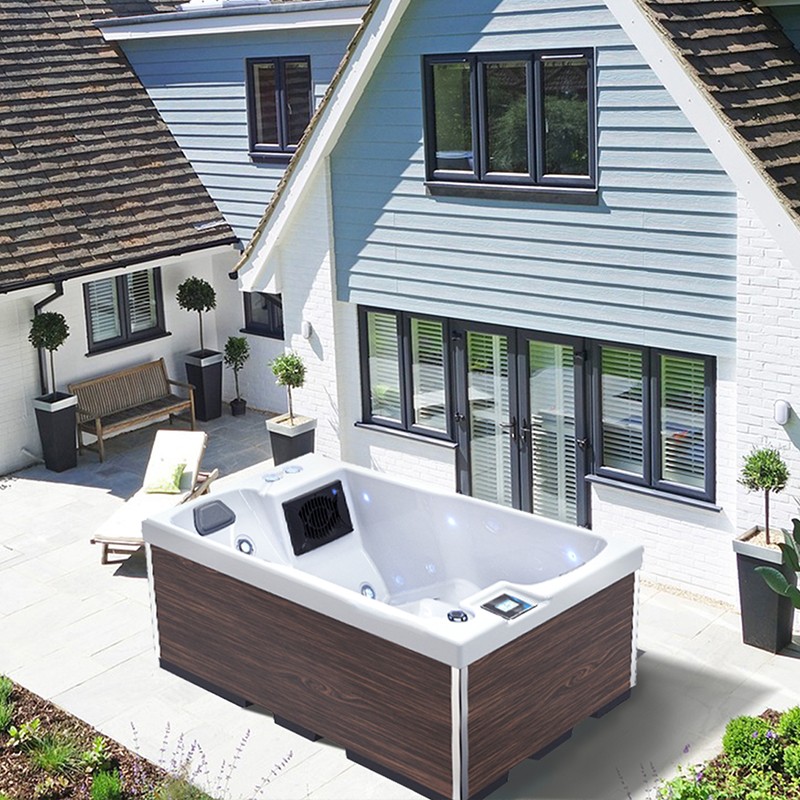
Why are more and more people choosing to bring spa hot tubs indoors?
Traditionally, spa hot tubs are mostly installed on outdoor terraces, in gardens, or near swimming pools. However, many families are beginning to realize that installing a spa hot tub indoors offers the following advantages:
• Greater privacy
• Unaffected by weather
• A cleaner environment
• All-weather use
• Better temperature control
• Safer floor conditions
However, one thing must be clear before installation: installing a spa hot tub indoors is several times more complex than outdoor installation.
Therefore, reading this article and understanding each key aspect will greatly help you complete the indoor installation safely and successfully.

What are the core factors to consider before installing a 6-person spa hot tub indoors?
To help you understand the installation conditions more systematically, this article uses a step-by-step analysis approach, providing comprehensive professional knowledge on everything from size, weight, passageway size, floor load-bearing capacity to ventilation and drainage.
Can a 6-person spa hot tub pass through doors, stairs, or entryways?
Before considering bringing a 6-person spa hot tub indoors, the first question is always: Can the equipment actually be moved into the room?
Taking the common dimensions of a 6-person spa hot tub as an example:
• Standard dimensions: Width approximately 2200–2400 mm
• Height approximately 850–950 mm
• Length varies depending on the brand
For example, the dimensions of a common model like the LOVIA SPA 6-person spa hot tub are:
2300 × 2300 × 880 mm.
This means you must confirm the dimensions of the following passageways:
1. Door width
The width of a typical residential entrance door is 900–1100 mm, so obviously the spa hot tub cannot be laid flat to fit inside.
2. Can it be tilted?
The spa hot tub can be moved vertically, so the height becomes 2300 mm. This requires checking:
• Is the door height greater than 2300 mm (most home door heights are only 2050–2200 mm)
• Is the hallway turning radius sufficient?
• Will it collide with the ceiling?
3. Is the staircase suitable for moving it?
If moving the tub upstairs or down to the basement, the following must also be confirmed:
• Staircase width
• Corner landing area
• Staircase load-bearing capacity
• Whether the handrail needs temporary removal
4. Indoor corridor width and corner space
A corridor plan must be drawn to ensure that each corner can pass through the 2300 mm height threshold.
The biggest obstacle to moving it indoors is often not room size, but "accessibility limitations."
In most cases, users will choose to:
• Remove door frames
• Temporarily remove parts of the wall
• Use indoor hoisting
• Hoist it in through a large floor-to-ceiling window or balcony window
• Use a sliding rail system for transport
You must complete a rigorous accessibility assessment before installation; this is the first requirement for placing a 6-person spa hot tub indoors.
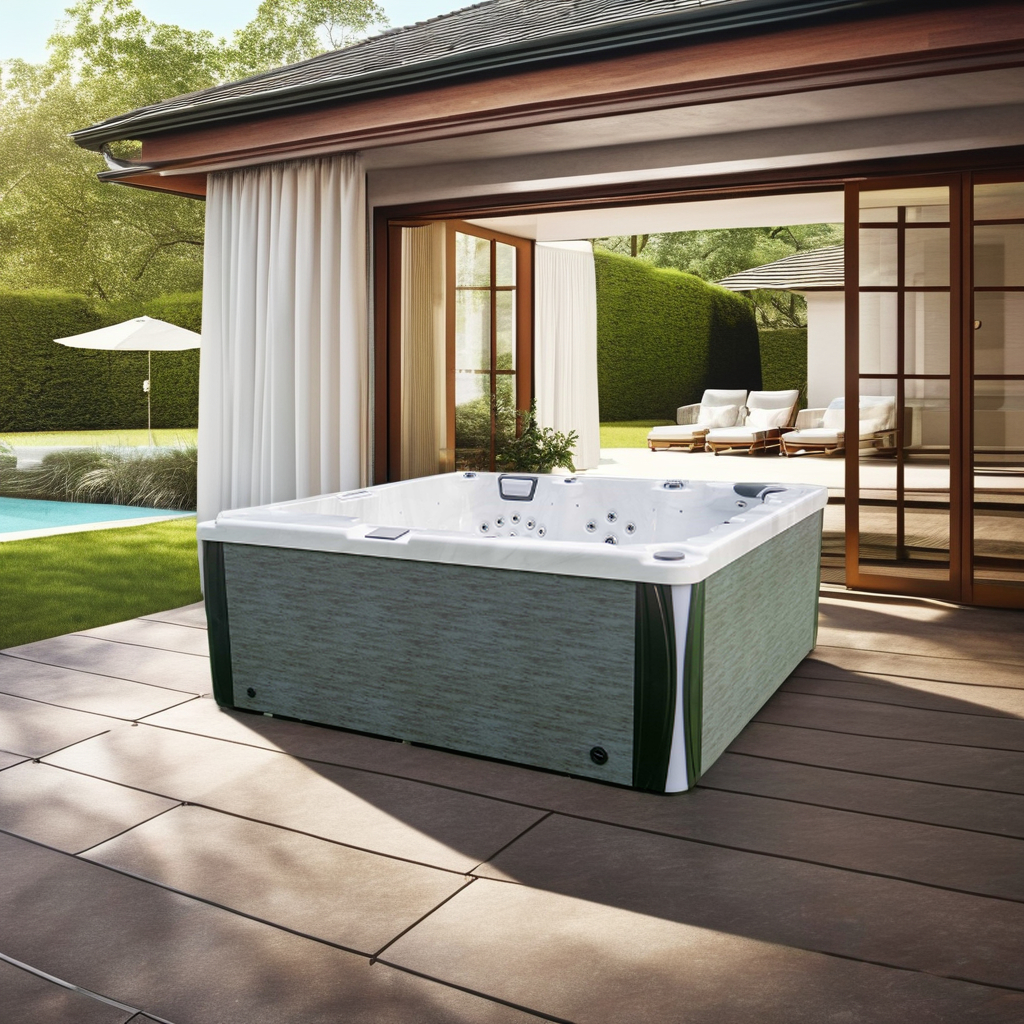
Is the indoor floor load-bearing capacity sufficient to support the spa hot tub?
Load-bearing capacity is the most important safety indicator when installing a spa hot tub indoors.
Taking a typical 6-person spa hot tub as an example:
• Dry weight: Approximately 300–400 kg
• Weight filled with water: Approximately 1500–2000 kg
• With 6 users (assuming an average weight of 70 kg): Approximately 420 kg
• Total weight may exceed 2200–2600 kg
This means:
The floor needs to withstand a load of at least 400–500 kg/m²
However, the load-bearing capacity of a typical residential floor is usually only:
• 150–200 kg/m² (standard floor)
• 250–300 kg/m² (reinforced floor)
Therefore, moving a spa hot tub indoors without assessing its load-bearing capacity may lead to:
• Floor cracking
• Floor subsidence
• Structural damage
How to improve load-bearing capacity?
• Choose a room with stronger load-bearing capacity (such as the ground floor or basement).
• Reinforce the floor structure.
• Use load-bearing slabs.
• Install reinforcing beams or floor supports.
In any case, a structural engineer must inspect the installation beforehand; do not rely on guesswork.

Is the indoor space large enough to accommodate and safely use the spa hot tub?
Besides being able to move it in, it must also fit and be safe to use.
The layout of the spa hot tub needs to consider:
1. The dimensions of the tub itself.
2. The maintenance space left between the tub and the wall (at least 50–70 cm).
3. Whether the overhead space allows for opening the cover.
4. Whether there is enough space for multiple people to access the water supply and drainage.
5. Whether the area around the tub is slip-resistant and moisture-proof.
If the room is too small, even if it fits, it will be difficult to use and maintain properly.
Does the room have a good ventilation and dehumidification system?
This is one of the most easily overlooked, yet most critical, aspects of installing a spa hot tub indoors.
A 6-person spa hot tub continuously generates:
• Water vapor
• Moisture
• Heat
In a confined environment, this can cause:
• Mold growth on walls
• Drips from ceilings
• Bubbling and warping of doors and windows
• Deterioration of indoor air quality
Therefore, the following systems must be installed:
Essential systems:
• Fresh air system
• Forced ventilation system
• Dehumidifier (wall-mounted or central)
• Room temperature control system
• Anti-mold coating material Insufficient indoor humidity control can lead to long-term damage to the building structure.
How to handle the drainage problem of a spa hot tub indoors?
The drainage volume of a 6-person spa hot tub is enormous, and ordinary drain pipes cannot handle it all at once.
Each water change may drain:
• 1500–1800 liters of water
It must be confirmed that the indoor drainage system can handle this volume of water, otherwise it may cause:
• Drain backflow
• Flooding
• Leakage to the floor below
Solutions include:
• Using a dedicated drain pump
• Installing a rapid drainage system
• Directing the drainage outdoors or to a dedicated drainage point
• Planning the floor slope for drainage
Drainage planning must be completed before installation.

Correct Steps for Moving a 6-Person Spa Hot Tub Indoors
For ease of understanding, the following is the complete indoor installation process.
Step 1: Measure All Access Dimensions
Including:
• Entrance door
• Hallway
• Stairs
• Foyer
• Room doors
• Windows (if required for hoisting)
It must be ensured that the installed height can accommodate the passage.
Step 2: Assess Floor Load Capacity
This step must be completed by a professional.
Step 3: Plan Ventilation, Dehumidification, and Air Conditioning Systems
Ensure the humidity level in the space is between 40% and 60%.
Step 4: Lay a Non-Slip, Waterproof Floor
Indoor installation requires:
• Non-slip ceramic tiles
• Waterproof floor paint
• Moisture barrier
Step 5: Install Compliant Electrical Wiring
Spa hot tubs typically require:
• An independent safety switch
• 220–240V power supply
• A waterproof switch
• A residual current device (RCD)
The humid indoor environment necessitates strict electrical safety measures.
Step 6: Transport and Install the Spa Hot Tub
Use the following methods:
• Hand-operated trolley
• Rail system
• Indoor hoisting
• Rotary transport
Step 7: Connect the Power Supply, Water Filling, and Drainage Systems
Ensure strict adherence to the instructions.
Step 8: Test the System and Check for Leaks, Heat Dissipation, Humidity, etc.
Only put the system into operation after confirming everything is normal.
What room size is needed for an indoor 6-person spa hot tub installation?
Recommended room area:
• 12–15 square meters
• Plus space for maintenance
Is a dehumidification system necessary?
Yes, these are basic requirements for an indoor spa hot tub.
Is a spa hot tub suitable for a living room?
From a humidity, drainage, and load-bearing perspective, it's not ideal unless carefully planned.
How to successfully install a 6-person spa hot tub indoors?
Successfully installing an indoor spa hot tub isn't difficult, but it shouldn't be done blindly.
You need to fully consider the following key factors:
✔ Does the room's passageway allow for transport?
✔ Is the floor's load-bearing capacity sufficient for over 2000kg?
✔ Is the indoor ventilation and dehumidification system complete?
✔ Is the floor non-slip and waterproof?
✔ Is there enough space for maintenance and use?
✔ Can the drainage system handle large volumes of water?
✔ Does the electrical system meet safety regulations?
If all of the above conditions are met, then installing a 6-person spa hot tub indoors is entirely feasible and can bring you an extremely comfortable, private, and healthy home spa experience.