


How Much Weight Can an Acrylic Hot Bathtub Bear?
2025-12-29 15:35When choosing a hot bathtub, one of the most important concerns for many consumers isn't appearance, but a very real and crucial technical question: How much weight can an acrylic hot bathtub bear?
This question is important because a hot bathtub in actual use doesn't just support "one person," but needs to withstand:
• The weight of the bathtub itself
• The weight of the water when full
• The user's weight
• Additional loads generated during dynamic use
A lack of clear understanding of load-bearing capacity can easily lead to unnecessary worries and even misjudgments about the safety of acrylic hot bathtubs. This article will systematically and professionally answer this question from multiple dimensions, including material properties, structural design, bottom support, calculations under full water conditions, and dynamic load-bearing factors.
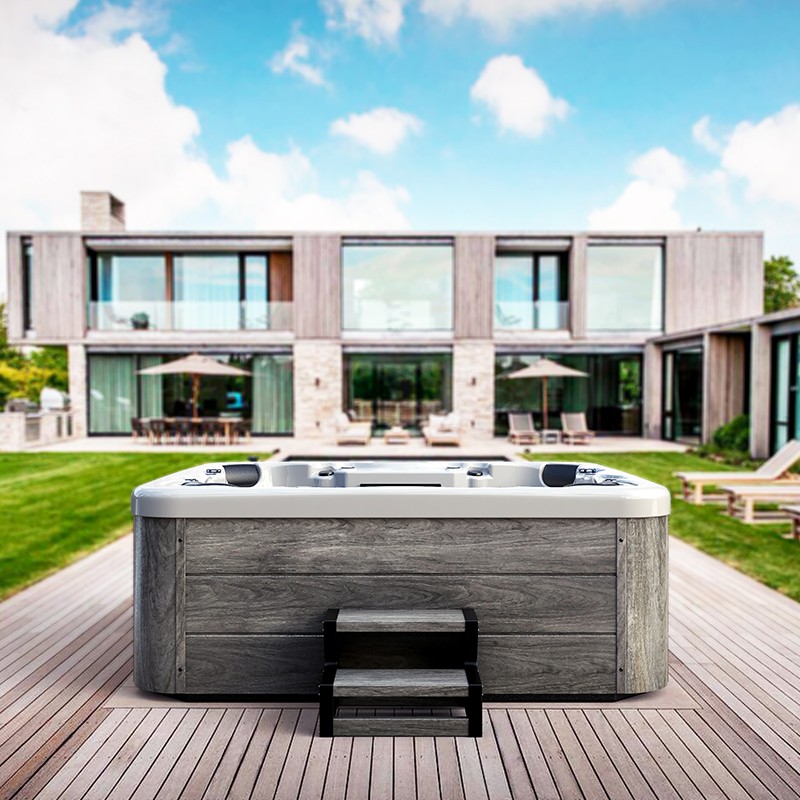
Can an acrylic hot bathtub really withstand a lot of weight?
Many people, upon hearing "acrylic," instinctively associate it with "plastic" and "thin," thus questioning:
Are acrylic hot bathtubs, which look so light, really safe?
The answer is clear:
Yes, a well-designed acrylic hot tub can withstand weights far exceeding everyday usage needs.
This is because an acrylic spa hot tub doesn't rely on a single acrylic sheet for support; it's an engineered composite structural system.
What exactly determines the load-bearing capacity of an acrylic hot tub?
To understand how much weight an acrylic spa hot tub can withstand, it's crucial to understand that the weight isn't solely borne by the "acrylic surface."
The main load-bearing structures of an acrylic hot tub include:
1. Acrylic surface layer (PMMA)
2. Back reinforcement layer (fiberglass or composite materials)
3. Bottom support structure (steel frame or integral base)
4. Ground stress distribution
These four parts work together to form a complete and stable load-bearing system.
How much pressure can acrylic material itself withstand?
From a materials science perspective, acrylic (PMMA) is not a fragile material.
The basic mechanical properties of acrylic include:
• Compressive strength: approximately 100 MPa
• Flexural strength: approximately 90–120 MPa
• Impact resistance: significantly higher than ceramics and enamel steel
This means that, with appropriate thickness and proper structural support, the acrylic body can fully withstand water pressure and the weight of a human body.
However, it is important to emphasize that:
The load-bearing capacity of an acrylic hot tub does not depend on how much the acrylic sheet "can bear on its own," but rather on the overall structural design.
How much weight can an acrylic spa hot tub withstand when "full of water"?
This is one of the most important and intuitive questions for users.
Let's first look at the calculation logic for "water weight":
• 1 liter of water ≈ 1 kilogram
• Small to medium-sized acrylic hot tubs:
Water capacity approximately 200–300 liters
Water weight approximately 200–300 kilograms
• Medium to large or multi-functional acrylic hot tubs:
Water capacity may reach 800–1200 liters or even more
Water weight approximately 800–1200 kilograms
This does not include:
• The weight of the tub itself (generally 30–80 kilograms)
• The weight of the users (single or multiple people)
Therefore, an acrylic spa hot tub under normal use can easily bear a total weight of several hundred kilograms, or even more than one ton.
How does the bottom structure of an acrylic hot tub distribute the weight?
If all the weight were concentrated on the acrylic surface, it would obviously be unsafe.
The actual weight is borne by the bottom support system.
Common acrylic spa hot tub bottom structures include:
1. Metal support frame (steel frame)
• Usually made of galvanized or spray-coated steel
• Multi-point support, evenly distributing the load
• Preventing bottom sinking or deformation
2. Integrated base structure
• Distributing weight evenly to the ground
• Reducing localized stress
• Improving overall stability
3. Synergistic effect of the back reinforcement layer
• Fiberglass or composite layer increases rigidity
• Preventing localized deformation of the bathtub due to weight
Through these structural designs, the weight of the acrylic spa hot tub is distributed across the entire bottom and ground, rather than concentrated at a single point.
How much "human weight" can an acrylic hot tub support?
From an engineering safety perspective, design standards typically allow for a safety margin far exceeding actual usage.
Under normal circumstances:
• Single person use:
Acrylic hot tubs can easily support a body weight of 100–150 kg.
• Multiple people use (2–4 people):
The system can support a body weight of 300–500 kg or even more.
Even with the weight of water, the overall system remains within safe limits.
It's important to note that: Load-bearing capacity refers to "evenly distributed weight," not extreme concentrated loads.
Will dynamic use affect the load-bearing safety of acrylic hot tubs?
Many people worry:
"Will moving around in the tub, getting up, and sitting down cause the tub to exceed its load-bearing capacity?"
From a design perspective, the answer is no.
Reasons include:
1. Dynamic loads are considered in the design
Hot tubs are not statically used products.
Sufficient structural strength margin is provided.
2. The buoyancy of water distributes the weight of the human body
In water, the actual pressure of the human body on the bathtub is significantly reduced.
3. Multi-point support reduces localized stress
The bottom structure effectively avoids concentrated stress.
Therefore, under normal use, the load-bearing safety of acrylic spa hot tubs is guaranteed.
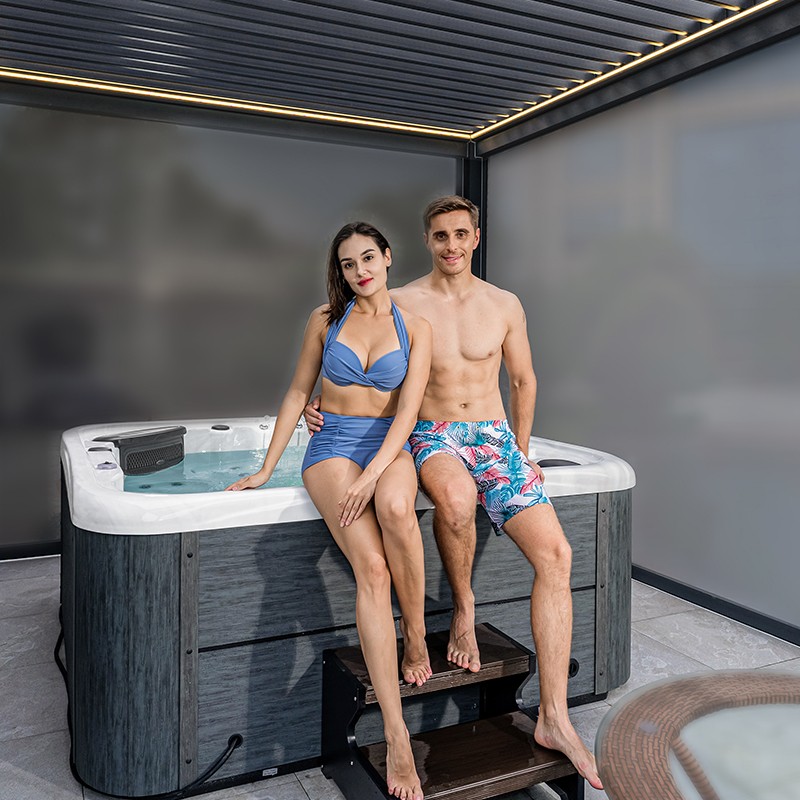
How does the load-bearing capacity of acrylic hot tubs compare to bathtubs made of other materials?
From the perspective of "absolute weight," the load-bearing logic of bathtubs made of different materials is not the same.
Compared to cast iron bathtubs:
• Cast iron is heavy, but its load-bearing capacity isn't solely determined by weight.
• Acrylic spa hot tubs achieve the same or even higher load-bearing capacity through structural design.
Compared to fiberglass bathtubs:
• Acrylic spa hot tubs have a more stable overall structure.
• The surface material has higher strength and durability.
Compared to artificial stone bathtubs:
• Artificial stone is heavier, requiring a higher-quality floor surface.
• Acrylic hot tubs achieve a better balance between load-bearing capacity and installation flexibility.
Therefore, in terms of overall load-bearing capacity and actual safety, acrylic spa hot tubs are no less suitable than any common material.
Does the floor load-bearing capacity affect the safety of acrylic hot tubs?
Yes, and it's very important.
Although acrylic spa hot tubs themselves have a high load-bearing capacity, the final weight still needs to be borne by the floor.
The correct logic is:
• Is the bathtub structure safe?
• Can the floor support the total weight?
Generally speaking:
• Concrete floors can easily support the weight of an acrylic spa hot tub.
• When installing in a wooden structure or on a raised floor, it's necessary to ensure the floor structure meets load-bearing standards.
However, this is a structural issue, not a problem with the acrylic spa hot tub itself.
Will the load-bearing capacity of an acrylic hot tub decrease over time?
Under normal use and proper maintenance:
The load-bearing capacity of an acrylic spa hot tub will not decrease significantly over time.
The reason is:
• Acrylic material itself does not fatigue under hot water.
• The back reinforcement layer remains stable over the long term.
• The metal support frame provides continuous support.
As long as the installation is correct, the floor is flat, and the support structure is intact, the load-bearing capacity is stable in the long term.
How to determine if an acrylic hot tub has good load-bearing capacity?
When choosing an acrylic hot tub, pay attention to the following technical points:
1. Acrylic sheet thickness (usually 3–6 mm)
2. Whether there is a complete back reinforcement layer
3. Whether the bottom is equipped with a metal support frame or an integral base
4. Whether the number of support points is sufficient and whether their distribution is reasonable
5. Whether the overall structure is stable and free from obvious deformation
These factors collectively determine the actual load-bearing capacity of the acrylic spa hot tub.