


How long after fecal contamination is it safe to use a swim spa tub?
2026-02-10 15:30Water safety is always one of the most critical issues when using a swim spa tub. The question of "how long after feces are found in a swim spa tub is it safe to swim again" is a very real and serious one. Whether for home use or in a public setting, improper handling can lead to serious health risks.
This article will systematically explain this issue from multiple professional perspectives, including water quality hygiene principles, pollution risks, disinfection logic, and safe waiting times, to help you clearly understand:
Why can't you use a swim spa tub immediately after feces appear in it?
How long does it take for it to be truly safe after proper treatment?
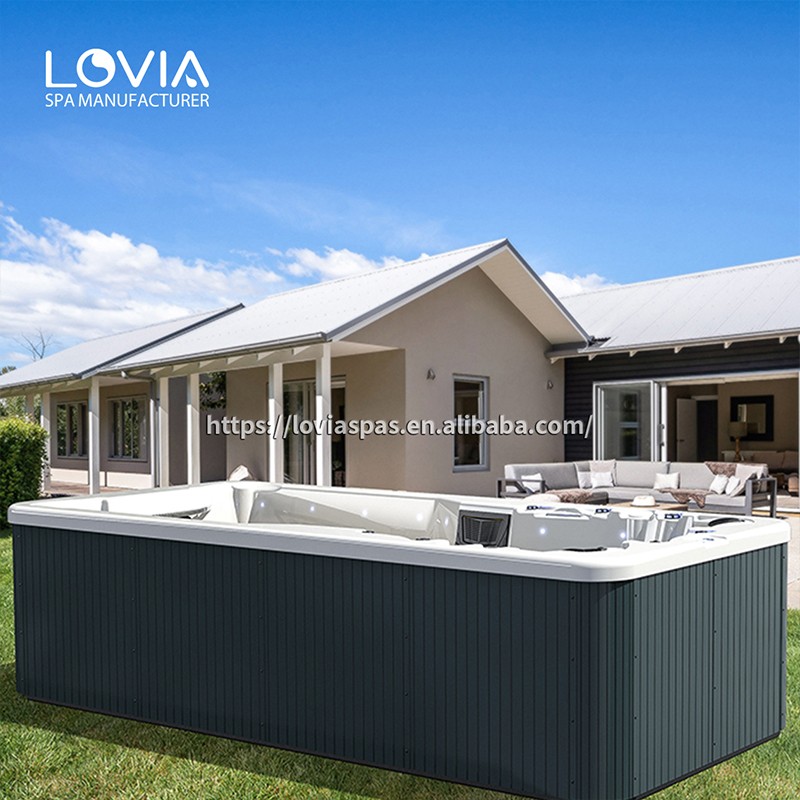
Why are feces in a swim spa tub a serious hygiene problem?
Swim spa tubs are high-temperature, circulating water systems. Unlike ordinary swimming pools, they have higher water temperatures, more frequent users, and relatively lower water turnover rates.
Once feces appear in a swim spa tub, it means:
• The water may be contaminated with intestinal bacteria.
• Pathogens may spread faster in the warm water environment.
• Tiny pollutants may spread throughout the tub through the circulation system.
It is especially important to understand that:
Fecal contamination is not the same as "visible dirt"; the real risk comes from microorganisms that are invisible to the naked eye.
What are the main risks of feces in a swim spa tub?
In a swim spa tub, fecal contamination can cause multiple risks:
1. Bacterial contamination risk
Feces may carry various intestinal bacteria, which can easily enter the human body through the skin, mouth, or respiratory tract once they enter the water.
2. Water circulation system contamination
Swim spa tubs rely on a circulating filtration system, and pollutants can enter the pipes, filters, and nozzles.
3. Abnormal disinfectant consumption
Feces will rapidly consume the free disinfectant in the water, causing the water to lose its protective capacity in a short time.
Therefore, the appearance of feces in a swim spa tub is not simply a matter of "scooping it out."

Is the treatment logic the same for solid feces and loose stools in a swim spa tub?
This is a very crucial distinction.
From a professional water quality management perspective:
• Solid feces
The contamination is relatively concentrated, and the spread of pathogens is smaller, so the risk can be controlled through timely treatment and disinfection.
• Loose stools or diarrheal contamination
These spread more easily in the water, resulting in a significantly higher degree of contamination in the swim spa tub. This article focuses on the premise you provided – the situation involving solid fecal contamination.
What should be the first step when solid fecal matter is found in a swim spa tub?
When solid fecal matter is discovered in a swim spa tub, there is only one primary principle:
👉 Immediately stop using it.
The specific logic includes:
• Prohibiting anyone from entering the swim spa tub.
• Suspending normal usage procedures.
• Preventing further disturbance of the water.
This is to prevent the contaminants from being further dispersed and entering the entire water circulation system.
Why must the swim spa tub be shut down?
Shutting down the swim spa tub is not a formality, but is based on the following professional considerations:
• To prevent more people from coming into contact with contaminated water.
• To allow the disinfection process to proceed in a stable state.
• To prevent water flow from accelerating the spread of contaminants.
When dealing with fecal contamination, the swim spa tub being in a "suspended use" state is a prerequisite for safe handling.
Why is free chlorine in the swim spa tub so important?
In swim spa tub water management, free chlorine is one of the most critical lines of defense.
The main functions of free chlorine include:
• Rapidly inactivating bacteria in the water.
• Inhibiting the spread of pathogens.
• Maintaining the continuous disinfection capacity of the water.
When fecal contamination occurs, free chlorine is rapidly consumed, so it must be ensured that it is maintained within an effective range.
How much free chlorine should the swim spa tub maintain after solid fecal contamination?
According to the professional premise you provided:
If solid fecal matter is present, the swim spa tub needs to be shut down for at least 25 minutes, while maintaining a free chlorine level of 2.0 ppm in the water.
This value is not arbitrarily set; the logic is based on:
• A free chlorine concentration of 2.0 ppm can effectively reduce bacterial activity in a short time.
• In a warm water environment, the disinfection efficiency of chlorine is relatively stable.
• 25 minutes is the minimum safe time window required for the disinfection reaction.
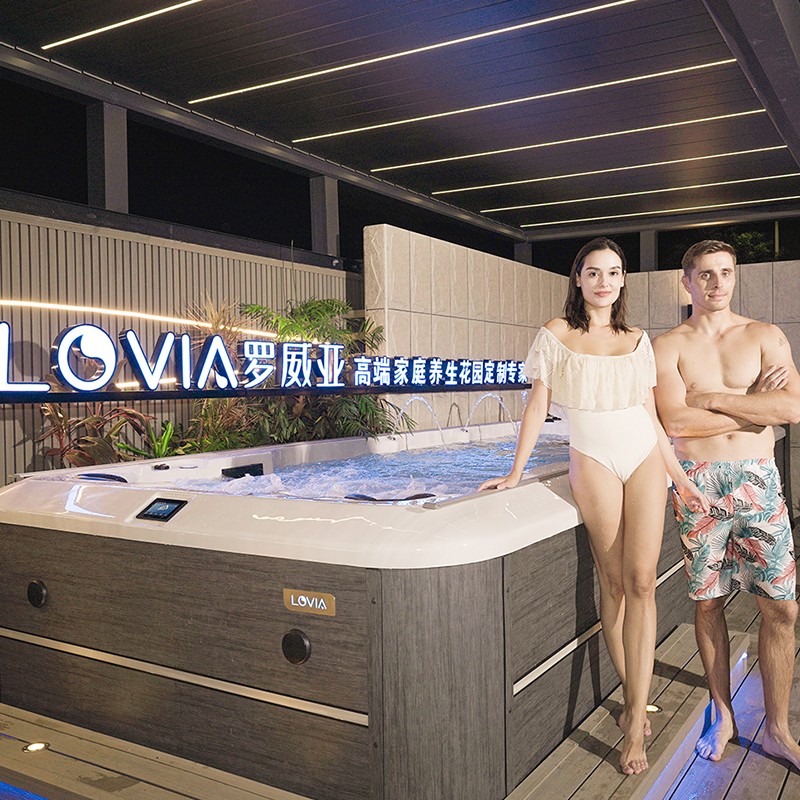
Why is it at least 25 minutes, and not a shorter time?
Disinfection in a swim spa tub is not instantaneous, but a chemical reaction process.
Factors to consider include:
• The effect of water temperature on the disinfection speed.
• Water volume and contaminant distribution.
• Contact time between the disinfectant and pathogens.
25 minutes is based on the "minimum safe contact time." Below this time, the disinfection process may be incomplete.
Is the swim spa tub definitely safe after 25 minutes?
It's important to understand that:
👉 25 minutes is the minimum safe waiting time, not a "free entry time."
In practical assessment, you also need to confirm:
• Whether the free chlorine concentration is still maintained at 2.0 ppm
• Whether the water has returned to being clear and free of visible contaminants
• Whether the circulation system is functioning properly
Only when all these conditions are met can the swim spa tub be considered "safe to use again."
Why does a swim spa tub require more caution than a regular swimming pool?
Swim spa tubs differ fundamentally from traditional swimming pools:
• Higher water temperature
• Smaller water volume
• More concentrated users
• More frequent water circulation
These characteristics mean that:
Once contamination occurs, the risk is more concentrated, and the reliance on the disinfection process is stronger.
What are the consequences of ignoring the waiting time for swim spa tub users?
Ignoring the necessary shutdown and disinfection time may lead to:
• Users coming into contact with incompletely disinfected water
• Skin, eye, or respiratory irritation
• Potential risk of gastrointestinal discomfort
The safe use of a swim spa tub is based on strictly following water treatment procedures, not subjective judgment.
Why does daily water quality management in a swim spa tub reduce these risks?
Although this article does not discuss actual cases, in principle:
• Stable free chlorine levels
• Properly functioning filtration system
• Reasonable usage guidelines
can significantly reduce the probability of serious contamination consequences in a swim spa tub.
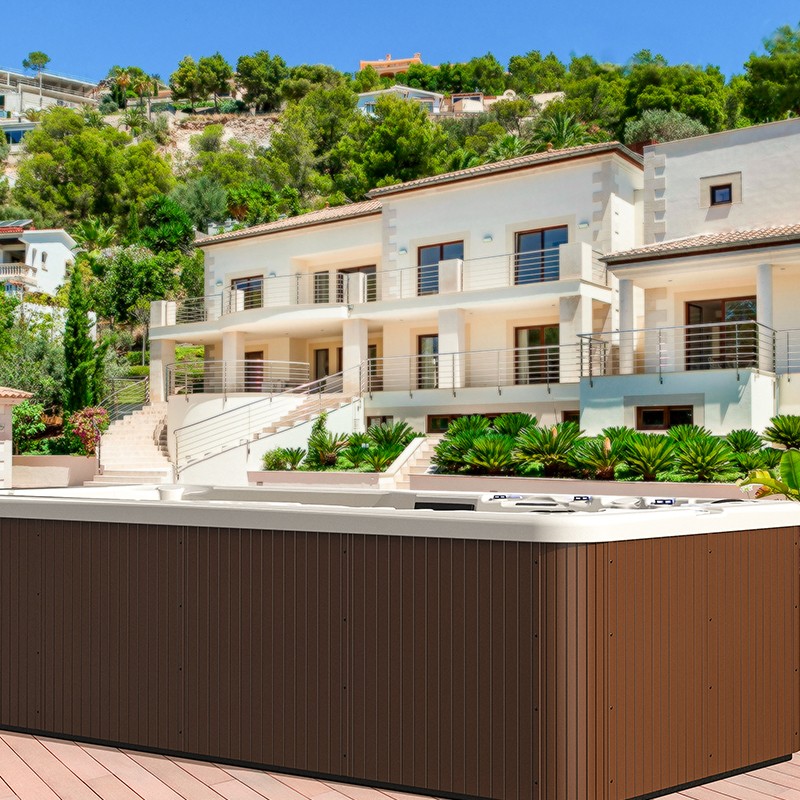
How long after feces are found in a swim spa tub is it safe to swim?
Based on the above professional analysis, a clear conclusion can be drawn:
• If solid feces are found in the swim spa tub, use must be stopped immediately.
• The swim spa tub should be shut down, and a waiting period of at least 25 minutes is required.
• During this period, the free chlorine in the water must be maintained at 2.0 ppm.
• Only when both the disinfection time and water quality conditions are met can it be safe to swim again.
For swim spa tubs, safety is always based on regulations, not on experience or wishful thinking.
What kind of inspection standards does LOVIA SPA follow internally?
LOVIA SPA follows a multi-level internal inspection system that includes material inspection, assembly checks, functional testing, and final quality review. Each stage is documented and verified by experienced technicians. Our Factory does not rely solely on external certification but enforces strict internal standards to ensure High quality consistency.
Buyers can request inspection photos or videos before shipment. This transparent approach reassures Wholesale clients that every unit they Buy meets reliable manufacturing benchmarks.