


How long after a wound is sutured can I soak in an outdoor hot tub?
2026-09-10 15:30For those who enjoy outdoor spa hot tubs, a very real question after surgery, injury, or other skin damage is: how long after a wound is sutured can I go back into an outdoor hot tub? Many people think that as long as the sutures haven't fallen out and the wound appears to have scabbed over, it's safe to soak; others rely on experience like "you can soak after the stitches are removed" or "it'll be fine after a week."
The problem is that suturing a wound doesn't mean it's fully healed, and temporary closure of the epidermis doesn't mean the deeper tissues have repaired. Furthermore, an outdoor spa hot tub is different from a regular shower; it involves continuous immersion, warm water, circulating water, and multiple people in contact with the wound. Therefore, the risks are significantly different for wounds that haven't fully healed.
This is also something many outdoor whirlpool hot tub users easily overlook. In the first few days after surgery, doctors usually emphasize keeping the incision clean and avoiding soaking; by the second week after surgery, the wound's appearance may have improved significantly, and the pain may have greatly decreased, easily leading patients to the misconception that they are already healed. However, wound healing is an ongoing process. The skin barrier, collagen tissue, and deep structures do not instantly return to their normal state simply because sutures are removed.
The American College of Surgeons explicitly recommends that surgical incisions should not be soaked in bathtubs, swimming pools, or hot tubs until they have healed. MedlinePlus also points out that showering is generally more appropriate than prolonged soaking of the wound, as soaking may cause the wound to reopen and increase the risk of infection.
Therefore, the question of "how long after a wound is sutured can I soak in an outdoor whirlpool hot tub" should not be answered with a simple number of days, but with a complete medical assessment: Is the wound now completely closed? Is there any oozing, bleeding, obvious scab formation, or dehiscence? Are the sutures, staplers, medical glue, or Steri-Strips still functioning? Did the surgical site experience deep tissue damage? Has the doctor explicitly permitted soaking? Furthermore, are the water temperature, water quality, sterilization status, and jet intensity of the outdoor whirlpool hot tub suitable for the recovery phase? Only when all these conditions are met is it more likely that bathing can be safely resumed.
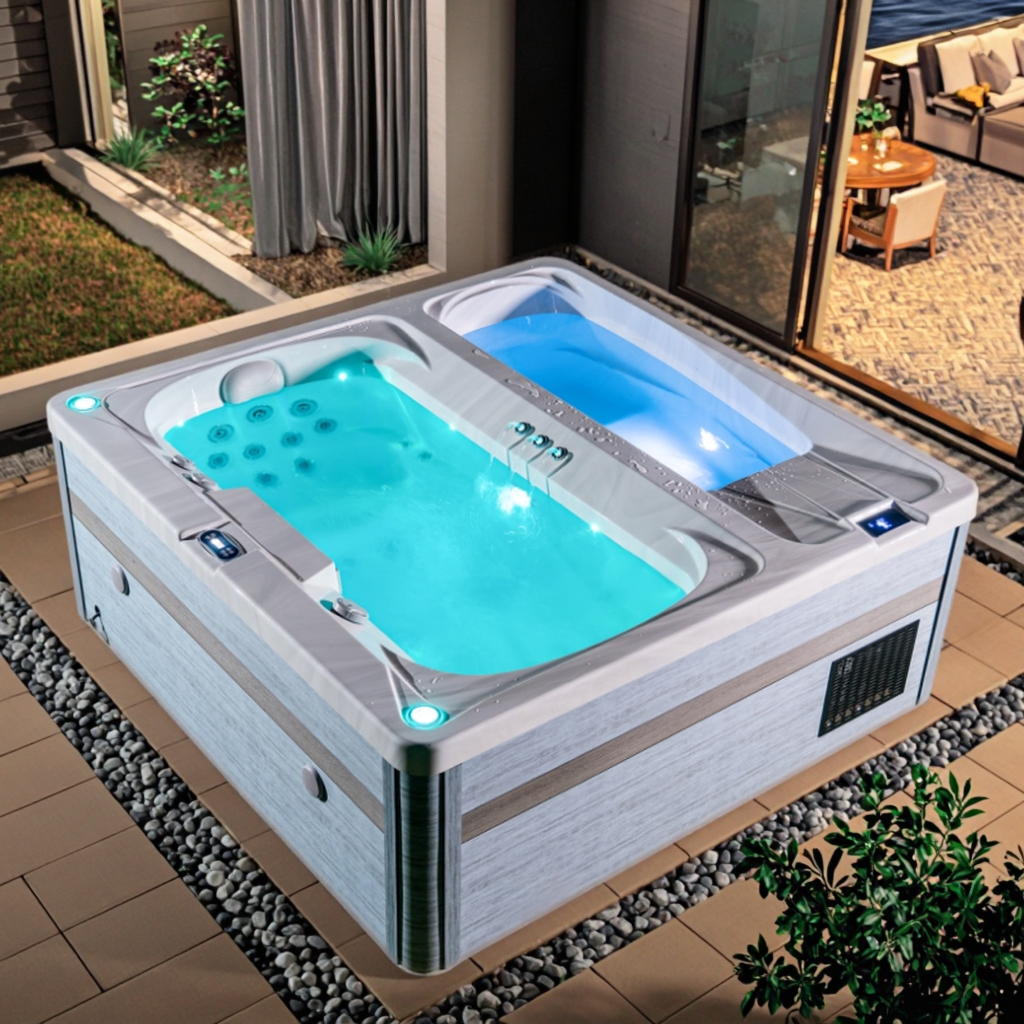
Why doesn't "the wound has been sutured" mean you can immediately soak in an outdoor hot tub?
The primary function of sutures is to help keep the wound edges in place, buying time for the body to repair itself. They are not a permanent "waterproof seal." Even when doctors close a wound using sutures, staplers, medical adhesive, or other methods, the internal tissue may still be in the repair phase.
From a tissue repair perspective, a wound typically goes through stages such as hemostasis, inflammation, proliferation, and remodeling. The initial tissue connections do not reach the strength of normal skin, so even if the wound surface appears closed, it cannot be simply assumed to be fully healed.
MedlinePlus points out that skin damage means a breach in the barrier that normally protects the body from bacterial invasion, and the wound requires a series of repair processes to gradually heal. The larger and deeper the wound, the longer the recovery time usually takes.
This issue is even more pronounced with outdoor whirlpool hot tubs. Because when entering an outdoor spa hot tub, the wound is not simply exposed to water for a few seconds, but may be immersed for 10 minutes, 15 minutes, or even longer, while also being affected by the circulating water, massage jets, and body movement. If a wound has not fully healed, prolonged soaking can soften the local tissue, stretch the sutured area, and allow microorganisms in the water to enter the tissue through the not-yet-fully-healed skin barrier.
Therefore, whether the sutures are still in place is not the sole criterion for determining whether to soak in an outdoor whirlpool hot tub; whether the wound has truly healed is the more important criterion.
How long after a wound is sutured can you soak in an outdoor hot tub?
If a practical conclusion must be given, it can be understood as follows: Do not use "a few days after suturing" as the sole basis for entering an outdoor whirlpool hot tub before your doctor explicitly allows it. Generally, you should wait until the wound is completely closed, there is no oozing or bleeding, no obvious signs of redness and infection, and the treating physician confirms that soaking is safe before resuming bathing.
The American College of Surgeons' patient guidelines clearly state that you should not soak in a bathtub, swimming pool, or hot tub until the incision has healed. MedlinePlus's closed surgical wound care guidelines indicate that showering usually allows for earlier recovery, but there is a clear difference between showering and soaking; showering does not leave the wound submerged in water for an extended period, while soaking may increase the risk of wound reopening and infection.
Therefore, common online claims such as "you can soak in a bath after 7 days," "you can soak 24 hours after suture removal," and "it's definitely fine after two weeks" should not be considered universal rules for all patients.
For example, a very shallow wound may heal quickly, while incisions from abdominal, joint, chest, or deep tissue surgeries may require longer. MedlinePlus's postoperative care recommendations for different surgeries also show that doctors' restrictions on bathtubs, swimming pools, and hot tubs vary depending on the specific type of surgery and the wound's healing progress. For example, postoperative care instructions for hip replacement surgery explicitly state not to immerse the incision in a bathtub, spa hot tub, or swimming pool; guidelines for some other surgeries also require waiting for the surgeon's confirmation before resuming immersion.
Therefore, the safer principle is not "remember a number," but "soak only after healing has been achieved."
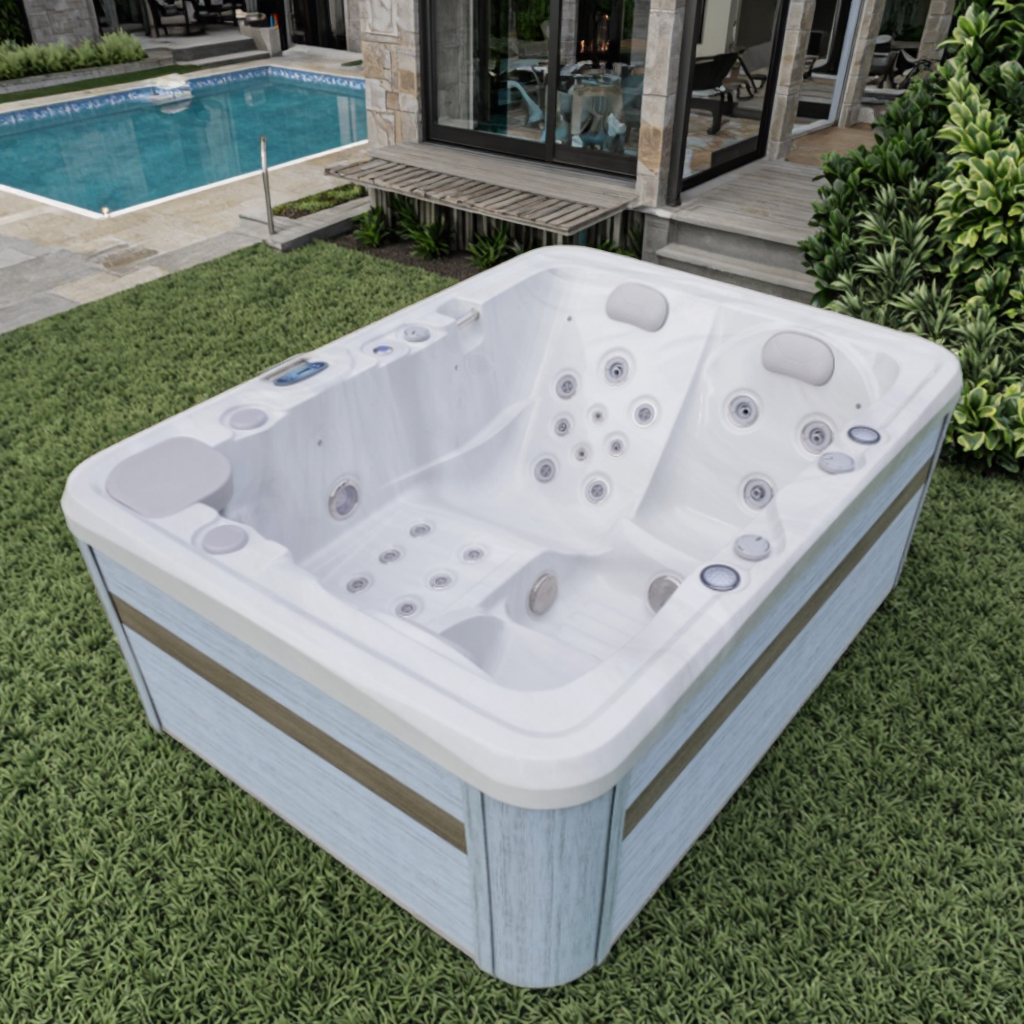
Why should outdoor hot tubs be approached with more caution than regular bathtubs?
Outdoor whirlpool hot tubs have several unique factors related to wound healing.
The first factor is water temperature.
Outdoor whirlpool hot tubs are typically maintained at temperatures significantly higher than normal room temperature, with many units set around 37–40°C. While warm water can provide a comfortable spa experience, prolonged exposure to a warm environment can be burdensome for a body that has just undergone surgery. The Cleveland Clinic, in its heart surgery incision care guidelines, also advises avoiding excessively hot or cold water temperatures during recovery, and specifically emphasizes against soaking the incision.
The second factor is the circulating water flow.
Outdoor whirlpool hot tubs use a circulating pump to continuously pass water through a filtration, heating, and nozzle system. If the wound area is located near a powerful massage nozzle, the area may be subjected to a continuous flow of water.
The third factor is the soaking time.
A regular shower might only expose the wound to water for a few minutes, while the typical use of an outdoor spa hot tub often involves prolonged sitting in the water, significantly increasing the exposure time.
The fourth factor is the risk of microbial contamination in the water.
CDC infection control guidelines for spa equipment and hot tubs indicate that spa equipment may pose a risk of infection transmission through direct contact with the wound, skin, and through water mist and aerosols.
Therefore, for a healing wound, "this is your own outdoor hot tub" does not mean "there is no risk of infection."
Why is it still not safe to use an outdoor hot tub with a fresh wound, even if the water is clean?
Even if an outdoor spa hot tub is properly filtered and disinfected, it cannot be considered sterile water.
The water in a home's outdoor spa hot tub is usually recycled, and may contain shed skin, sweat, sebum, and other organic matter. Even if water quality parameters are maintained within reasonable ranges, it cannot guarantee that the water meets the sterility levels required for a medical environment.
CDC infection control data specifically points out that facilities such as spas, whirlpools, and hot tubs have been linked to medically relevant infection events, with transmission routes including direct contact of wounds with the water.
This does not mean that a healthy person will necessarily get infected using a well-maintained outdoor hot tub, but rather that the risk assessment criteria must be more stringent for people with open or not fully healed wounds.
Therefore, "I clean my outdoor spa hot tub weekly," "My water quality tests are normal," and "I just changed the water" cannot replace the condition that "the wound has been confirmed by a doctor to be safe for soaking."
What situations indicate that a wound is not suitable for soaking in an outdoor hot tub?
If any of the following occurs, you should generally not soak in an outdoor whirlpool hot tub on your own, but should continue wound care as directed by your doctor:
First, the wound still has a visible opening. Even a small nick should not be dismissed as "nothing to worry about."
Second, the wound is still oozing fluid. Persistent oozing, bloody fluid, yellow or green discharge, in particular, warrants a doctor's consultation.
Third, the redness and swelling around the wound are expanding instead of gradually decreasing.
Fourth, the area is becoming increasingly painful, hot, or noticeably tender.
Fifth, there is an unusual odor or purulent discharge.
Sixth, fever, chills, or significant general malaise develops.
The Cleveland Clinic points out that surgical wound infections can present with symptoms such as pus, redness, pain, fever, and other signs of infection. Their data also indicates that while surgical site infections are generally uncommon, if infection is suspected, medical personnel should be contacted immediately.
MedlinePlus also advises contacting a surgeon if the incision experiences increased redness, swelling, pain, bleeding, wound enlargement or deepening, or if the drainage becomes thick, colored, or has an unusual odor. If body temperature exceeds 100°F (approximately 37.7°C) and persists for more than 4 hours, a doctor should also be contacted immediately.
In these situations, the focus is no longer on "when can I take a whirlpool hot tub outdoors," but rather on "whether there are any issues requiring medical evaluation."
Can I take a whirlpool hot tub outdoors immediately after suture removal?
Not necessarily.
Suture removal simply indicates that the doctor believes the external sutures no longer need to provide their original fixation function; it does not mean that the deeper tissues of the wound have fully healed.
This is a very important distinction.
For example, sutures for some surgeries may be removed approximately 7–14 days post-surgery, but the exact timing varies depending on the surgical site, wound condition, and the doctor's assessment. MedlinePlus information on hip replacement surgery mentions that sutures or staples may be removed in some patients in approximately 10–14 days, but explicitly advises against soaking in bathtubs, hot tubs, or swimming pools.
Therefore, the idea of "removing stitches today, soaking in an outdoor whirlpool hot tub tomorrow" is not a reasonable, universally accepted approach.
A more reasonable approach would be:
Stitch removal → Continued wound observation → Confirm complete closure → Confirm no abnormal drainage, redness, or infection → Doctor's permission for soaking → Resume outdoor hot tub use.
These steps cannot be simply omitted.
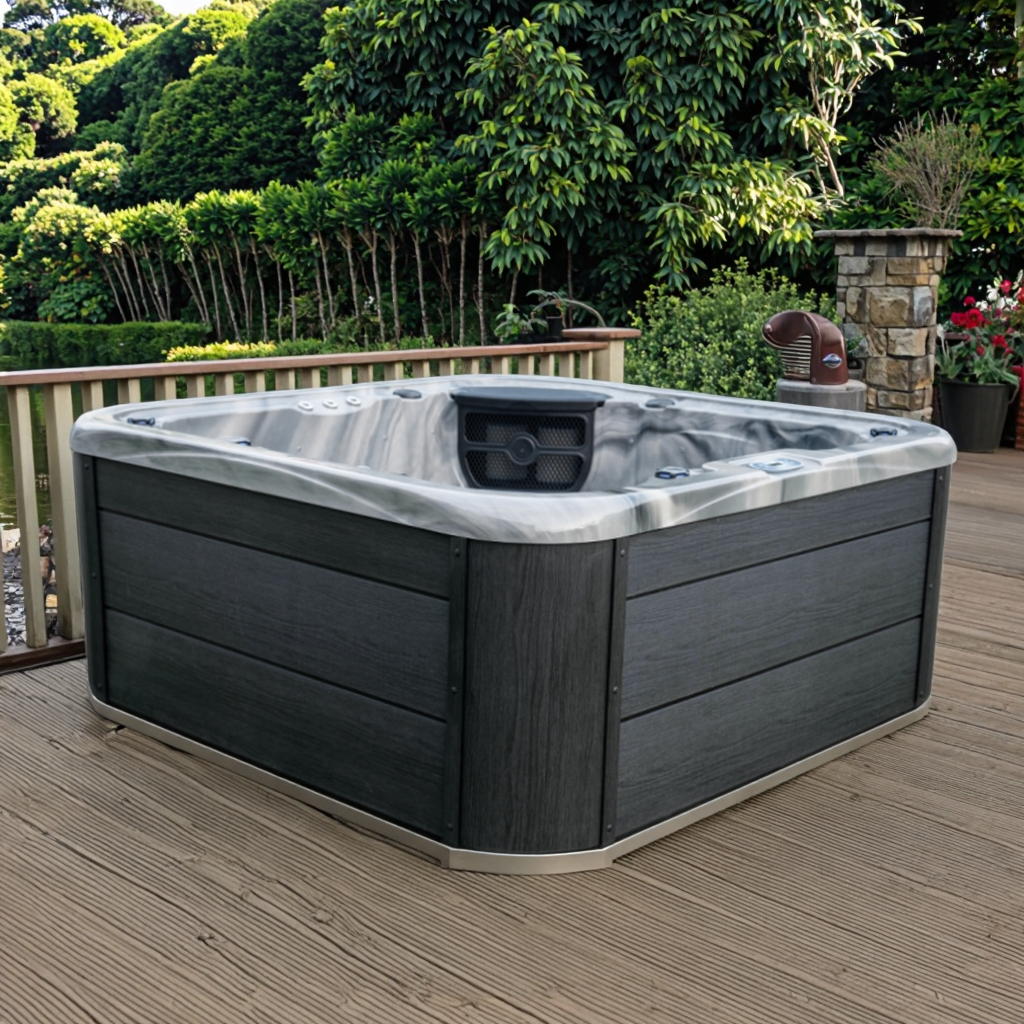
Why should outdoor hot tub manufacturers also emphasize post-operative safety precautions?
From the perspective of outdoor spa hot tub product design and user education, these issues are equally worthy of manufacturers' attention.
An outdoor whirlpool hot tub is essentially a heated, circulating hydrotherapy device involving multiple systems such as water temperature, circulation pump, filter, massage nozzles, and water quality management. The risks vary depending on the user's physical condition.
Therefore, professional outdoor spa hot tub manufacturers can clearly remind users in their user manuals that if they have recently undergone surgery, have open wounds, or are recovering, they should consult a doctor before entering the outdoor whirlpool hot tub and follow medical professionals' restrictions on soaking and hydrotherapy activities.
For manufacturers like LOVIA®, manufacturers of outdoor hot tubs and outdoor swim spas, temperature control, circulation filtration, water quality maintenance, and nozzle design are crucial components of equipment performance. However, these product functions cannot replace medical judgment. For post-operative users, "how hot the water can the device heat to" and "is the patient ready to enter the spa hot tub?" are two entirely different questions.
This distinction also helps consumers correctly understand the boundaries of outdoor spa hot tub use: the device provides a controlled spa environment, while the user's suitability depends on individual physical conditions.
What procedures should be established for reusing an outdoor hot tub after wound healing?
A relatively safe procedure can be summarized as "Doctor's confirmation—Wound examination—Water quality check—Low-intensity recovery—Continuous observation."
First is doctor's confirmation. Especially for those who have undergone major surgery, deep sutures, joint surgery, chest or abdominal surgery, skin grafts, or have complications, it is not recommended to judge based solely on the appearance of the wound.
Second is wound examination. Confirm that the wound is completely closed, without persistent oozing, significant redness and swelling, signs of infection, or reopening.
Third, check the water quality of the outdoor hot tub. Ensure the filter and circulation system are functioning properly, and that the pH and disinfectant levels are within the manufacturer's recommended range.
Fourth, reduce the irritation of your first hot tub soak. The water temperature should not be too high, the soaking time should not be too long, and the nozzle should not directly spray onto the surgical area.
Fifth, observe afterward. If there are no abnormalities in the wound, you can gradually resume your normal outdoor spa hot tub usage habits; if any abnormalities occur, stop bathing and contact medical personnel.
FAQ: Common Questions about Using an Outdoor Hot Bath After Wound Sutures
FAQ 1: How long after suture removal can I soak in an outdoor spa hot tub?
Suture removal does not mean the wound is completely healed. After suture removal, you should still observe whether the wound is completely closed, whether there is any oozing, redness, swelling, or signs of infection, and follow your doctor's advice to decide when you can soak. Do not use "suture removal" as the only condition for entering an outdoor hot tub.
FAQ 2: I can shower after the wound is healed, can I also soak in an outdoor hot tub?
No. There is a significant difference between showering and prolonged soaking. MedlinePlus points out that showering is generally more suitable than soaking for postoperative wounds because soaking may increase the risk of wound reopening and infection.
FAQ 3: My wound has scabbed over, can I soak in an outdoor whirlpool hot tub?
You can't judge based on just the scabbing. You should ensure the wound is completely closed, dry, and free of abnormal discharge, and obtain your doctor's permission. If the scabbed area is still moist, easily peels off, or has oozing underneath, you should not soak it yourself.
FAQ 4: Can I use a waterproof bandage to protect my wound before soaking in an outdoor hot tub?
It is not recommended to use waterproof dressings as a reason to enter an outdoor hot tub prematurely. Waterproof dressings can be used for specific wound care, but they cannot replace complete wound healing and your doctor's permission for soaking.
FAQ 5: What should I do if my wound turns red after soaking in an outdoor spa hot tub?
If it's just a minor, temporary skin change, you can stop soaking and observe. If the redness and swelling continue to increase, accompanied by increased pain, local heat, oozing, pus, odor, or fever, you should contact your doctor as soon as possible.