


How high can the water temperature of a swim spa tub be?
2026-02-13 15:30Before purchasing or using a swim spa tub, many people focus on one key question: How high can the water temperature of a swim spa tub actually reach?
This question seems simple, but it actually involves multiple aspects, including equipment design, safety limitations, usage scenarios, and human comfort.
A lack of systematic understanding of swim spa tub temperatures can not only affect the user experience but may even have unnecessary impacts on equipment operation and physical sensations.
This article will provide a comprehensive analysis from a professional perspective of the upper temperature limit of swim spa tubs, common setting ranges, and key factors affecting water temperature, helping you build a clear and accurate understanding.

What is the normal water temperature range for a swim spa tub?
To understand the "maximum temperature" of a swim spa tub, you first need to clarify what the "normal operating temperature" is.
Common Temperature Ranges for Swim Spa Tubs
In most design specifications, the water temperature of a swim spa tub is typically controlled within the following range:
• Minimum common temperature: Approximately 24–26°C
• Commonly comfortable temperature: Approximately 28–32°C
• Higher spa temperature: Approximately 34–38°C
This range is not arbitrarily set, but rather considers factors such as human comfort, equipment safety, and water stability.
Why is a swim spa tub different from a regular swimming pool?
Compared to traditional swimming pools, swim spa tubs typically have higher water temperatures due to:
• Different usage
• Smaller water volume
• Emphasis on spa and relaxation properties
Therefore, swim spa tubs are designed to withstand and maintain higher water temperatures.
What is the maximum temperature a swim spa tub can reach?
This is one of the most frequently asked questions.
Maximum water temperature from an equipment design perspective
In most cases, the maximum settable water temperature for a swim spa tub is typically around 38–40°C.
This upper limit is not accidental, but the result of a comprehensive consideration.
Key considerations include:
• The human body's tolerance to prolonged exposure to hot water
• The safe operating range of the heating system
• The stability of pipes and sealing materials
Therefore, a swim spa tub is not necessarily "the higher the better."
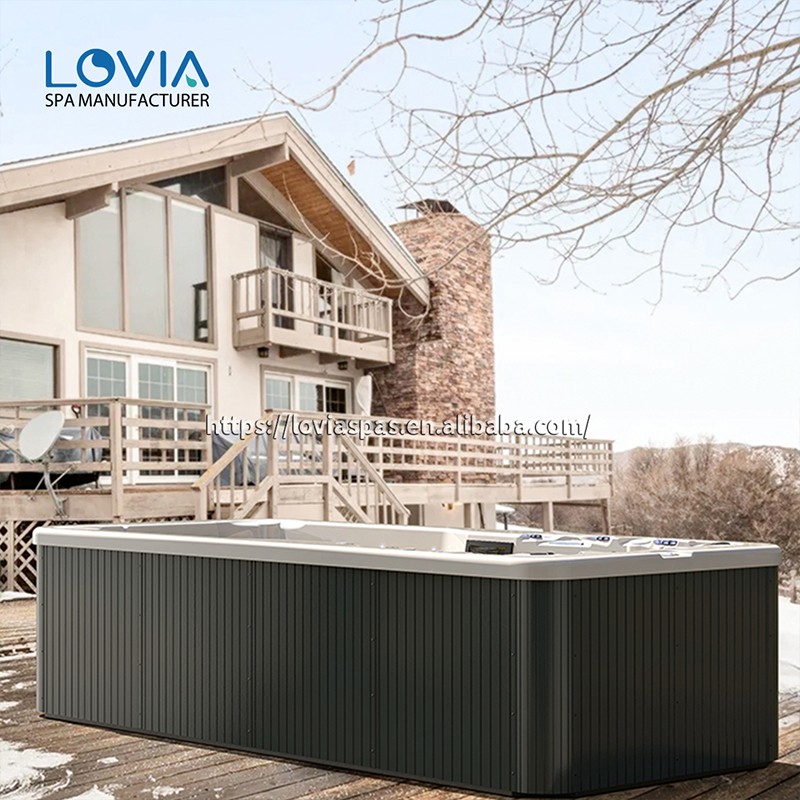
Why can't a swim spa tub heat up indefinitely?
Even if higher water temperatures were technically possible, there are usually limitations, including:
• High-temperature water is not suitable for prolonged human contact
• Higher water temperatures cause faster changes in water quality
• Energy consumption and equipment load increase significantly
This is why swim spa tubs have a specific temperature upper limit.
Is the temperature of a swim spa tub fixed?
The answer is: no, it is adjustable.
How is the water temperature of a swim spa tub adjusted?
Most swim spa tubs are equipped with:
• A temperature control system
• A heating element
• A control panel
Users can adjust the water temperature within the allowable range according to their needs to suit different usage purposes.
What are the different temperature requirements for different usage scenarios?
Swim spa tubs aren't limited to one specific use case; different usage methods require different temperatures:
• For swimming or sports: Temperatures are typically lower.
• For relaxation and spa purposes: Temperatures are typically higher.
• For extended use: Temperatures are generally not set to the maximum value.
Therefore, swim spa tub temperature settings are often "dynamically selected" rather than fixed.
Why can't the water temperature of a swim spa tub be kept at its highest value for extended periods?
This is a very important but often overlooked question.
The impact of high temperatures on water stability
When a swim spa tub is kept at a high water temperature for a long time:
• Disinfectant consumption accelerates.
• Dissolved substances in the water react more actively.
• Water quality is more prone to imbalance.
This means maintenance becomes significantly more difficult.
The impact of high water temperatures on equipment operation
From an equipment perspective:
• The heating system operates under high load for extended periods.
• The circulation system experiences greater pressure.
• Some components age faster.
Therefore, even if a swim spa tub can reach a high temperature, it is not recommended to maintain it at its maximum value for extended periods.
What is the relationship between swim spa tub water temperature and human comfort?
Water temperature is not just a technical parameter; it directly impacts the user experience.
Why is 37–38°C considered a high spa temperature?
This is because:
• It's close to body temperature
• It provides noticeable thermal stimulation
• It offers strong comfort for short periods of use
However, this temperature also means it's more suitable for short periods of relaxation than prolonged activity.
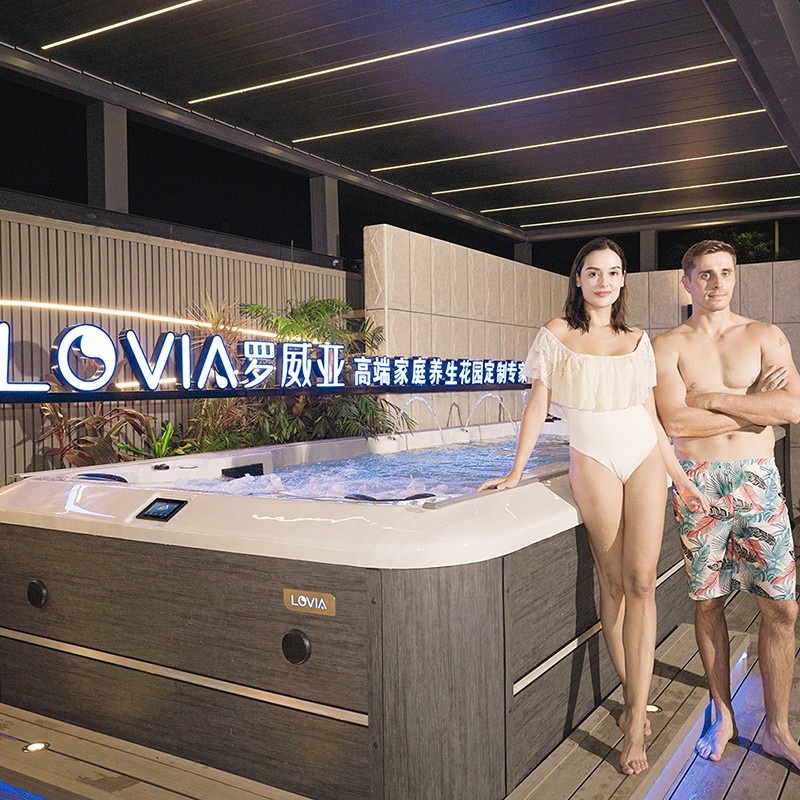
What happens when the swim spa tub water temperature is too high?
When the water temperature exceeds the body's comfort range:
• It can easily cause fatigue
• It may increase heart rate
• It may require a significantly shorter usage time
Therefore, temperature settings need to be considered in conjunction with the duration of use.
Does the swim spa tub temperature depend on the water volume?
Yes, and the relationship is very direct.
What does a swim spa tub with a large water volume mean?
A larger water volume:
• It takes longer to heat up
• It requires more energy to maintain a high temperature
• Temperature fluctuations are relatively more stable
Therefore, different sizes of swim spa tubs will have different requirements for actual temperature management.
Do environmental factors affect the maximum temperature of a swim spa tub?
While the equipment itself has a temperature limit, the external environment still has an impact.
How does ambient temperature affect a swim spa tub?
In colder environments:
• Longer heating time
• Faster heat loss
• Higher load on the heating system
In warmer environments, it's easier to approach and maintain the set temperature.
Is a swim spa tub suitable for continuous heating?
This is closely related to the temperature setting.
What does continuous heating mean?
If the swim spa tub is always kept at a high water temperature:
• Significantly increased energy consumption
• Increased difficulty in water quality management
• Extended equipment operating time
Therefore, temperature management often needs to be rationally planned in conjunction with usage frequency.
Are there safe limits to the temperature settings of a swim spa tub?
The answer is yes.
Why are safe temperature limits needed?
The purpose of safety limits is to:
• Prevent accidental overheating
• Reduce accidental risks
• Protect the equipment and the user
This is why swim spa tubs are generally not allowed to heat up indefinitely.
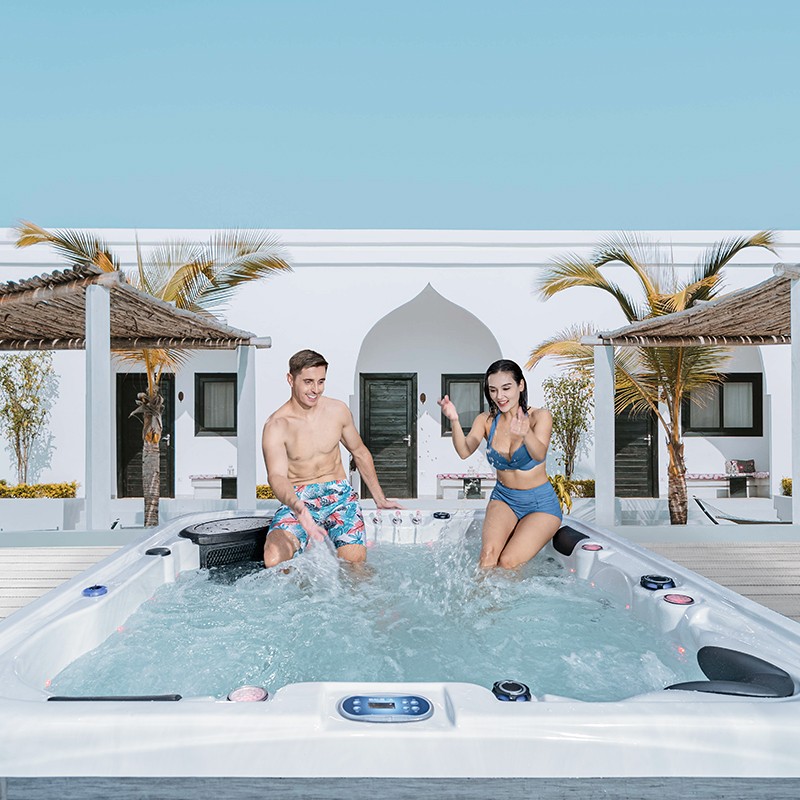
How to reasonably understand "how hot can a swim spa tub get?"
From a professional perspective, this issue shouldn't focus solely on a single number.
The correct approach includes:
• Understanding the design limits of the equipment
• Understanding the usage scenarios corresponding to different temperatures
• Recognizing that higher temperatures do not necessarily equate to a better experience
The temperature of a swim spa tub is essentially a "controllable variable," not a fixed target.
How high can the temperature of a swim spa tub be?
The following clear conclusions can be drawn:
• Common operating temperatures for swim spa tubs are generally between 28–38°C
• The maximum set temperature usually does not exceed 40°C
• Higher temperatures place higher demands on usage duration, water quality, and equipment
• A suitable temperature should be set comprehensively based on the intended use, duration, and environmental factors.