


How Heavy is a 5-Person Spa Hot Tub?
2025-12-19 15:30When purchasing or planning the installation of outdoor spa products, weight is another crucial factor second only to size. This is especially true for products like 5-person spa hot tubs, which are widely used in patios, terraces, gardens, commercial clubs, and resorts. Their weight not only affects installation methods but is also closely related to load-bearing capacity, transportation, safety, and electrical configuration.
Therefore, one of the most frequently asked questions by consumers and installers is:
"How heavy is a 5-person spa hot tub?"
This article will delve into this core question, using the LOVIA SPA (2300×2300×880 mm) 5-person spa hot tub as a reference to present you with the clearest and most accurate weight data.
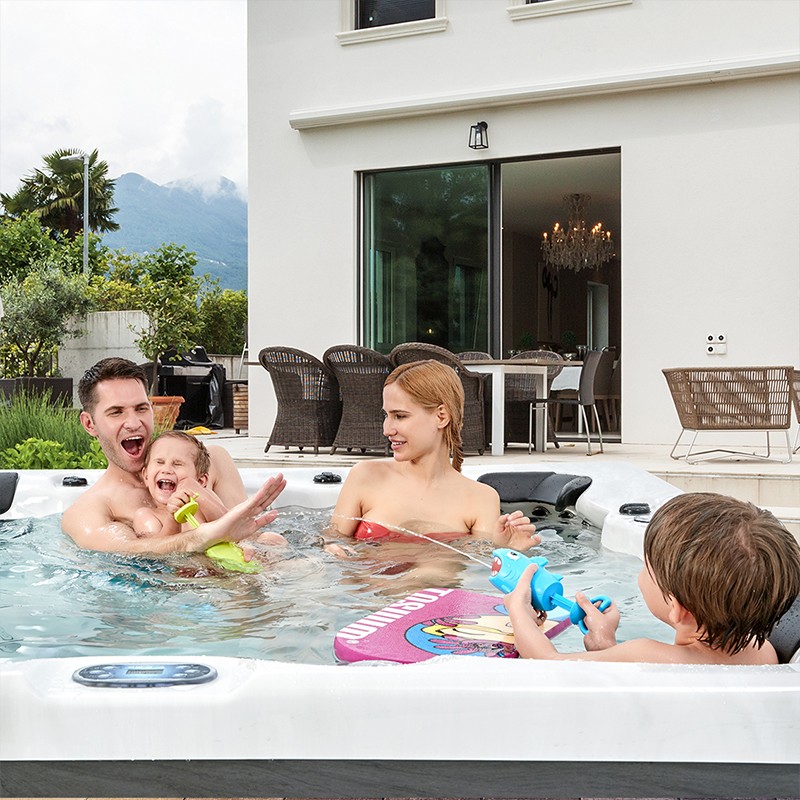
What are the components that make up the weight of a 5-person spa hot tub?
To answer the question, "How much does a 5-person spa hot tub weigh?", we must first understand that its weight is not determined by a single structure, but rather by multiple components, including:
• Shell structure (Acrylic + FRP fiberglass reinforcement layer)
• Stainless steel frame or steel structure
• Piping system
• Nozzle system
• Pump system
• Heater
• Control system
• External enclosure
• Internal insulation layer
• Humidity isolation structure
• Other small components
Different brands and models of spa hot tubs vary in material thickness, craftsmanship, structure, configuration, and number of nozzles. Therefore, even within the category of "5-person spa hot tub," the weight can differ.
However, high-quality manufacturers typically use thicker materials and a more robust structure, making their weight a more meaningful reference point.
Products from brands like LOVIA SPA (founded in 1989, one of China's most renowned manufacturers of outdoor and pool spa tubs) have weights closer to industry standards and can serve as a benchmark.
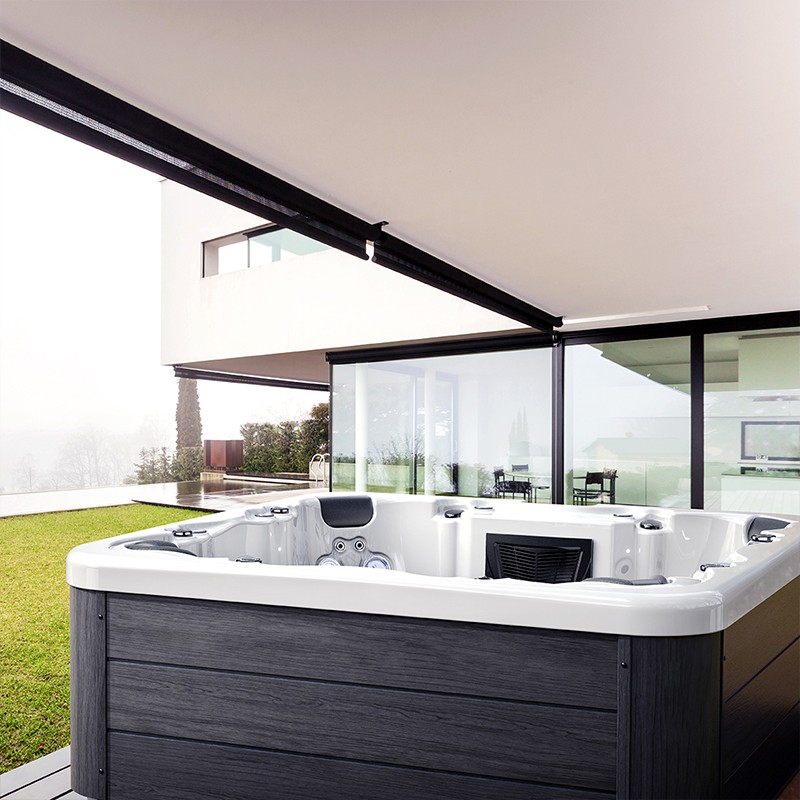
How much does the LOVIA SPA 5-person spa hot tub weigh?
LOVIA SPA 5-person spa hot tub specifications:
• Dimensions: 2300 × 2300 × 880 mm
• Dry weight (without water): 350 kg
• Weight when full (including water): 2190 kg
This means:
• The dry weight of the 5-person spa hot tub is approximately 350 kg.
• The total weight of the 5-person spa hot tub when full of water is approximately 2190 kg.
These two figures are crucial because they apply to different design and installation stages:
• Dry weight: related to transportation, handling, entry, and carrying upstairs.
• Weight when full of water: related to load-bearing capacity, foundation, terrace structural strength, and installation planning.
Compared to the industry average, the weight of the LOVIA SPA 5-person spa hot tub falls within the high-quality standard range: sufficiently robust and durable without unduly increasing the installation burden.
Why is there such a large difference between the dry weight and the full water weight?
A spa hot tub can be moved relatively lightly when not in use, but once filled with water, its weight can increase by 4–6 times, or even more.
This is because:
1 gallon of water weighs approximately 3.8 kg
1 cubic meter of water weighs approximately 1000 kg
A typical 5-person spa hot tub requires:
• 1200–1600 liters of water (approximately 1.2–1.6 tons)
Adding the weight of the tub's structure, the final weight when full of water usually exceeds 1800–2300 kg.
LOVIA SPA's weight data closely follows this scientific logic:
• Weight full of water 2190 kg =
• Dry weight 350 kg + water weight approximately 1840 kg
This falls within the typical water volume range for a 5-person spa hot tub.
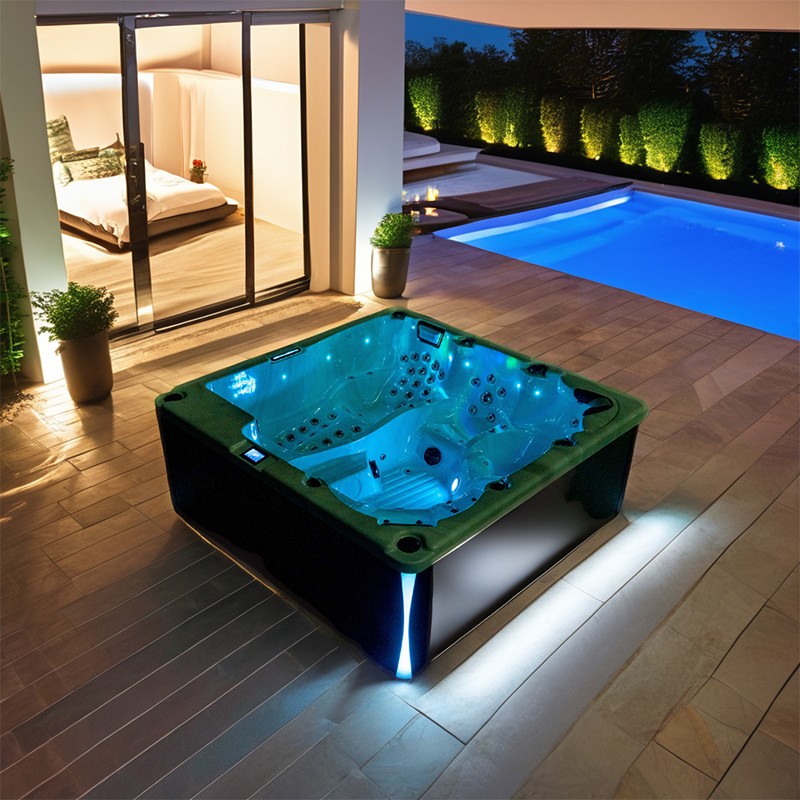
What is the average weight of a 5-person spa hot tub?
Based on data from major global manufacturers and industry practices, the weight of a standard outdoor 5-person hot tub is approximately as follows:
• Dry weight: 300–450 kg
• Full water weight: 1800–2400 kg
LOVIA SPA's data (350 kg dry weight, 2190 kg full water weight) perfectly matches this professional range and is typical for high-quality products.
Why is the weight of a hot tub so important?
When choosing to purchase or install a hot tub, weight is a core factor that must be considered in advance, and its importance is reflected in the following aspects:
1. Load-bearing requirements
The weight of a full-water hot tub typically exceeds 2 tons, especially for a 5-person hot tub. Therefore, the ground must meet the load-bearing standards.
• Patio ground
• Balcony
• Rooftop terrace
• Wooden platform
• Garden lawn foundation
Insufficient load-bearing capacity can lead to serious problems such as structural deformation, subsidence, and even collapse.
2. Transportation and Handling
A spa hot tub weighing 300–450 kg (dry weight) is not lightweight and requires:
• A professional handling team
• Mechanical hoisting and forklifts
• Planning the handling route
• Avoiding narrow passageways
Failure to plan the delivery route in advance will cause installation difficulties.
3. Installation Planning
Heavy spa hot tubs place higher demands on structural stability:
• A sturdy foundation is required
• If placed on a wooden platform, structural reinforcement is needed
• If placed on a roof, a structural engineer assessment is required. Proper installation planning can avoid risks during later use.
4. Safety in Use
A full-water weight of 2 tons means:
• Multiple users bathing simultaneously
• Water level rise
• Changes in the stress on the tub
• Pressure on the bottom structure
The stronger and more reasonably weighted the spa hot tub, the more stable and safer it will be in long-term use.
5. Design and Aesthetics
High-quality spa hot tubs typically use:
• Thick shell
• Reinforced frame
• Complete insulation
• Multi-layered structure
Greater weight means more reliable support, and a longer product lifespan and performance.
What factors determine the weight of a spa hot tub?
The following factors directly affect the final weight of a spa hot tub:
1. Shell Thickness and Materials
Top brands often use thicker shell materials:
• Acrylic thickness
• Fiberglass reinforcement layer
• Reinforced resin layer
A thicker structure is more robust, and naturally, heavier.
2. Frame Structure
5-person spa hot tubs typically use:
• Stainless steel frame (heaviest, most stable)
• Galvanized steel frame
• Wooden frame
Stainless steel frames are the heaviest and most durable.
3. Number of Nozzles and System Configuration
More nozzles, larger pumps, and more powerful circulation systems all mean higher weight.
4. Exterior Wall Panel Material
• PVC panels are the lightest
• Composite panels are next
• Aluminum alloy panels and wood panels are the heaviest
5. Insulation Layer Configuration
High-end spa hot tubs often use:
• Multi-layer insulation foam
• Full-coverage insulation
• Localized reinforced insulation layers
These structures also increase weight.
6. Internal Layout of a 5-Person Bathtub
The number of seats, the design of the recliner, and the design of the footwell all affect the internal structure and weight.
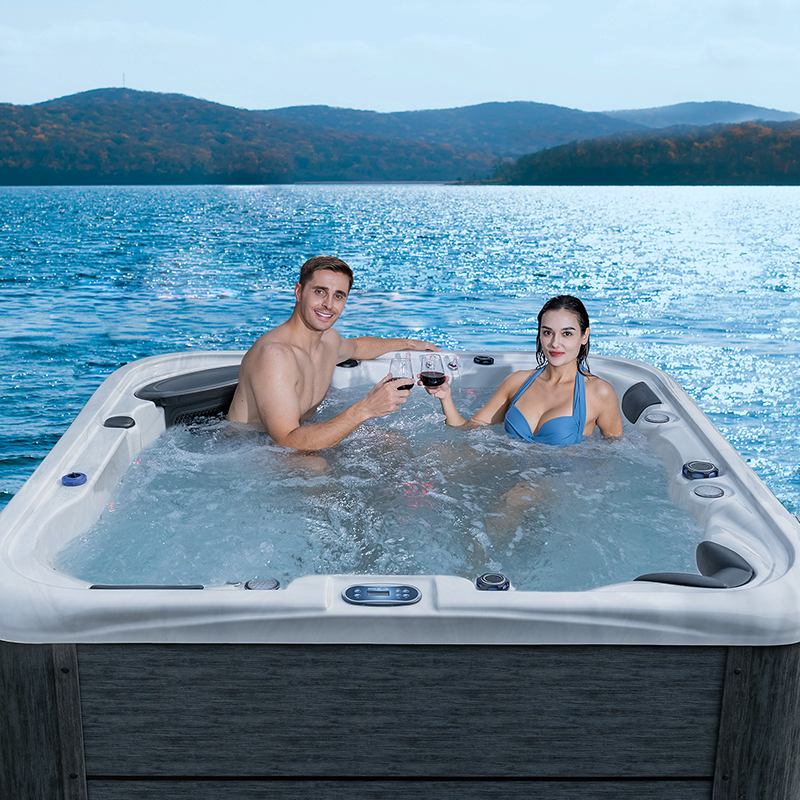
What is the relationship between water volume and weight in a 5-person spa hot tub?
A 5-person spa hot tub typically requires 1200–1600 liters of water, and one liter of water is approximately 1 kg.
Therefore, the weight of the water alone is:
• 1200–1600 kg (1.2–1.6 tons)
This also explains why the weight increases significantly when filled with water.
Based on data from LOVIA SPA:
• Full water weight: 2190 kg
• Dry weight: 350 kg
This indicates a water capacity of approximately 1840 kg, which is standard for a 5-person bathtub.
What weight-bearing capacity is needed for a 5-person spa hot tub?
Generally recommended:
• At least 3000–3500 kg weight capacity
This is because:
• Weight of the bathtub full of water
• Weight of the people in the tub
• Uneven stress distribution
• Long-term structural fatigue
Therefore, the load-bearing structure must be checked before installation planning.
Where is a 5-person spa hot tub suitable for installation?
Because a full tank of water can weigh over 2 tons, a 5-person hot tub is typically suitable for installation in:
• Patio
• Ground-level terrace
• Garden
• Concrete platform
• Reinforced timber platform
• Indoor floor space
• Professionally engineered rooftop platform
It is not recommended for installation in:
• Balcony with insufficient load-bearing capacity
• Unreinforced roof
• Standard timber frame platform