


How Does an Outdoor Spa Hot Tub Water Circulation System Work?
2026-11-05 15:30An outdoor hot tub requires more than just heating; it needs continuous water circulation, filtration, and sanitization to ensure a comfortable user experience. The water circulation system is the core component of an outdoor hot tub, responsible for transporting water from the tub to the filter and heater, and then returning the treated water to the tub, thereby maintaining the water temperature and quality within an optimal range.
In simple terms, the water circulation process in an outdoor spa hot tub involves water intake, pumping, filtration, heating, and return. Some units may also feature dedicated massage pumps, ozone treatment systems, or other water treatment components, depending on the specific product design.
Unlike a standard bathtub, an outdoor hot tub typically uses the same body of water repeatedly at relatively high temperatures. Sweat, skin oils, residues from skincare products, and outdoor dust can all enter the water. If circulation and filtration are inadequate, it becomes difficult to maintain stable water quality; this can also lead to issues such as uneven water temperature, weakened jet pressure, and reduced heating efficiency.
Understanding how an outdoor whirlpool spa hot tub’s water circulation system works helps consumers choose the right equipment, enables users to identify malfunctions promptly, and can help lower long-term maintenance costs.
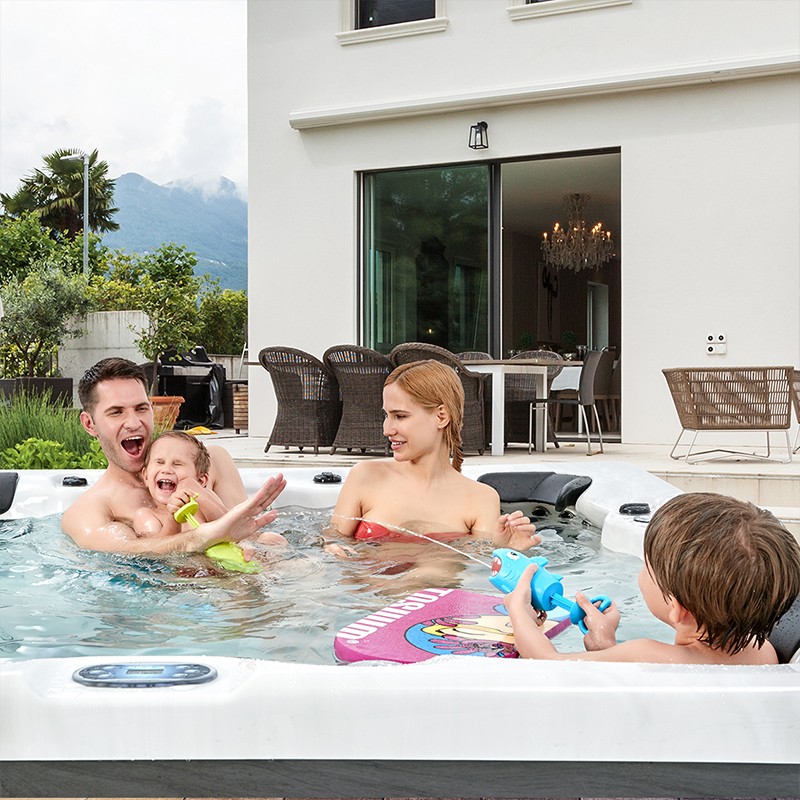
How Does an Outdoor Hot Tub Water Circulation System Work?
1. Water Intake: Drawing water from the tub into the plumbing
The circulation process begins at the water intake. Outdoor whirlpool spa hot tubs typically draw water into the circulation plumbing through suction ports, filter inlets, or skimmers. Some models feature multiple intake points to improve the coverage of water circulation.
Suction ports must remain clear. If hair, leaves, or other debris block these inlets, the circulation flow rate may drop, which in turn impairs filtration and heating. Users should regularly inspect the intake points and ensure that the water level in the tub meets the manufacturer’s requirements.
2. Circulation Pump: Driving continuous water flow
The circulation pump serves as the power source for the outdoor hot tub’s water circulation system. An electric motor drives an impeller, which pushes the water through the filter, heater, and other components before returning it to the tub.
Pump configurations vary depending on the specific model. Some outdoor whirlpool spa hot tubs utilize a dual-speed pump: a low-speed mode for daily circulation and a high-speed mode to power the massage jets. Other models are equipped with separate pumps—one dedicated to circulation and another to the massage system.
A dedicated circulation pump ensures the necessary water flow for filtration and heating even when the massage function is turned off, while the massage pump is primarily responsible for delivering high-volume water flow. When selecting or replacing a pump, refer to the manufacturer’s specifications for flow rate, head pressure, and electrical parameters; do not rely solely on motor power to gauge performance.
3. Filter: Removing Suspended Impurities
Once water enters the circulation system, it typically passes through a filter. Most residential outdoor hot tubs use cartridge-style filtration systems, which are designed to trap dust, hair, fibers, and other suspended particles.
Filters cannot remove all dissolved substances, nor can they serve as a substitute for water sanitization. If a filter cartridge is not cleaned regularly, impurities will accumulate, increasing resistance to water flow. This reduces the circulation rate, which in turn impairs both heating and filtration efficiency.
Therefore, the filter in an outdoor spa hot tub should be cleaned or replaced periodically, based on usage frequency and the manufacturer’s recommendations. If you notice a decrease in water flow, the filter and the water intake (suction) ports should be the first points to check for blockages.
4. Heater: Maintaining the Set Temperature
After filtration, the water generally flows into the heater. Most residential outdoor spa hot tubs use electric heaters, though some systems may employ heat pumps or other heating methods. A control system monitors the water temperature via a temperature sensor and regulates the heater’s operation to maintain the desired set point.
Many outdoor hot tubs are typically operated at temperatures between 37°C and 40°C; however, always adhere to the manufacturer’s instructions and relevant safety standards regarding maximum temperature limits.
Heaters require a specific minimum water flow to operate correctly. If the circulation pump fails or the filter becomes clogged, the system may trigger a flow-protection mechanism and shut off the heater. Never bypass a flow switch or other safety device in an attempt to force the whirlpool spa hot tub to continue heating.
5. Water Return: Returning Treated Water to the Tub
Once filtered and heated, the water is returned to the whirlpool spa hot tub through the return plumbing, completing a continuous circulation loop. The placement of the return ports influences how water is distributed and how evenly the temperature is maintained throughout the tub.
A well-designed plumbing layout ensures thorough mixing of the water, preventing areas with poor circulation. However, the fact that water flows out through the return jets does not necessarily mean that every area of the whirlpool spa hot tub has been adequately treated. Therefore, the design of a circulation system must account for more than just the pump's flow rate; it must also consider the coordination between suction inlets, return jets, and the internal water flow paths.
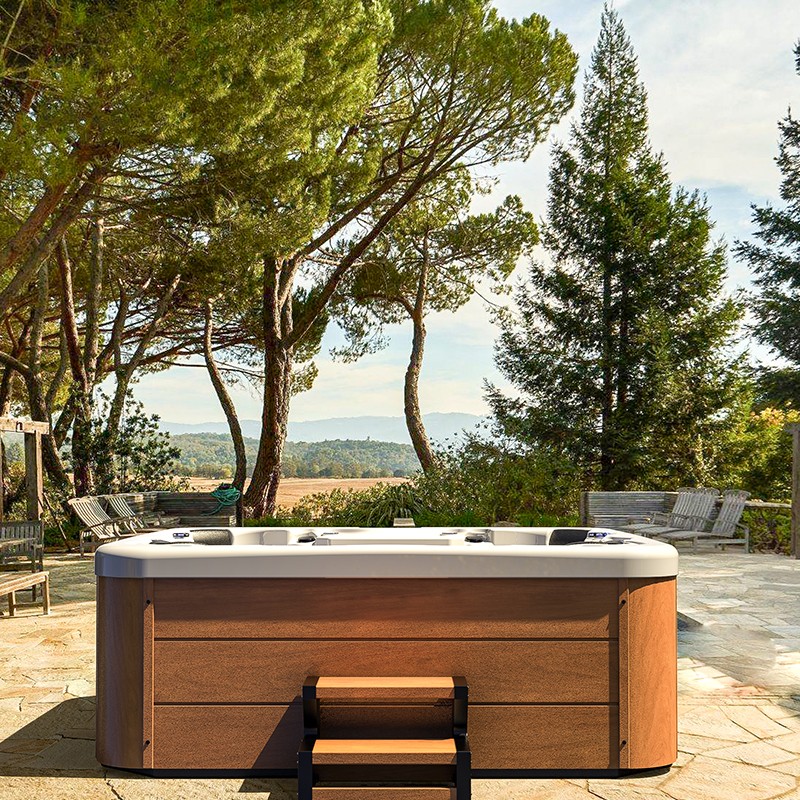
Core Components of an Outdoor Hot Tub Water Circulation System
A complete water circulation system for an outdoor whirlpool spa hot tub typically includes suction inlets, a circulation pump, a filter, a heater, return piping, and a control system. Some units may also feature dedicated massage pumps, flow sensors, and auxiliary sanitization equipment.
| Component | Main Function | Common Issue |
| Suction Fittings | Draw water into the system | Blockage |
| Circulation Pump | Move water through the system | Reduced flow or noise |
| Filter Cartridge | Remove suspended particles | Clogging |
| Heater | Maintain water temperature | Scaling or low-flow protection |
| Return Fittings | Return treated water to the tub | Poor water distribution |
| Control System | Manage pumps and temperature | Sensor or control faults |
| Jet Pump | Power massage jets | Weak jet pressure |
The control system coordinates the operation of the water pump, heater, and filtration cycles. When the water temperature falls below a set point, the system may activate the heater; once the target temperature is reached, it adjusts its operational state according to the device's control logic. If a sensor detects an abnormal flow rate, some systems will automatically disable the heater to reduce the risk of overheating.
It is important to note that the specific components and plumbing configurations can vary between different outdoor whirlpool spa hot tub models. Always consult the manual for your specific model before performing any maintenance; do not assume the structure is the same as that of other products.
Water Circulation vs. Massage Jets in Outdoor Hot Tubs: What’s the Difference?
Consumers often confuse water circulation with massage functions, yet they serve distinct purposes.
Water circulation is primarily responsible for routing water through the filtration and heating systems to maintain water quality and temperature. Massage jets, by contrast, utilize a higher volume of water flow to provide a massage experience. Some outdoor whirlpool spa hot tubs use a dual-speed pump for both functions—operating at a low speed for routine circulation and a high speed to power the massage jets—while other models utilize separate, independent pumps.
Certain massage jets also incorporate a Venturi effect to draw in air, creating an air-water mixture. Consequently, strong massage pressure or an abundance of bubbles does not necessarily indicate that the water has been thoroughly filtered or sanitized.
To determine whether an outdoor whirlpool spa hot tub is functioning correctly, one should not rely solely on the output pressure of the jets; instead, it is essential to check the filtration system, circulation cycles, and sanitization levels. Filtration, circulation, and sanitization are complementary processes that cannot substitute for one another.
Key Parameters for Outdoor Hot Tub Water Circulation Systems
Designing a water circulation system requires a comprehensive assessment of factors such as the hot tub's capacity, actual flow rate, plumbing resistance, filtration efficiency, and the requirements of the heater. Specifications may vary significantly between different models; therefore, always refer to the data provided by the manufacturer.
1. Water Flow Rate and Theoretical Circulation Time
Water flow rate is typically expressed in GPM (gallons per minute) or L/min (liters per minute). Actual flow is influenced by factors such as pump performance, pipe length, the number of elbows (bends), filter resistance, and nozzle design.
Theoretical circulation time can be estimated using the following formula:
Theoretical Circulation Time = Hot Tub Water Capacity ÷ Actual Circulation Flow Rate
For example, if an outdoor spa hot tub has a capacity of 1,500 L and an actual circulation flow rate of 50 L/min, it would theoretically take 30 minutes to circulate a volume of water equivalent to the tub's total capacity.
However, this does not mean that all the water has undergone effective filtration within those 30 minutes. Due to continuous mixing and varying flow paths within the tub, some water may pass through the filter multiple times, while water in other areas may take longer to reach the suction intake. Consequently, theoretical circulation time cannot replace the specific filtration protocols prescribed for the equipment.
2. Water Temperature and Heating Efficiency
The heating rate of an outdoor whirlpool spa hot tub depends on the volume of water, heater power, initial water temperature, ambient temperature, and the effectiveness of the insulation.
If a whirlpool spa hot tub heats up slowly during cold weather, check the filter, circulation pump, temperature settings, and the insulating cover. If circulation is functioning properly but heating remains inadequate, further inspect the heater and temperature sensors.
3. Filtration Cycles and Water Quality Management
Different outdoor whirlpool spa hot tubs utilize various filtration modes—some employ continuous low-flow circulation, while others operate on a preset schedule. Filtration cycles should be determined based on the equipment design, frequency of use, and water quality conditions.
Filters primarily remove suspended particles, while disinfection systems manage microbial risks. Clear water does not necessarily indicate that disinfection levels are adequate. Users must still monitor pH levels and disinfectant concentrations as required by the equipment specifications, and perform regular maintenance on the filtration system.
Common Issues and Solutions for Outdoor Hot Tub Water Circulation Systems
1. Weak Water Flow or Insufficient Output from Massage Nozzles
Common causes include a clogged filter, an obstructed suction intake, low water level, air entering the plumbing lines, or a pump malfunction. It is recommended to first check the water level and the suction intake, then clean the filter. If the water flow remains insufficient, inspect the water pump and plumbing in accordance with the manufacturer’s instructions.
Do not remove suction intake guards or bypass safety features in an attempt to increase flow.
2. Slow Heating or Failure to Heat
Abnormal heating does not necessarily mean the heater is damaged. A clogged filter, a malfunctioning circulation pump, or insufficient water flow can trigger safety mechanisms that cause the heater to stop operating.
When troubleshooting, begin by checking the filter, circulation status, and any error codes on the control panel. If circulation is functioning properly but the water temperature fails to reach the set point, further inspection of the heater and sensors is required. In cold weather, also ensure that the whirlpool spa hot tub cover and plumbing are adequately insulated.
3. Cloudy Water, Unpleasant Odors, or Increased Foaming
These issues may stem from inadequate filtration, improper sanitizer concentrations, the accumulation of organic contaminants (such as those from human use), or an imbalance in water chemistry. It is recommended to test the water quality, clean the filter, and adjust your sanitization and water-replacement schedule according to the manufacturer’s guidelines.
Do not attempt to resolve water quality issues solely by extending pump run times, and do not add chemicals without first testing the water.
4. Abnormal Noise from the Circulation Pump
Unusual noise or vibration from the circulation pump may be caused by insufficient water intake, air entering the plumbing, a clogged impeller, or a motor fault. Start by checking the water level and any error indicators on the equipment. If the issue persists, cease operation and contact a professional technician; never attempt to disassemble the pump while it is powered.
5. Frozen Plumbing in Winter
Outdoor whirlpool spa hot tubs in cold climates are at risk of frozen plumbing, which can lead to cracked pipes, seal failures, and equipment damage.
Enable the freeze-protection feature as specified by the manufacturer, and ensure that the necessary operating conditions are met. If the equipment is to be left unused for an extended period, follow the prescribed drainage and line-clearing procedures to prevent any residual water from freezing inside. Do not assume that automatic freeze protection will remain functional during a power outage or equipment failure.
Maintenance Schedule for Outdoor Hot Tub Water Circulation Systems
| Component | Main Function | Common Issue |
| Suction Fittings | Draw water into the system | Blockage |
| Circulation Pump | Move water through the system | Reduced flow or noise |
| Filter Cartridge | Remove suspended particles | Clogging |
| Heater | Maintain water temperature | Scaling or low-flow protection |
| Return Fittings | Return treated water to the tub | Poor water distribution |
| Control System | Manage pumps and temperature | Sensor or control faults |
| Jet Pump | Power massage jets | Weak jet pressure |
The frequencies provided above are for reference only; the actual maintenance schedule should be adjusted based on the equipment manual, frequency of use, and local regulations. For commercial outdoor spa hot tubs, a robust system for water quality monitoring and equipment maintenance should be established in accordance with operational requirements.
Frequently Asked Questions (FAQ) Regarding Outdoor Hot Tub Water Circulation Systems
FAQ 1: How does the water circulation system of an outdoor spa hot tub work?
A circulation pump draws water into the plumbing, routes it through filtration and heating equipment, and then returns it to the tub, creating a continuous circulation loop.
FAQ 2: Does an outdoor whirlpool spa hot tub require 24-hour circulation?
Not necessarily. Some systems utilize continuous low-flow circulation, while others rely on scheduled filtration cycles. Operating times should be set according to the manufacturer’s instructions.
FAQ 3: What is the difference between a circulation pump and a massage (jet) pump in an outdoor hot tub?
A circulation pump is primarily responsible for the water flow required for daily circulation, filtration, and heating; a massage pump provides a higher flow rate to the massage jets. Some systems integrate both functions into a single dual-speed pump.
FAQ 4: Why is the water quality poor even though there is water flowing through the jets?
Water flow through the jets does not necessarily indicate that filtration and sanitization are functioning correctly. You should check the filter, circulation settings, sanitizer concentration, and water quality test results.
FAQ 5: How can I prevent the plumbing of an outdoor hot tub from freezing during the winter?
You should enable the anti-freeze (freeze protection) feature as specified by the manufacturer. If the whirlpool spa hot tub is to be left unused for an extended period, follow the prescribed drainage and line-purging procedures to prevent damage caused by residual water freezing.