


Does Sunlight Affect Chlorine Levels in Outdoor Spa Hot Tubs?
2026-06-02 15:35Many users notice that on sunny days, chlorine in the water seems to dissipate faster than on cloudy days or at night. Even without increased usage, chlorine levels drop significantly.
This is not accidental; it's a process with a clear physical and chemical mechanism.
To understand this correctly, a systematic analysis is needed from three aspects: the mechanism of chlorine's action in whirlpool spa hot tubs, the impact of ultraviolet radiation on chemical substances, and the specific characteristics of the outdoor environment.
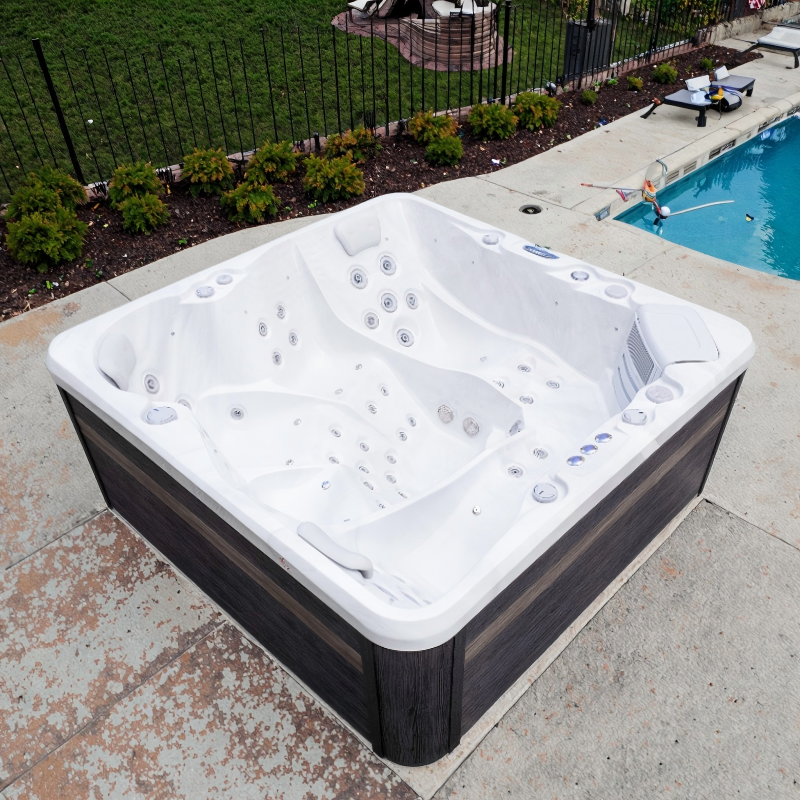
What exactly does chlorine do in spa hot tubs?
In any spa hot tub system, chlorine has only one primary function: continuously destroying microorganisms and organic pollutants in the water, maintaining its hygiene and stability.
When chlorine dissolves in water, it forms active chlorine substances with strong oxidizing capabilities. These substances can:
• Destroy bacterial cell walls
• Inhibit algae growth
• Decompose organic pollutants
• Prevent biofilm formation
Therefore, chlorine does not exist statically in whirlpool spa hot tubs but is constantly participating in chemical reactions.
Why does sunlight affect chlorine in spa hot tubs?
The key factor is ultraviolet (UV) radiation.
Sunlight contains multiple wavelengths, but UV radiation has the greatest impact on the chlorine content of hot tubs.
UV radiation has sufficient energy to:
• Break the chemical bonds of chlorine molecules
• Convert effective disinfecting chlorine into chloride ions, which have no disinfecting ability
• Accelerate the volatilization and decomposition of chlorine.
This process is chemically known as photodegradation.
Why are outdoor hot tubs more significantly affected?
Because the outdoor environment exposes the water directly to UV radiation.
Compared to indoor hot tubs, outdoor hot tubs have a decisive difference: The water is directly exposed to natural sunlight.
This means:
• Longer water surface exposure time
• Higher UV intensity
• Continuous degradation of chlorine molecules.
Therefore, with the same water volume and the same amount of chlorine added, the chlorine degradation rate in outdoor hot tubs is almost inevitably faster.
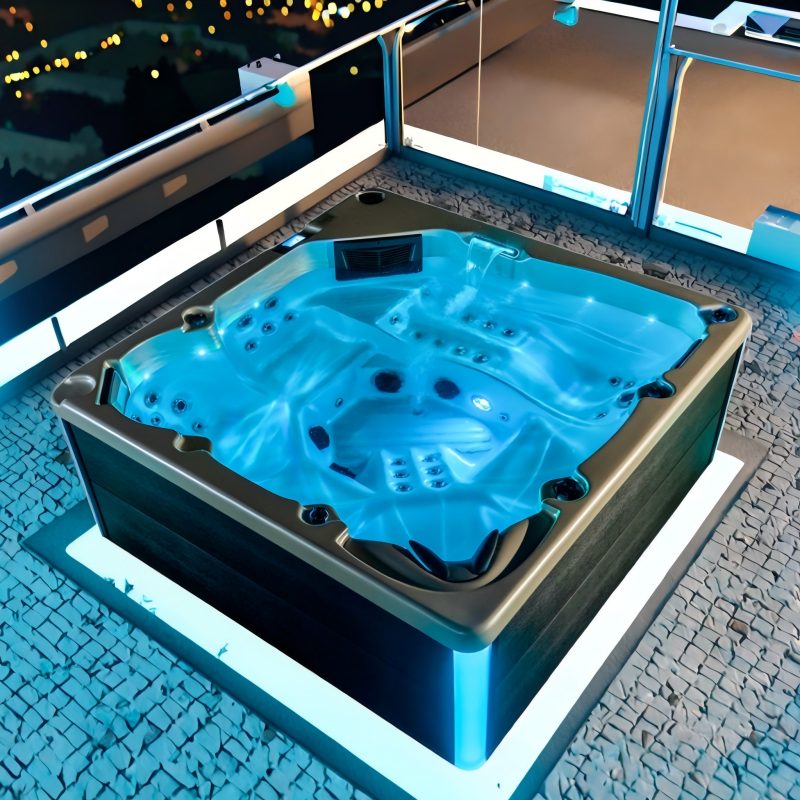
Is the destructive effect of sunlight on chlorine in hot tubs continuous?
Yes, and it is continuous throughout the day, as long as the water surface is exposed to sunlight.
Even in mild weather:
• UV rays are still present
• Chlorine is still photodegrading
• Effective disinfection capabilities continue to decline.
This is why chlorine levels detected in whirlpool spa hot tubs often differ between day and night.
Does sunlight make spa hot tubs "look clean but are actually unsafe?"
This is a very important concept.
When sunlight shines on a spa hot tub:
• The water may still be clear
• However, effective chlorine has already been degraded
• Disinfection capabilities are significantly reduced
This means the water may appear clean, but its microbial control is weakened.
Does UV radiation affect different types of chlorine the same way?
Not entirely the same, but all are destroyed.
Whether it's:
• Free chlorine
• Compound chlorine
• Stable chlorine forms
None of them are completely immune to UV radiation in whirlpool spa hot tubs.
Prolonged exposure to sunlight will reduce their effective concentration.
Why are spa hot tubs more prone to chlorine deficiency under strong sunlight?
This is the result of multiple factors:
1. Ultraviolet light directly decomposes chlorine.
2. High temperatures accelerate chemical reactions.
3. Chlorine evaporates more easily.
4. Microbial activity is enhanced.
In a whirlpool spa hot tub, these factors coexist, significantly accelerating chlorine consumption.
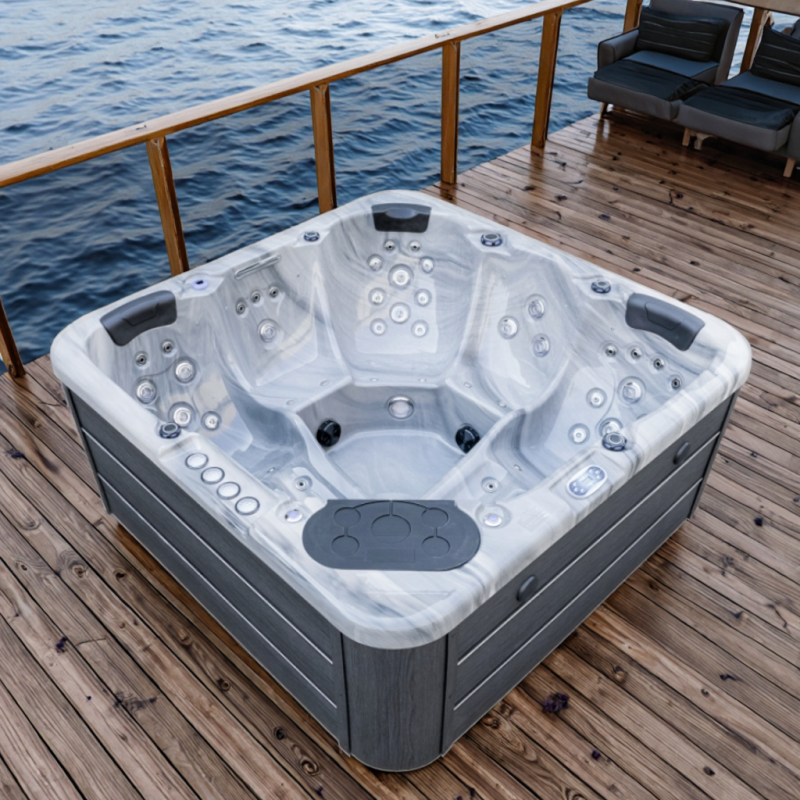
Does sunlight affect the stability of chlorine in a spa hot tub?
Yes. The "stability" of chlorine in water essentially refers to: how long chlorine retains its disinfecting ability before being consumed or decomposed.
Sunlight significantly shortens this time through photochemical reactions.
Why does the same amount of chlorine have a shorter effect in an outdoor spa hot tub?
Because in an outdoor environment:
• Chlorine not only has to fight pollutants
• It also has to fight sunlight itself. This makes the "workload" of chlorine in a spa hot tub much heavier.
Does sunlight directly turn spa hot tubs green?
Sunlight itself doesn't turn the water green, but it creates conditions by reducing chlorine levels:
• When chlorine is insufficient
• Disinfection ability decreases
• Algae grow more easily.
Therefore, sunlight indirectly affects water quality by influencing chlorine levels.
Why are algae more likely to appear in spa hot tubs under strong sunlight?
This is because:
• Sunlight provides energy for algae growth
• It also breaks down chlorine
• It weakens the algae-inhibiting barrier
This dual effect is particularly pronounced in whirlpool spa hot tubs.
What happens to chlorine after it's broken down by sunlight?
When chlorine is decomposed by UV light:
• It transforms into substances with no disinfecting ability
• It no longer participates in sterilization
• It cannot control microorganisms
This means that while "total chlorine" may still be present, "available chlorine" has decreased.
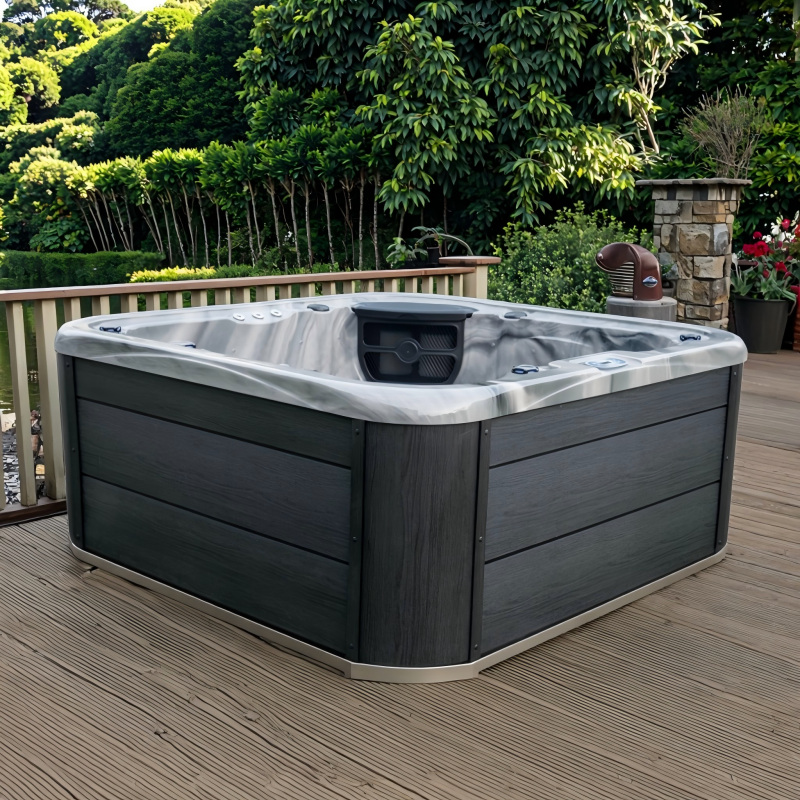
Does sunlight affect chlorine test results in spa hot tubs?
Yes, because the test measures the remaining available chlorine in the water.
Under strong sunlight:
• Chlorine consumption accelerates
• Test values drop faster
• Water quality risks increase
Why does covering a spa hot tub with a lid protect chlorine?
Because the lid can:
• Block UV light
• Reduce water surface exposure
• Slow down the photodegradation of chlorine
This is especially important in outdoor spa hot tubs.
Is sunlight one of the main causes of chlorine loss in outdoor spa hot tubs?
From a chemical perspective, yes.
In outdoor spa hot tub environments:
• Ultraviolet light is a significant driver of chlorine breakdown.
• More stable than simply usage frequency.
• More consistent than temperature.
What happens if we ignore the effect of sunlight on chlorine?
When users focus only on the amount of chlorine added and ignore sunlight:
• Chlorine levels may be insufficient for extended periods.
• Water quality becomes unstable.
• The disinfection system becomes overburdened.
This is especially easy to overlook in whirlpool spa hot tubs.