


Causes of Particulate Films on the Surface of Outdoor Spa Hot Tubs
2026-11-10 15:35During long-term use of an outdoor spa hot tub, some users may notice a granular film forming on the water surface, the inner walls of the tub, or along the waterline. This film can appear white, off-white, yellow, or transparent; it may manifest as a fine powder, or take on an oily, slimy, or flocculent (flaky/clumpy) texture. Even if the water in the tub appears clear, it does not necessarily mean that the water quality or the circulation system is in optimal condition.
The formation of such a granular film is typically linked to water chemistry imbalances, the accumulation of human body oils, mineral deposits, reduced filtration efficiency, or contamination within the plumbing system. If left unaddressed, this can lead to clogged filters, malfunctioning jets, decreased heating efficiency, and an increased risk of microbial contamination.
For residential users, as well as operators of hotels and commercial spa facilities, it is crucial to understand the causes of these granular films and to establish a proper maintenance regimen. This article explores the common causes, methods for identification, treatment options, and preventive measures.
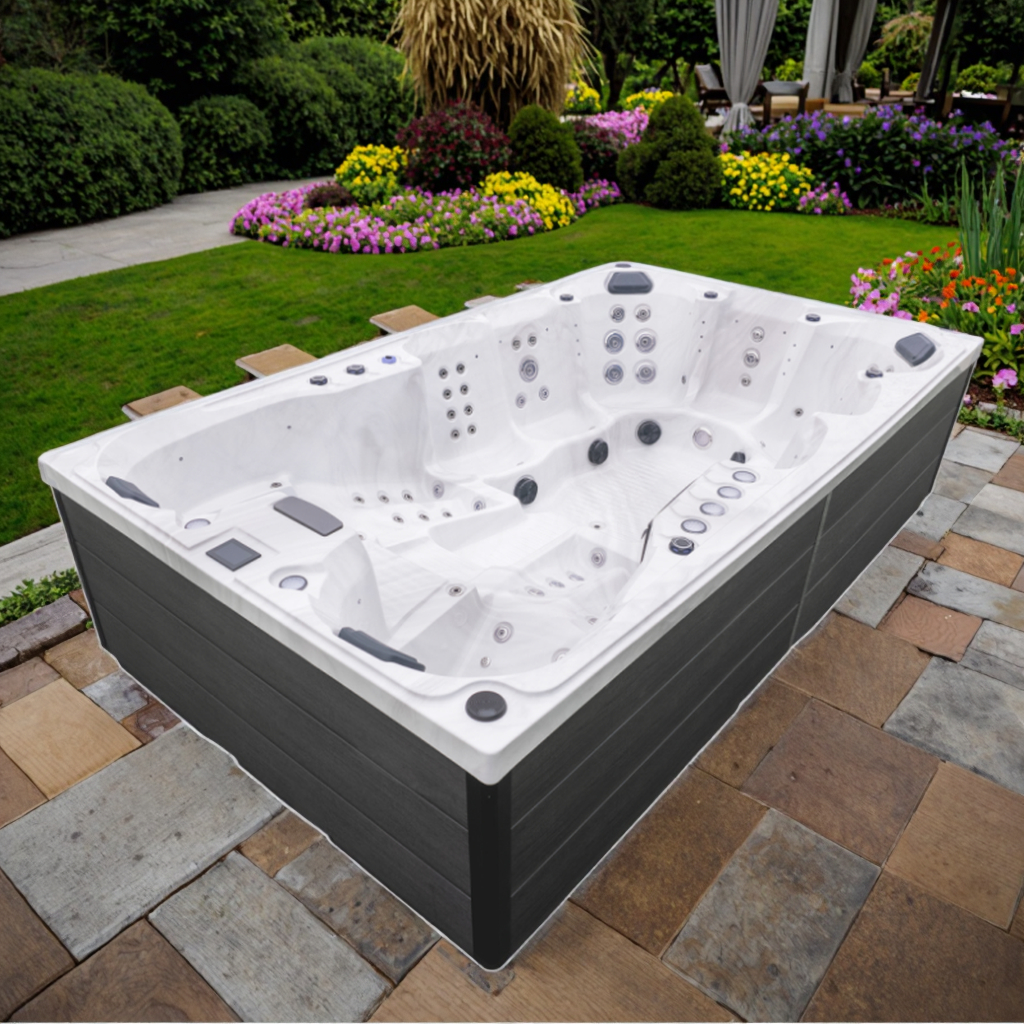
What is the granular film found on the surface of an outdoor hot tub?
A granular film is not a single, specific substance, but rather a mixture formed by the accumulation, combination, or precipitation of various contaminants in the water. Common components include human body oils, residues from skincare products, calcium and magnesium minerals, traces of cleaning agents, dust, and biofilms created by microorganisms.
Because outdoor spa hot tubs typically operate at temperatures between 37°C and 40°C (98°F–104°F) and are equipped with water pumps, filters, and massage jets, their aquatic environment differs from that of a standard bathtub. Higher water temperatures can disrupt the chemical balance of the water, while continuous circulation can cause oils and particulate matter to migrate and aggregate.
Common types of granular films include the following:
| Film Appearance | Possible Cause | Common Characteristics |
| White powdery particles | Calcium deposits | Dry, chalky residue |
| Gray or white flakes | Suspended impurities | Small floating particles |
| Yellow or brown film | Body oils and organic matter | Oily surface |
| Transparent sticky film | Biofilm or organic buildup | Slimy texture |
| Rainbow-colored film | Oils and cosmetic residues | Colorful surface reflection |
Please note that color and texture should only be used for preliminary assessment; they cannot definitively identify the specific composition of the contaminants. If a granular film is discovered, it should be investigated by combining water quality testing with an assessment of the equipment's operational status.
Primary Causes of Granular Film in Outdoor Hot Tubs
1. Excessive calcium levels in the water, leading to mineral deposits
This is a common cause of white, granular-looking films. If the water source used to fill an outdoor spa hot tub has high hardness, it likely contains elevated levels of calcium and magnesium ions. As the water temperature rises—especially if the pH level is high or the water chemistry is unbalanced—calcium ions can combine with carbonates to form calcium carbonate precipitates.
These deposits may appear as a white powder, fine particles, or hard scale, gradually accumulating on the inner surfaces of the tub, around the jets, and near the heater.
Because outdoor whirlpool spa hot tubs typically operate at high temperatures, proper water chemistry management is essential. If hard water is used over an extended period without appropriate treatment, mineral buildup will likely become increasingly pronounced.
Solution: Use water testing kits to monitor calcium hardness, pH, and total alkalinity. Generally, it is recommended to maintain the pH between 7.2 and 7.8, while calcium hardness should be managed according to the equipment manufacturer’s specifications. If the water source is too hard, consider using treated water or specialized water-softening/hardness-management products. For existing scale, use cleaning agents specifically formulated for the materials of your spa hot tub.
2. Accumulation of Body Oils and Skincare Product Residues
Body oils are a primary source of the oily films and particulate deposits that can appear on the surface of whirlpool spa hot tub water.
When users enter the spa hot tub, natural skin oils, sweat, sunscreen, body lotion, hair conditioner, and cosmetics are introduced into the water. These substances do not always dissolve completely; some remain as tiny oil droplets floating on the surface.
As the water circulates, these oils can combine with dust, minerals, and other organic impurities to form yellow, grayish-white, or transparent films.
This is particularly common in the summer, when users often apply sunscreen. If the hot tub is used frequently by multiple people, the accumulation of oils and cosmetic residues can accelerate significantly.
Solution: Users should shower before entering the spa hot tub to minimize the introduction of sunscreen, body lotion, and other skincare residues. If an oily film has already formed, you can use oil-absorbing products designed for hot tubs and ensure that the filter is cleaned regularly. Hotels and commercial spa facilities can also install shower areas near the hot tub to minimize the introduction of contaminants into the water.
3. Improper Use of Disinfectants Leading to Chemical Precipitation
Outdoor whirlpool spa hot tubs typically use chlorine or bromine for water disinfection. If the dosage is incorrect, or if incompatible water treatment products are used together, it can result in cloudy water, the precipitation of particles, and the accumulation of chemical residues.
For instance, certain calcium-based disinfectants can increase the calcium content in the water. If the source water is already hard, long-term use may heighten the risk of mineral deposits.
Furthermore, some flocculants, clarifiers, and cleaning agents are not suitable for all types of outdoor hot tubs. Improper use can lead to clogged filters or the persistence of fine particulate matter.
Solution: Calculate the required dosage of chemicals based on the actual water capacity of the spa hot tub, and ensure that all water treatment products used are specifically designed for hot tubs or spas. Regularly monitor disinfectant levels, and avoid arbitrarily increasing the dosage in an attempt to enhance disinfection. Additionally, never mix different chemical products directly.
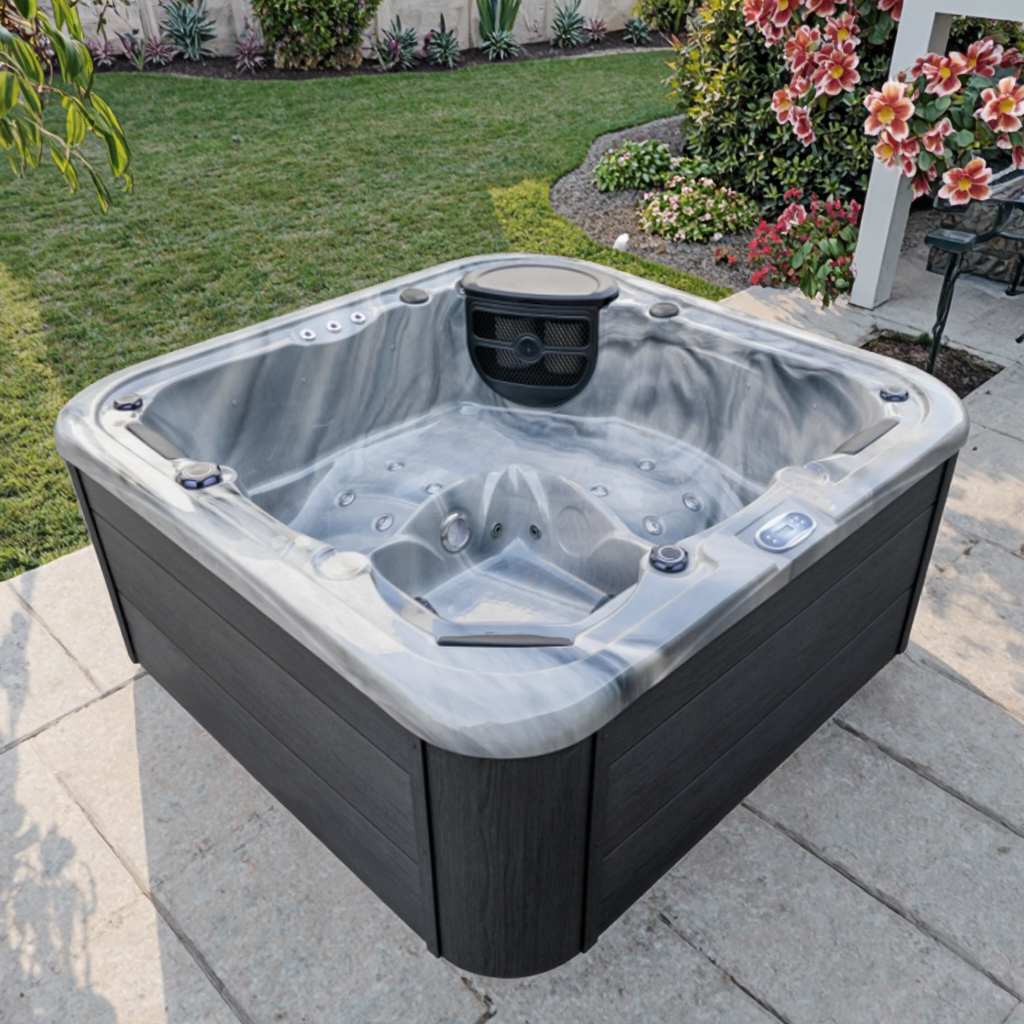
4. Clogged Filters Preventing Effective Particulate Removal
The filtration system is responsible for removing dust, hair, oils, and other suspended particles from the hot tub water. If the filter is not cleaned regularly, a significant amount of debris will accumulate on the surface of the filter cartridge.
When a filter cartridge becomes clogged, water flow resistance increases and circulation efficiency drops; consequently, some particles are not filtered out in time and end up re-entering the hot tub water.
This explains why some users find that even after repeatedly scrubbing the interior walls of the spa hot tub, a particulate film continues to reappear.
Solution: Inspect the filter regularly and clean the cartridge based on the frequency of use. Residential users should check the filter weekly and rinse it as needed, depending on the level of contamination. If a filter cartridge cannot be cleaned properly, or if it is damaged or worn out, it should be replaced promptly. For commercial outdoor hot tubs, a more rigorous filter maintenance schedule should be established based on the intensity of use.
5. Formation of Biofilm Within the Plumbing
Biofilm is an issue in outdoor whirlpool spa hot tubs that is frequently overlooked. Over time, microorganisms can attach themselves to circulation pipes, jets, and other damp surfaces, combining with organic contaminants to form sticky, viscous structures. Even if the interior walls of a hot tub appear clean, contaminants may still be accumulating within the internal plumbing.
When the water pump and massage jets are activated, portions of this biofilm may detach and re-enter the tub, appearing as grayish-white flocculent matter, transparent sticky particles, or floating films.
If these particulate films consistently reappear after the spa hot tub has been cleaned, the internal plumbing should be thoroughly inspected.
Solution: Use a specialized pipe-cleaning product designed for outdoor spa hot tubs, following the manufacturer’s instructions for cleaning, draining, and flushing the system. For units that have not undergone a deep clean for an extended period, pay particular attention to the circulation pipes, jets, and filtration system. Note that standard disinfectants may not be effective at removing mature, established biofilms.
6. Iron, Copper, and Other Minerals in the Water Source
Mineral content in tap water and groundwater can vary significantly depending on the location.
If the water used to fill an outdoor spa hot tub contains high concentrations of iron, copper, or other metal ions, these may form colored deposits following oxidation or changes in water chemistry.
For instance, iron can create yellow, brown, or reddish-brown particles, while copper may result in blue-green deposits. These substances can adhere to the tub’s interior walls or combine with other impurities to form particulate films.
Solution: When filling the tub for the first time or changing the water source, it is advisable to test for iron, copper, calcium hardness, and pH levels. If the water source contains significant levels of metal ions, consider using appropriate pre-treatment equipment or a proven metal-sequestering/treatment product.
7. Outdoor Dust, Pollen, and Plant Debris
Outdoor whirlpool spa hot tubs are more susceptible to environmental contamination than indoor units.
Dust, pollen, leaves, insects, and other fine debris can easily enter the water. Once these particles combine with human body oils and minerals, they may form floating films or adhere to the interior surfaces of the spa hot tub. Solution: Keep the thermal cover in place whenever the whirlpool spa hot tub is not in use, regularly clean the area surrounding the whirlpool spa hot tub, and inspect the thermal cover for any damage or poor sealing.
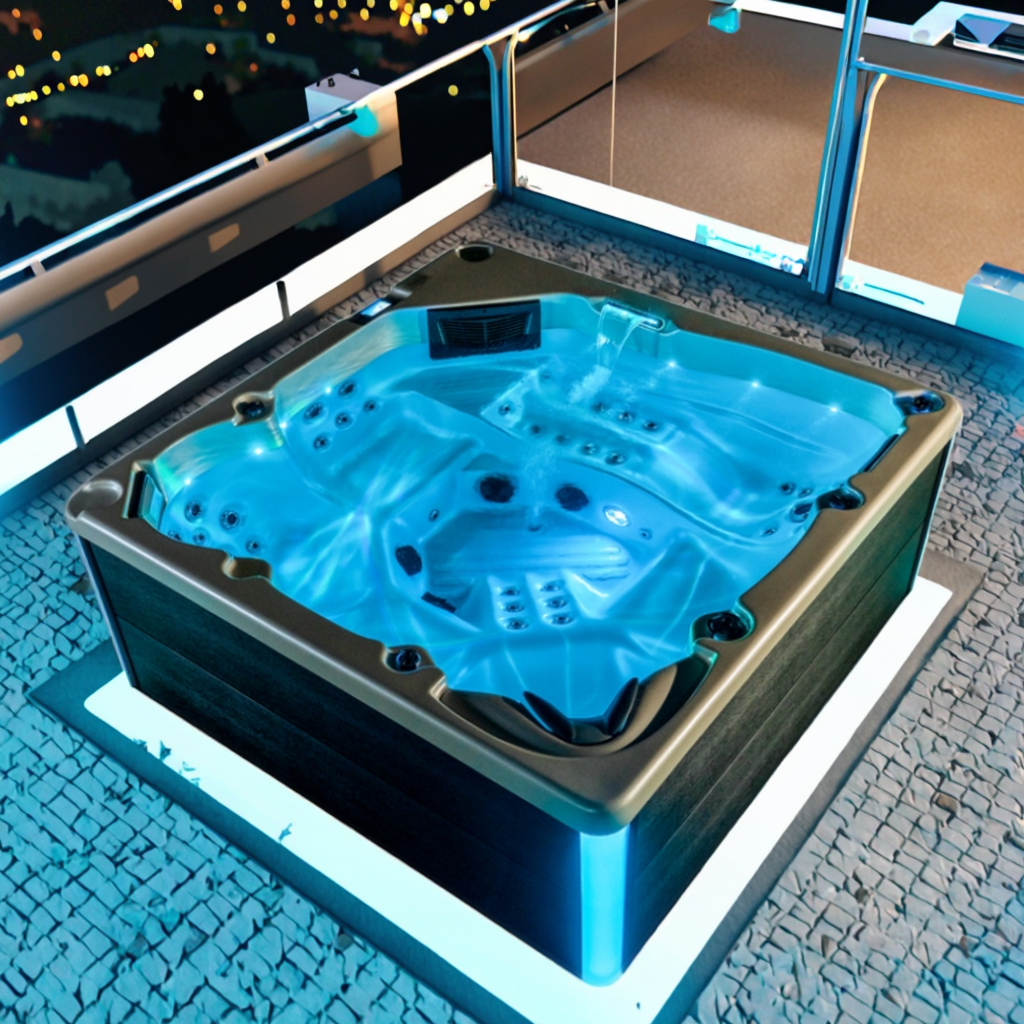
What impact can a granular film have on an outdoor hot tub?
A granular film not only detracts from the spa hot tub’s appearance but can also interfere with equipment operation and compromise water quality and safety.
1. Impact on water quality and user experience: The continuous accumulation of oils, minerals, and suspended particles can cause the water to become cloudy. In commercial settings—such as hotels or resorts—the appearance of the water directly influences how guests perceive the facility's hygiene standards.
2. Increased strain on the filtration system: As particulate matter enters the filtration system, it adheres to the surface of the filter cartridge. If left uncleaned, this can lead to clogs, reduce water circulation, and even impair the performance of the massage jets.
3. Reduced heating efficiency: If the film consists primarily of calcium scale, deposits may accumulate inside the heater and plumbing, hindering heat transfer. Long-term buildup can also lead to higher equipment maintenance costs.
4. Increased risk of microbial contamination: If the granular film contains biofilm or organic deposits, extra caution is required. The CDC notes that biofilms, sediments, water temperature, and residual disinfectant levels are all critical factors in controlling *Legionella* bacteria in spa hot tubs. Therefore, if you notice a distinct slimy film or recurring flocculent (flaky) debris, you should suspend use of the hot tub and conduct a thorough inspection.
Addressing a Granular Film in an Outdoor Hot Tub
Once the source of the problem has been identified, you can take the following steps to resolve it:
Step 1: Suspend use and remove visible contaminants
If a noticeable granular film appears—especially if accompanied by an unpleasant odor, cloudy water, or slimy deposits—stop using the whirlpool spa hot tub immediately.
For oily films on the water surface, use specialized oil-absorbing products or a fine-mesh skimmer. For deposits on the interior walls, use soft cleaning tools along with a cleaner specifically designed for acrylic surfaces.
Avoid using steel wool, abrasive scouring pads, or highly corrosive cleaning agents, as these can damage the whirlpool spa hot tub’s surface.
Step 2: Clean the filter
Remove the filter cartridge and inspect it for the presence of oils, minerals, and other particulate matter. First, rinse with clean water, then perform a deep clean using a specialized cleaner suited to your specific filter cartridge type.
If the filter cartridge is damaged, deformed, or severely clogged, replace it promptly. Once the filtration system is functioning correctly, it will be much more effective at removing suspended impurities from the water.
Step 3: Adjust Water Balance
Re-test the pH, sanitizer concentration, total alkalinity, and calcium hardness.
If the pH is too high, use a spa hot tub-appropriate pH adjuster, making adjustments in small, incremental doses. If calcium hardness is too high, consider partially draining and refilling the tub or using a treated water source.
If the sanitizer concentration is too low, add more according to the product instructions—do not exceed the recommended dosage.
Step 4: Clean Circulation Pipes and Jets
If a particulate film keeps reappearing, a deep clean of the circulation plumbing is recommended.
Use a specialized pipe-cleaning product according to the manufacturer’s instructions, allowing the cleaner to circulate through the system before draining and rinsing. Pay special attention to the jets, pipe connections, and the interior of the filtration system.
Step 5: Drain and Refill (If Necessary)
If the water is severely cloudy, contains significant sediment, or fails to return to a normal state despite the steps above, consider draining the tub completely.
After draining, clean the interior surfaces, jets, and filter, then refill the tub using properly treated water. Before restarting the equipment, ensure the circulation system is operating correctly, and perform a full water quality test and sanitization treatment.
Frequently Asked Questions (FAQs)
FAQ 1: What causes white particles to appear on the surface of an outdoor hot tub?
Typically, you should first check for calcium deposits, mineral precipitation, or residual cleaning agents. If the particles are hard and adhere to the interior surfaces, check the calcium hardness and pH levels; if they appear as loose, flocculent (fluffy) debris, inspect the filtration system.
FAQ 2: Why does a particulate film appear in an outdoor hot tub immediately after a water change?
This may be due to high hardness in the new water source, or it could be that contaminants remaining within the plumbing were flushed out when the tub was refilled. It is recommended to check the quality of the water used for refilling and, if necessary, perform a deep clean of the circulation pipes.
FAQ 3: Can an anti-foaming agent remove particulate film in an outdoor spa hot tub?
Not necessarily. Anti-foaming agents are primarily designed to reduce foam; they are not effective at addressing all types of oils, minerals, or biofilms. You should first identify the source of the contamination before selecting the appropriate treatment product.
FAQ 4: Can particulate film clog the jets in an outdoor spa hot tub?
Yes, it is possible. Over time, the accumulation of fine particles and sediment can enter the circulation piping and jets, leading to reduced water flow. Therefore, if you notice the recurring presence of particulate film, you should promptly inspect your filtration system and plumbing.
FAQ 5: How often should an outdoor hot tub undergo a thorough cleaning?
There is no fixed schedule that applies to every unit. For residential users, the frequency of deep cleaning should be based on usage levels and the manufacturer’s recommendations. For hot tubs in hotels or commercial spa facilities, a maintenance plan should be established based on usage load and local health and safety regulations.