


Can I Use a Spa Jacuzzi Tub If I Have Diabetes?
2026-05-20 15:35For many people who prioritize their health and quality of life, a spa jacuzzi tub is not merely a means of relaxation, but a daily tool for alleviating physical stress. However, when the user has diabetes, questions often arise:
Can I use a spa jacuzzi tub if I have diabetes?
Is a spa jacuzzi tub safe for people with diabetes?
What specific precautions should be taken when using a spa jacuzzi tub?
In reality, having diabetes does not mean you must completely avoid spa jacuzzi tubs; however, given the potential impact diabetes has on blood circulation, nerve sensitivity, and skin healing capabilities, individuals with diabetes do indeed need to exercise greater caution than the average person when using one.
This article will provide a systematic and rational answer to the question, "Can people with diabetes use a spa jacuzzi tub?" by examining various dimensions, including the tub's operating principles, the effects of diabetes on the body, water temperature, water flow, duration of use, and skin safety.

Why Do People with Diabetes Worry About Using a Spa Jacuzzi Tub?
Many people with diabetes experience natural apprehensions when considering the use of a spa jacuzzi tub—and these concerns are not unfounded.
Diabetes may be accompanied by the following issues:
•Reduced sensitivity in nerve endings
•Weakened blood circulation
•Diminished capacity for skin self-repair
•Reduced sensitivity to temperature changes
Conversely, the operational characteristics of a spa jacuzzi tub include:
•A continuous warm-water environment
•Strong water jets/currents
•Prolonged immersion
Therefore, it is entirely rational for people with diabetes to be concerned about whether using a spa jacuzzi tub might pose additional risks.
What Are the Basic Operating Principles of a Spa Jacuzzi Tub?
To determine whether using a spa jacuzzi tub is suitable for you, you must first understand how it functions.
A spa jacuzzi tub operates primarily through the synergistic action of the following systems:
•Heating System: Maintains a constant water temperature.
•Circulation System: Keeps the water flowing.
•Jet System: Directs streams of water toward the body via nozzles.
•Filtration and Sanitation System: Ensures water quality and safety.
The core characteristics of a spa jacuzzi tub are:
Warm Water + Water Jet Stimulation + A Relatively Enclosed Immersion Environment
These characteristics are not inherently dangerous; however, for certain populations—including people with diabetes—the manner in which the tub is used requires more careful and scientifically informed management.
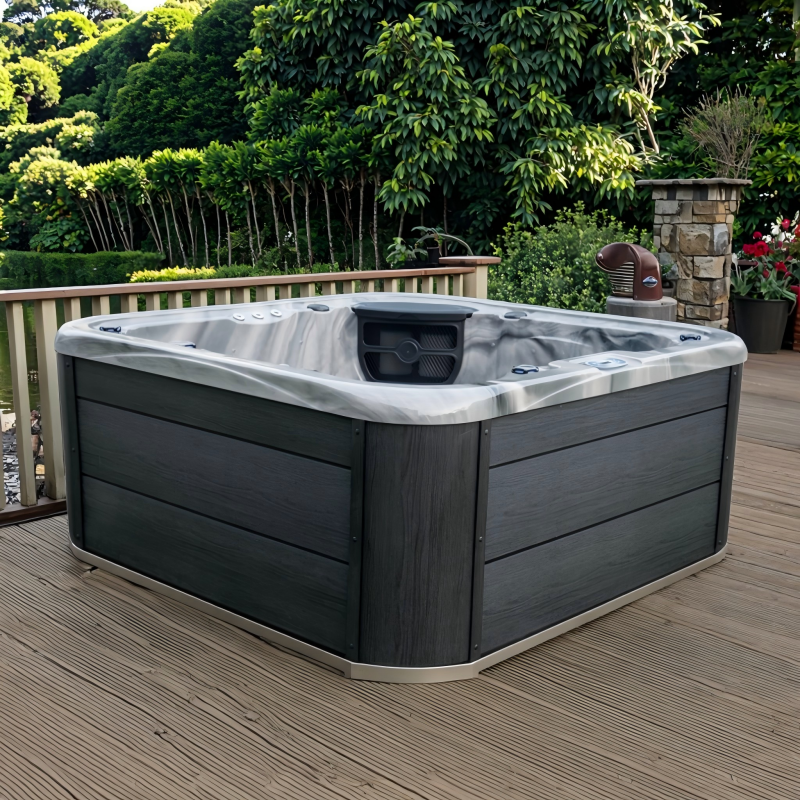
In What Ways Does Diabetes Affect the Use of a Spa Jacuzzi Tub?
1. Potential Decline in Temperature Perception
Some diabetic patients suffer from nerve damage, making them less sensitive to hot water than the average person; consequently, they may fail to detect excessively high water temperatures immediately.
2. Altered Blood Circulation Regulation
Hot water causes blood vessels to dilate. However, diabetic patients may have relatively weaker vascular regulatory capabilities; therefore, excessively high water temperatures or prolonged immersion can easily place an increased strain on the body.
3. Reduced Skin Tolerance
Diabetes can compromise the skin's barrier function, making the skin more susceptible to irritation or infection—a particular concern given that a spa jacuzzi tub involves prolonged contact with water.
These factors do not mean that one cannot use a spa jacuzzi tub, but rather that it must be used with greater caution.
Can Diabetic Patients Use a Spa Jacuzzi Tub?
The core conclusion is:
Provided that water temperature, usage duration, water jet intensity, and water quality are properly controlled, diabetic patients can use a spa jacuzzi tub.
The spa jacuzzi tub itself is not a contraindication; the truly critical factor is how it is used, rather than simply whether one is allowed to use it at all.
Why is Water Temperature a Key Factor When Using a Spa Jacuzzi Tub?
Among all usage conditions, water temperature is one of the most critical control points.
Why is Water Temperature So Important?
•High temperatures can increase the strain on the circulatory system.
•Diminished temperature sensitivity may cause physical discomfort to go unnoticed.
•Prolonged immersion in high-temperature water can easily lead to fatigue or dehydration.
The Importance of Appropriate Water Temperature
For diabetic patients, the water temperature in a spa jacuzzi tub should adhere to the principles of being gentle, stable, and non-irritating—rather than chasing the notion that "the hotter, the more relaxing."
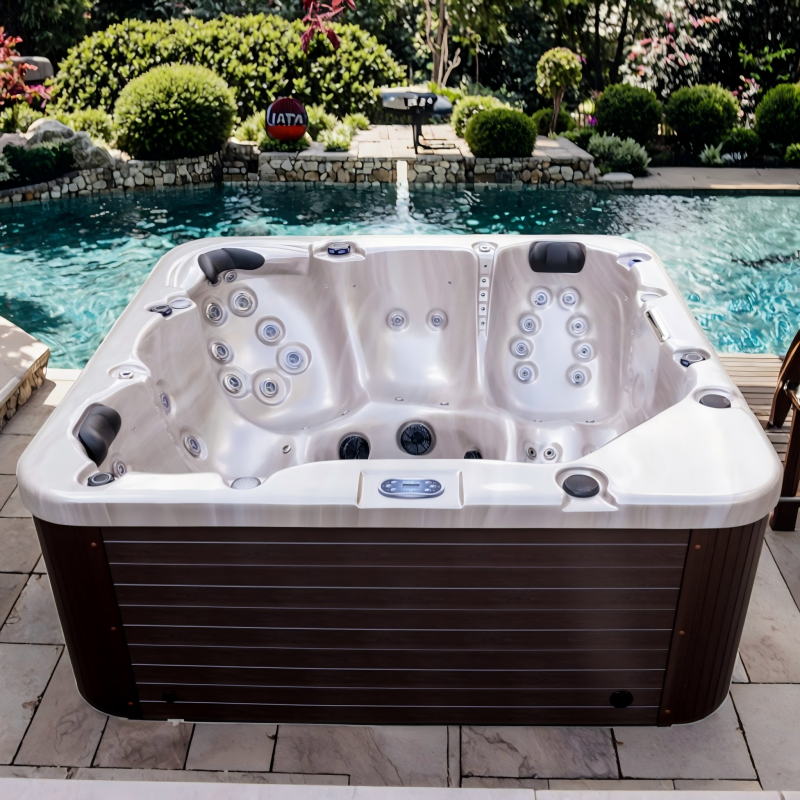
Is the Jet Force in a Spa Jacuzzi Tub Safe for Diabetics?
The intensity of the water jets in a spa jacuzzi tub is a primary concern for many people.
The Dual Nature of Jet Force
•Moderate Jet Force: Helps to relax muscles.
•Excessive Jet Force: May cause irritation to the skin and underlying tissues.
When using a spa jacuzzi tub, diabetic patients should pay particular attention to the following:
•Whether the jet intensity can be adjusted.
•Whether individual nozzles can be turned off.
•Whether there is any localized, continuous, and strong impact from the jets.
Spa jacuzzi tubs equipped with adjustable jet systems are more conducive to safe usage.
How Should Diabetic Patients Regulate Their Usage Time in a Spa Jacuzzi Tub?
Prolonged immersion does not necessarily equate to a better experience. For individuals with diabetes:
•Prolonged soaking may lead to physical fatigue.
•Fluid loss (dehydration) can be difficult to detect.
•Discomfort is more likely to arise in warm environments.
Reasonably limiting the duration of use is a crucial prerequisite for safely using a spa jacuzzi tub.
Why is water quality management particularly important for spa jacuzzi tubs?
A spa jacuzzi tub operates as a recirculating water system; consequently, the condition of the water directly impacts skin safety.
Reasons why individuals with diabetes need to pay extra attention to water quality:
•Their skin barrier is more fragile.
•Their wound-healing capacity is relatively slower.
•They are more susceptible to bacterial and fungal infections.
Therefore, a spa jacuzzi tub must meet the following standards:
•Regular disinfection.
•A properly functioning filtration system.
•Clear water free of any odors.
Water quality management is not an optional extra, but a fundamental requirement that must be prioritized.
Do individuals with diabetes need to pay special attention to their skin and feet when using a spa jacuzzi tub?
Absolutely—this is essential.
Reasons include:
•The extremities (feet and skin) are more prone to reduced sensation or numbness.
•Minor abrasions may go unnoticed for some time.
•Prolonged soaking can cause the skin to soften and become more vulnerable.
Before and after using a spa jacuzzi tub, pay particular attention to the following:
•Whether there are any breaks or lesions in the skin.
•Whether there is any discomfort in the feet.
•Whether there is any abnormal redness or irritation.
Under what circumstances should one avoid using a spa jacuzzi tub?
Even though a spa jacuzzi tub is inherently safe, its use should be avoided in the following situations:
•When feeling physically unwell.
•When there are open wounds or skin lesions.
•When unable to clearly perceive changes in water temperature.
•When the water quality in the spa jacuzzi tub does not meet safety standards.
These are not permanent restrictions, but rather emphasize that one should not force oneself to use the tub when in an unsuitable physical state.
How can one use a spa jacuzzi tub safely and appropriately?
In summary, when using a spa jacuzzi tub, individuals with diabetes should adhere to the following principles:
•Keep the water temperature within a comfortable range.
•Use a system with adjustable jet intensity.
•Limit the duration of each individual session.
•Ensure the water quality remains clean and hygienic.
•Monitor the condition of the skin before and after use.
The true value of a spa jacuzzi tub lies in providing soothing relief and relaxation—not in placing an additional burden on the body.

Common Misconceptions Regarding Diabetes and Spa Jacuzzi Tubs
Misconception #1: Individuals with diabetes cannot use a spa jacuzzi tub at all.
This is an exaggerated and inaccurate interpretation of the facts.
Misconception #2: Low water temperature guarantees complete safety.
Jet force, water quality, and duration are equally important factors.
Misconception #3: The absence of discomfort implies there is no risk.
A diminished sense of sensation is, in itself, a warning sign that warrants vigilance.