


Are acrylic outdoor hot tubs eco-friendly? What is acrylic?
2026-10-14 15:35As modern households increasingly prioritize the quality of outdoor leisure living, outdoor spa hot tubs have evolved from niche luxury items into common features in backyards, on terraces, and in vacation homes. Among the various materials used for hot tubs, acrylic has emerged as a mainstream choice, thanks to its attractive appearance, pleasant tactile feel, excellent heat retention, and high durability.
However, with rising environmental awareness, consumers are asking new questions when shopping for hot tubs: Are acrylic outdoor spa hot tubs eco-friendly? What exactly is acrylic? Is it safe? Is it recyclable? Does it place a burden on the environment over the long term?
These are valid questions. Today, purchasing decisions go beyond mere functionality and price; factors such as the eco-friendliness of the material, the sustainability of the manufacturing process, and the product's lifespan are becoming increasingly important.
This is particularly true for large home fixtures like acrylic hot tubs, where the material affects not only the product's quality and longevity but also energy consumption during production, waste disposal, and overall environmental impact. Therefore, to answer whether acrylic outdoor hot tubs are eco-friendly, we must first understand what acrylic is and how it is utilized in the hot tub industry.
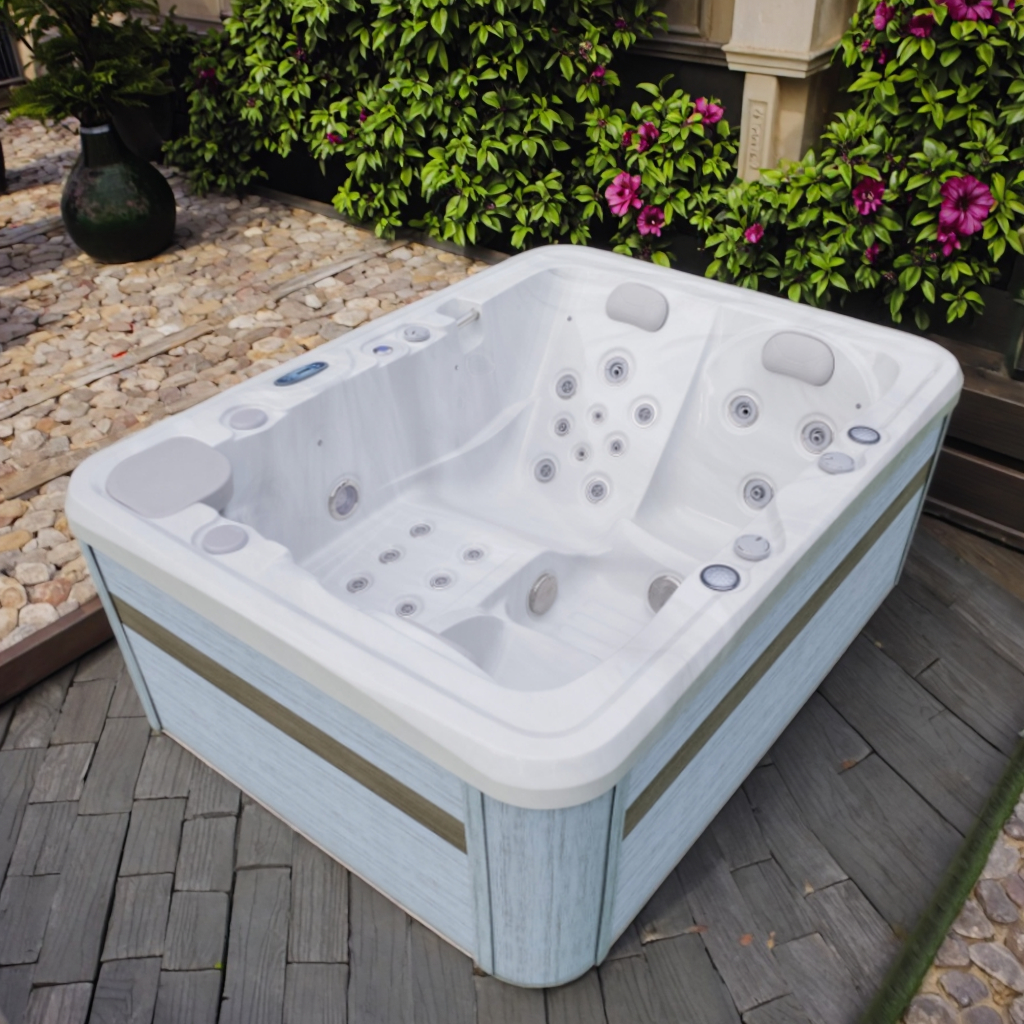
Why is acrylic widely used in outdoor spa hot tubs?
Acrylic—chemically known as polymethyl methacrylate (PMMA)—is a transparent polymer material. First mass-produced in the early 20th century, it quickly found applications across the construction, medical, automotive, home furnishing, and sanitary ware industries. Due to its excellent transparency, weather resistance, and ease of processing, it is often referred to as "organic glass."
Many people mistakenly assume acrylic is just another cheap plastic when they first hear the name. In reality, however, there is a significant difference in performance between high-quality acrylic and ordinary plastics. While standard plastics are prone to aging, yellowing, and becoming brittle, high-quality acrylic offers superior stability. It boasts a light transmission rate of up to 92%—rivaling glass—yet weighs about 50% less and offers several times the impact resistance of ordinary glass.
In the hot tub industry, acrylic is rarely used in isolation. Most acrylic outdoor spa hot tubs feature a composite structure typically consisting of three core layers. The innermost layer is the acrylic surface, which determines the tactile feel, appearance, and waterproofing capabilities. The middle layer is usually a fiberglass-reinforced layer that enhances overall structural strength. The bottom layer serves as the support structure—comprising an ABS base, a steel frame, or a wooden frame—to bear weight and provide stability. It is this multi-layered construction that allows acrylic outdoor hot tubs to maintain their aesthetic appeal while withstanding prolonged exposure to high-temperature water pressure and the weight of users.
Acrylic outdoor hot tubs dominate the market because they strike an ideal balance among various performance characteristics. Unlike ceramic, they are not brittle; unlike wood, they are not prone to moisture damage or rot; and unlike metal, they do not conduct heat rapidly or feel cold to the touch. This balance is crucial for outdoor hot tubs, which must endure environments characterized by high temperatures, humidity, and direct sunlight.
Why are acrylic outdoor hot tubs so popular?
Market data indicates that acrylic has become the dominant material in the global hot tub market. Industry statistics show that over 70% of high-end residential hot tubs in North America and Europe utilize an acrylic composite structure—a figure that clearly demonstrates market recognition of the material's performance.
The popularity of acrylic outdoor spa hot tubs stems, first and foremost, from their visual appeal. When polished, the acrylic surface exhibits a high-gloss finish that looks premium and creates the atmosphere of a luxury spa. Many of the high-end finishes consumers recognize—such as white, pearl gray, and stone textures—are achieved using acrylic.
Secondly, they offer a comfortable tactile experience. Acrylic has lower thermal conductivity than metal or ceramic, so the surface does not feel cold to the touch. This comfort is particularly noticeable when using the hot tub in winter.
Additionally, acrylic outdoor spa hot tubs offer excellent weather resistance. High-quality acrylic remains stable across a wide temperature range, typically withstanding environmental fluctuations from -20°C to over 80°C. This weather resistance is crucial for hot tubs exposed to the outdoors for extended periods.
Even more critical is thermal insulation performance. A hot tub's energy consumption depends largely on the rate of heat loss; acrylic’s inherently low thermal conductivity helps slow this dissipation. When paired with a high-density foam insulation layer, acrylic outdoor hot tubs can significantly reduce the energy required for continuous heating.
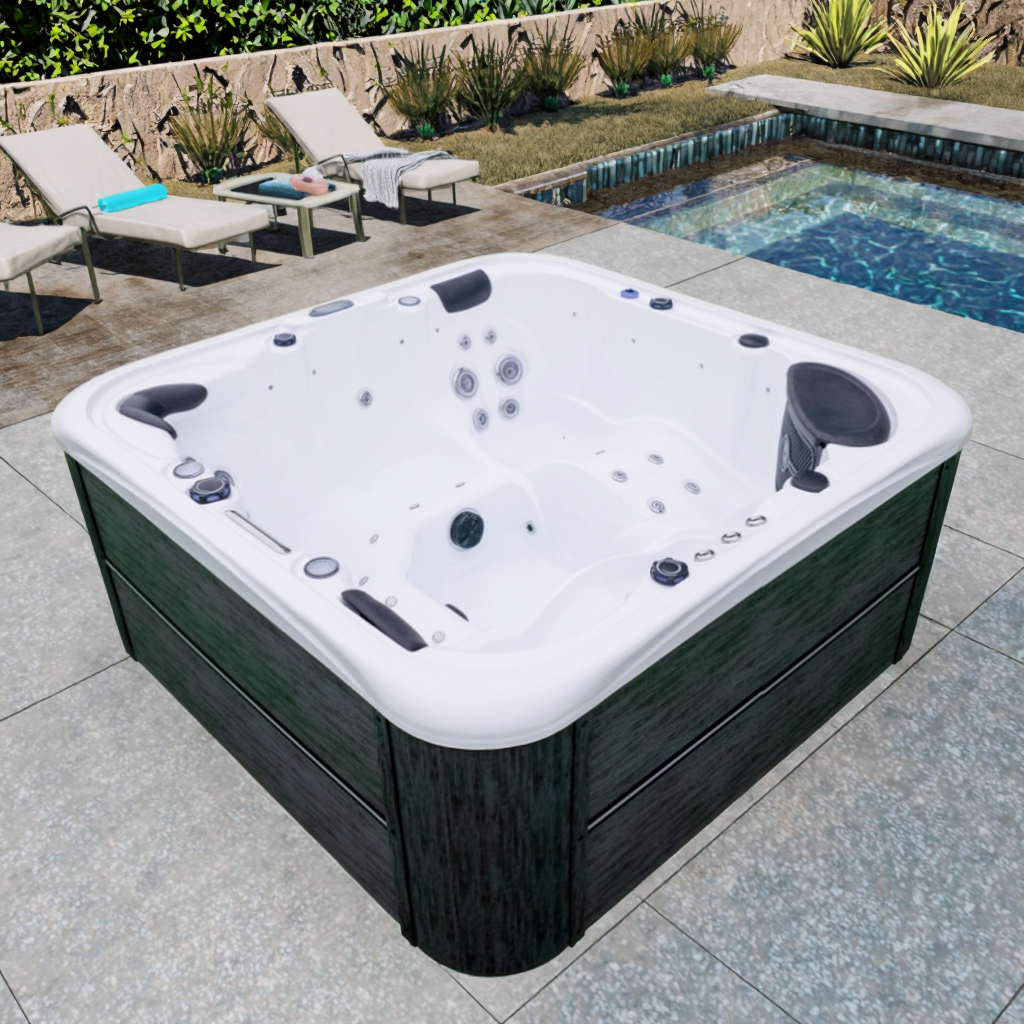
Are acrylic outdoor hot tubs eco-friendly?
This is the central question of this article. Evaluating the environmental friendliness of acrylic outdoor hot tubs requires a comprehensive analysis across four dimensions—raw material sourcing, the manufacturing process, the usage phase, and end-of-life disposal—rather than a simple "yes" or "no" answer.
Raw materials: Acrylic is not a natural material, but it offers high stability
First, it must be acknowledged that acrylic is not a natural material; it is a petrochemical derivative. From an environmental perspective, any polymer material reliant on the petrochemical industry entails carbon emissions. Acrylic production involves monomer synthesis, polymerization, and high-temperature processing, all of which consume energy.
According to publicly available industry data, the production of 1 kilogram of PMMA material generates approximately 5 to 8 kilograms of CO2 equivalent. While this figure is higher than that of some common plastics, it is lower than the processing emissions for high-energy materials like aluminum alloys and steel.
However, assessing a material's environmental impact requires looking beyond the production phase. Acrylic’s strength lies in its exceptional stability. With proper maintenance, high-quality acrylic outdoor hot tubs typically last 10 to 20 years; some premium models remain in excellent condition even after two decades of use. A longer lifespan translates to a lower environmental cost per unit of usage time.
In other words, although acrylic production imposes some environmental burden, the product's durability ensures that its long-term environmental performance is actually quite favorable.
Energy Efficiency in Use: The Advantage of Acrylic Outdoor Hot Tubs
Many people overlook a key point: for hot tubs, the primary environmental impact often stems not from manufacturing, but from energy consumption during long-term use.
A standard five-person outdoor hot tub typically holds between 1,200 and 1,800 liters of water. Heating this volume from 15°C to 40°C can require over 40 kWh of electricity. If insulation is poor, maintaining that temperature subsequently consumes significant energy.
This is where the eco-friendly advantages of acrylic outdoor spa hot tubs become apparent. Acrylic has low thermal conductivity, and modern high-end models often feature multi-layer foam insulation systems, resulting in significantly lower heat loss compared to products made from cheaper materials.
Industry test data shows that high-quality insulation systems can reduce heat loss by approximately 20% to 40%. If a standard hot tub consumes 4,000 kWh of electricity annually, an acrylic model with superior insulation could save between 800 and 1,600 kWh per year. Based on global average carbon emission estimates for power generation, this equates to a reduction of hundreds of kilograms of CO2 emissions annually.
Therefore, from a long-term usage perspective, acrylic outdoor hot tubs offer excellent energy-saving and eco-friendly qualities.
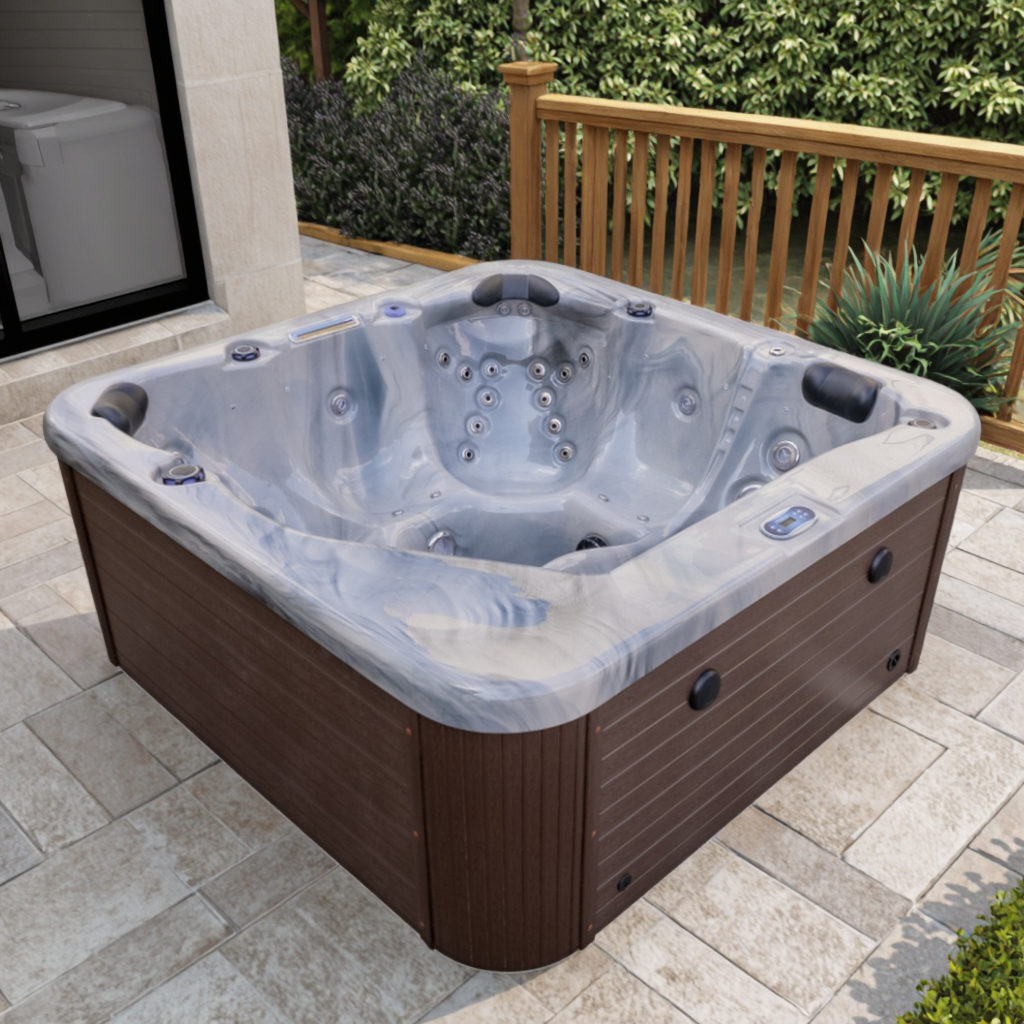
Do acrylic outdoor hot tubs release harmful substances?
This is a common concern among consumers. The answer is: properly manufactured acrylic outdoor hot tubs generally do not release harmful substances under normal operating conditions.
PMMA (acrylic) is chemically stable and highly water-resistant, meaning it does not readily react with water. Unlike some low-quality plastics, it does not release significant amounts of volatile organic compounds (VOCs) when exposed to hot water. High-quality acrylic undergoes complete polymerization, resulting in extremely low levels of residual monomers.
Of course, there is a prerequisite: the product must come from a reputable manufacturer. Low-end, inferior products may utilize recycled scrap materials or non-compliant additives, which can pose safety risks in high-temperature environments. Consequently, when purchasing an acrylic outdoor spa hot tub, consumers should prioritize brands that hold quality certifications and meet environmental standards. From a safety perspective, standard acrylic material is generally considered low-risk.
Can acrylic outdoor hot tubs be recycled?
One cannot discuss environmental friendliness without addressing the issue of recycling. Many people assume that because acrylic is a type of plastic, it must be difficult to recycle. In reality, this view is not entirely accurate.
Acrylic is a recyclable material. Theoretically, waste acrylic can be repurposed through mechanical shredding or chemical recycling to produce new sheets, decorative components, or industrial materials. Some advanced facilities have even achieved closed-loop recycling.
However, the challenge in recycling acrylic outdoor spa hot tubs lies in the fact that they are rarely made of pure acrylic; instead, they feature a composite structure. Because they incorporate fiberglass, metal frames, plumbing systems, and insulation foam, the costs associated with disassembly and sorting are high, resulting in relatively low actual recycling rates.
This means that while acrylic itself is recyclable, recycling the entire hot tub unit presents challenges within the supply chain.
How do acrylic outdoor hot tubs compare to other materials in terms of environmental impact?
A balanced view of environmental impact requires a comparative analysis.
Compared to wooden hot tubs: Wood may appear more natural, but it entails high maintenance costs—requiring treatments against rot, mold, and insects—and may involve the depletion of forest resources. If the wood is not sourced sustainably, its environmental profile is not necessarily superior to that of acrylic.
Compared to stainless steel hot tubs: Steel is highly recyclable, but its production process is extremely energy-intensive. Furthermore, steel conducts heat rapidly and offers poor insulation, leading to higher energy consumption during long-term use.
Compared to inflatable PVC hot tubs: PVC is inexpensive but lacks durability, typically requiring replacement every three to five years; this short lifespan implies more frequent resource consumption.
Overall, acrylic outdoor hot tubs strike a favorable balance between lifespan, comfort, energy efficiency, and maintenance costs. From a lifecycle perspective, while the material may not be the absolute "greenest" option, it is certainly a mainstream choice with a strong environmental performance record.
How can users make acrylic outdoor hot tubs more environmentally friendly?
Even after purchasing an acrylic outdoor spa hot tub, users can further minimize their environmental impact through proper usage.
First, prioritize models with superior thermal insulation. Better insulation translates to lower long-term energy consumption. Second, using a high-quality thermal cover is recommended; studies show that heat loss in a hot tub can increase by over 50% if left uncovered.
Third, ensure regular maintenance. A clean filtration system reduces the frequency of water changes, thereby conserving water. With proper maintenance, the water change interval for an acrylic outdoor hot tub can be extended from once a month to once every two or three months.
Additionally, if conditions permit, integrating solar power or a heat pump system can further reduce carbon emissions.
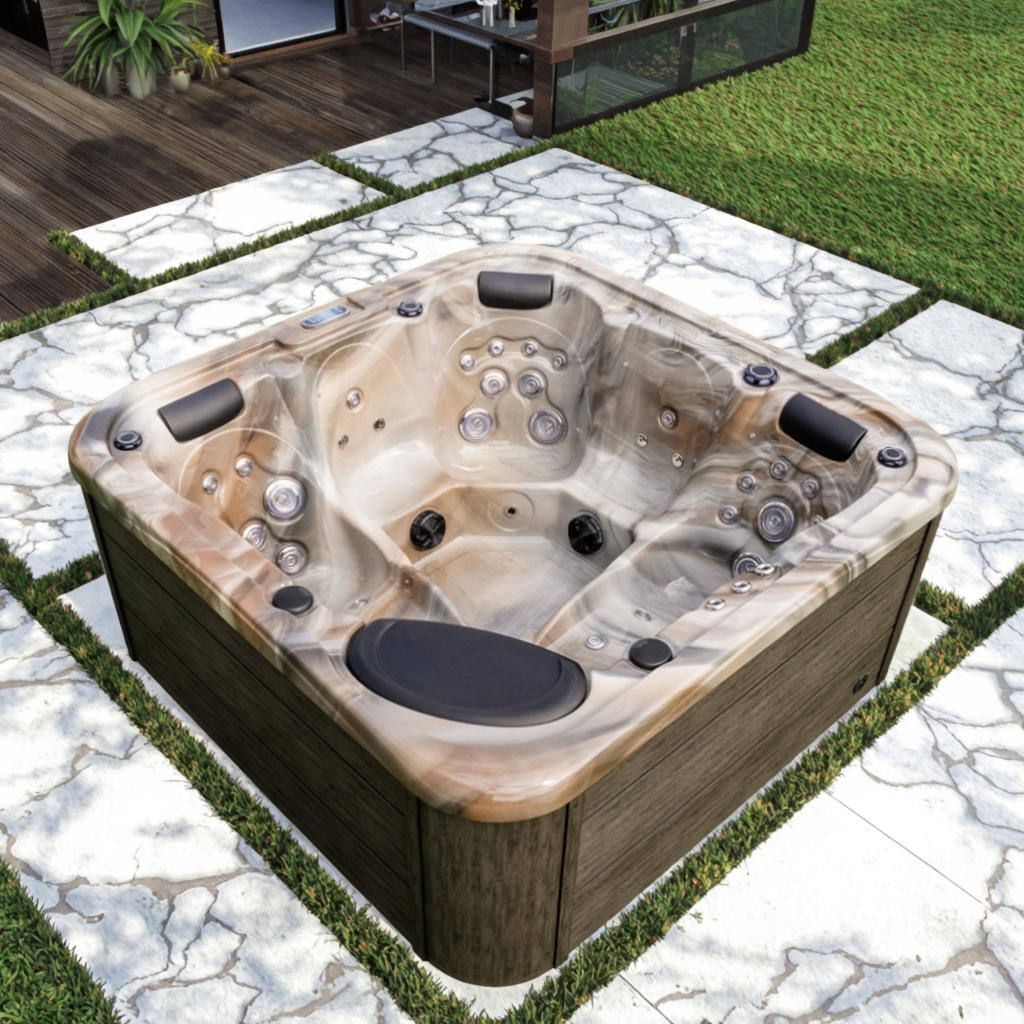
FAQ
Are acrylic outdoor hot tubs safe?
Acrylic outdoor hot tubs produced by reputable manufacturers offer a high level of safety; the material is stable and does not readily release harmful substances.
Does acrylic yellow over time?
Low-quality acrylic may age and yellow, but high-quality, UV-resistant acrylic retains its appearance well even with long-term outdoor use.
What is the lifespan of an acrylic outdoor spa hot tub?
Typically 10 to 20 years; high-end models can last even longer with proper maintenance.
Which is more eco-friendly: acrylic or PVC outdoor spa hot tubs?
From a lifecycle perspective, acrylic outdoor hot tubs are generally more eco-friendly due to their longer lifespan, superior insulation, and lower long-term resource consumption.
Is an acrylic outdoor spa hot tub worth buying?
If you value comfort, durability, thermal insulation, and the overall user experience, an acrylic outdoor hot tub is a mainstream choice well worth considering.